Custom Denim Manufacturer: A Streetwear Sourcing Guide
Denim is often the piece that decides a streetwear collection. It carries the highest price on the rail, it appears in almost every lookbook shot, and it is the garment a customer keeps long after the printed tee has faded. It is also the hardest category to source well, because a pair of jeans is not one product but a stack of decisions: fabric weight, weave, stretch, thread, stitch density, hardware, wash and fit. Get one of them wrong and the problem shows up either in the fit or in the returns inbox.
This guide is for brand owners and product managers who are sourcing custom denim for the first time, or who have been buying stock jeans and want a fit, fabric and wash that belong to their brand instead of everyone else's.
Quick answer: custom denim manufacturing means the factory builds the garment to your specification — your fabric choice, your measurements, your wash, your hardware and your labels — and MOQ for these programmes is 100 pieces per style, per color, with sampling typically completed in one to two weeks and bulk production running three to four weeks after sample approval.
Key Takeaways
- Denim is a specification-heavy category. Fabric weight, weave and stretch have to be chosen first, because they decide fit behaviour, wash results and the price you can charge.
- Fit is development work, not a size chart. A graded pattern and an agreed tolerance are what keep a size run consistent.
- The wash is a production stage with its own risks. Approving a wash swatch on the correct fabric is what prevents tone drift in bulk.
- Hardware, stitching and labelling are visible quality signals to your customer and cheap to fix before production, expensive to fix after.
- INFULLSAIL is a Dongguan-based OEM and ODM clothing manufacturer with more than 20 years of apparel experience, producing custom denim for streetwear brands at an MOQ of 100 pieces per style, per color.
What Custom Denim Manufacturing Involves for a Streetwear Brand
Custom denim means the garment is developed for you rather than picked from a catalogue. In practice, that covers pattern development from a block, fabric sourcing and testing, sampling, cutting, sewing, hardware attachment, washing and finishing, decoration where needed, quality control, packing and export shipping.
That range of steps is the reason denim quotes are hard to compare. A supplier that quotes only cut-and-sew is not quoting the same job as one that also develops the wash and handles the trims. When you ask for a quotation, ask which stages are included, and which are handled elsewhere. That single question tells you where your own workload will land — and whether you are going to spend the next month chasing labels, wash houses and freight forwarders yourself.
For a growing brand, the practical value of putting those stages in one production plan is control: the wash house hears the same specification as the sewing line, and the labels arrive in the same timeline as the garments, so your launch date does not slip because one subcontractor was planning against a different brief.
Denim Fabric: Weight, Weave and Stretch Decide How the Jeans Sell
Fabric is the first decision because everything downstream depends on it. Three attributes drive most of the conversation.
Weight. Denim is usually described in ounces per square yard. Lighter weights feel softer and drape more, which suits summer styles and relaxed silhouettes; heavier weights hold structure, which suits workwear-inspired shapes and boxy streetwear cuts. Weight also affects how a wash reads: the same wash treatment produces a visibly different result on a light and a heavy fabric.
Weave and construction. The classic is a right-hand twill, but the choice of yarn, weave direction and finishing affects how the surface takes indigo, how the fabric ages and how much it shrinks during washing. If you want a vintage look, the weave matters as much as the colour.
Stretch. Rigid denim keeps the authentic look and ages sharply, but it restricts movement; added elastane improves comfort and recovery but changes the hand feel and how the garment behaves after laundering. Deciding this early avoids a sample round that has to be repeated.
Ask your manufacturing partner for fabric options with their composition, weight and shrinkage information, then test the two candidates you are seriously considering rather than approving from a swatch book. Our page on Fabrics and Processes shows how those stages are handled in production.
Fit and Pattern: Turning a Denim Idea Into a Graded Size Range
Fit is where custom denim earns its cost. A reference pair of jeans, a tech pack or even detailed reference photos and measurements are enough for a factory to begin pattern development, and from there the work becomes measurable: rise, waist, hip, thigh, inseam, leg opening and the tolerance allowed on each.
Two things are worth agreeing in writing before sampling. The first is the base size you will develop around and how the pattern should grade away from it, because a fit that works at medium but opens up at extra large is a fit problem, not a sizing problem. The second is the tolerance — how many millimetres of variation are acceptable on a waistband or inseam. A factory that works to an agreed tolerance can tell you honestly whether a bulk run is correct; without one, every measurement discussion becomes an opinion.
Fit development also affects what you can sell. If the pattern is developed and owned for your brand, the shape stays yours across seasons, so a reorder is a repeat of a known product rather than a new gamble, and your returns rate has a reason to stay low.
Washes and Finishing: Where the Vintage Look Comes From
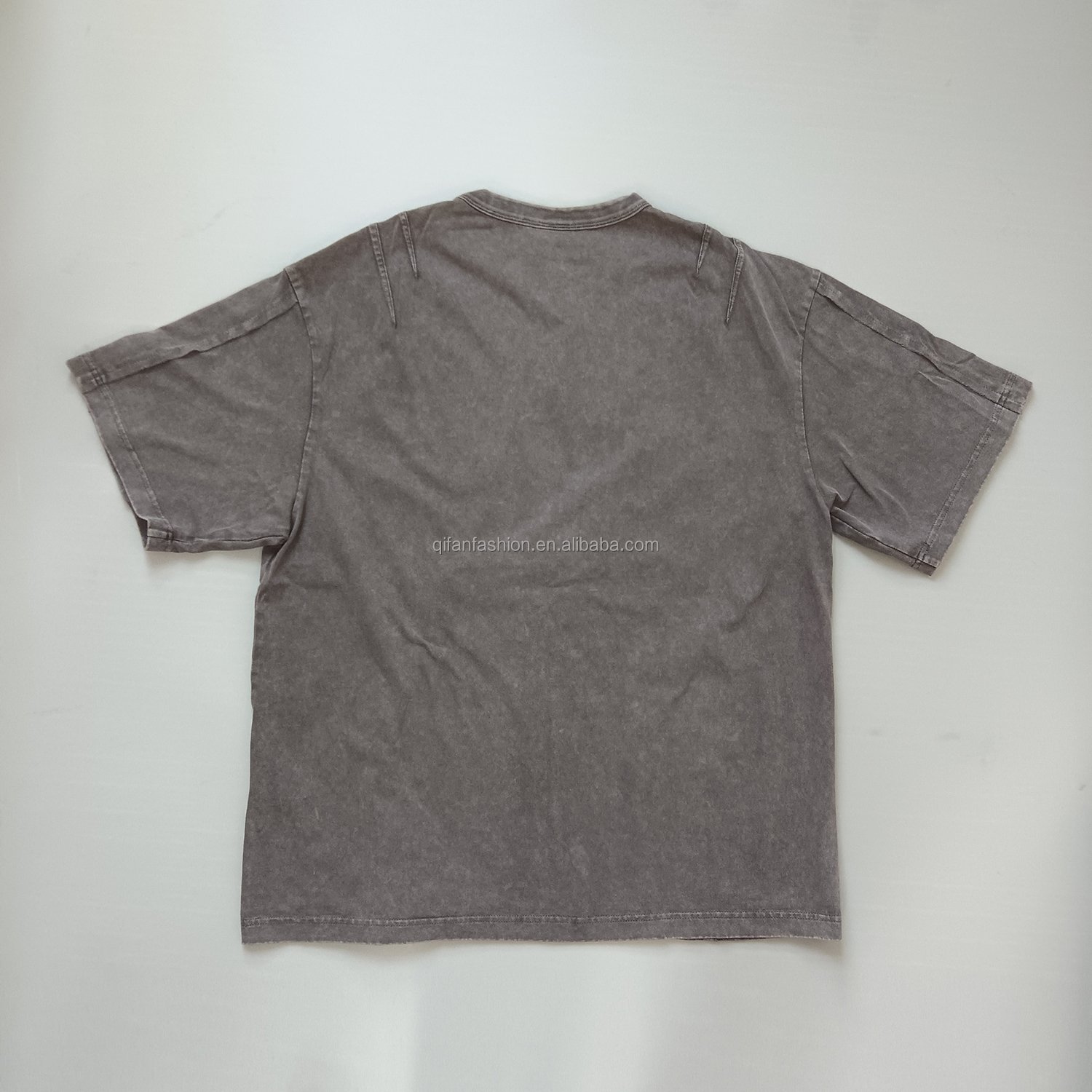
The washed, worn-in look that streetwear buyers want is produced through a sequence of finishing stages rather than a single treatment — stone or enzyme washing, bleaching, hand processes such as whiskering and sanding, and in some programmes dyeing or over-dyeing. Each addition changes the surface, the softness and the final tone, which is why the sequence has to be developed rather than guessed.
The risk in washing is consistency. Tone varies with fabric, machine load and process time, so the swatch you approve should always be made on the fabric lot you intend to produce in. If a brand approves a wash swatch on one fabric and produces in another, the "same" recipe can come back visibly different, and a whole size run can end up looking like two different products in one drop.
Our page on Retro Clothing Manufacturing Solutions explains the washed and vintage finishes used in these programmes.
Finishing is not only about the look. Softness, shrinkage behaviour and whether the garment keeps its shape after a few washes are the parts a customer notices in week three, and those are decided in the same stage. For a brand selling at a premium, that is the difference between a repeat customer and a review you would rather not read.
From Approved Denim Sample to Bulk: Quality Control Checks That Matter
The approved sample is the reference document for the order, so it deserves a proper review. Handle the jeans in daylight, wear or drape them rather than judging them flat, check the wash tone against the swatch, and confirm the labels, hardware and stitch quality with the same eye a customer would use.
During bulk production, the checks that matter most in denim are:
- Measurement checks across sizes, using the tolerance agreed during development, not only on the sample size.
- Wash consistency against the approved swatch, batch by batch, since tone drift is the defect buyers notice first.
- Stitch and seam checks on stress points — waistband, crotch, pockets and belt loops — where wear shows earliest.
- Hardware and rivet security, plus correct button and zipper function.
- Decoration placement, held by template rather than by eye where printing or embroidery is applied.
- Final inspection before packing, covering trims, labelling and packing method.
Agree in writing how you will be told if a problem appears during production, and how it will be resolved, so a small issue does not become a late shipment.
At INFULLSAIL, sampling is a paid step and the fee is quoted clearly in advance, so nothing is added to the invoice later. Samples are typically completed within one to two weeks. Bulk production typically runs three to four weeks after sample approval, depending on style and quantity. The standard MOQ is 100 pieces per style, per color, and smaller trial orders can be discussed case by case depending on the style and the processes involved. Reorders are supported at the same minimum. We ship worldwide by sea, air or land, and quotations set out the production schedule and shipping options so you can plan your launch. Our Manufacturing and Production page covers the stages behind those timelines.
FAQ
What is the minimum order quantity for custom denim?
The standard MOQ is 100 pieces per style, per color. Lower-volume trial orders can be discussed on a case-by-case basis, depending on the style and the processes involved, so it is worth sending your project details even if your first run is small.
Can you produce denim from my own design or a reference pair of jeans?
Yes. A technical pack gives the most precise starting point, but a reference garment with measurements, a sketch or clear reference photos are enough to begin pattern development. Fabric, fit, wash and labelling details are then confirmed during sampling.
How long does custom denim sampling and production take?
Sampling is typically completed within one to two weeks, and the sampling fee is quoted clearly in advance. Bulk production typically runs three to four weeks after sample approval, depending on style complexity and order quantity.
How do you keep the wash tone consistent across a denim order?
The wash is developed and approved as a swatch on the fabric lot intended for production, and bulk output is checked against that approved swatch. Fixing the fabric before wash development is what keeps tone consistent across a size run and across reorders.
Do you support reorders and smaller trial runs?
Yes. Reorders run at the same MOQ of 100 pieces per style, per color, and the approved sample and specification stay on file so a repeat run does not need to be redeveloped. Smaller trial runs can be discussed case by case.
Get a Custom Denim Quotation
Send us what you have — a reference pair of jeans or a tech pack, the fabric direction you are considering, the wash look you want, your size range and the market you are selling in — and we will reply within one business day with a development plan and a clear quotation, including the sampling cost up front. Share your project through our contact page and we will take it from there.