Custom Graphic Tees: From Artwork File to Approved Sample
Key Takeaways
- A graphic tee is approved twice: once as artwork and once as a physical sample. Problems appear when the two approvals describe different things.
- Artwork files need to be production-ready — vector where possible, with separations, colour references and placement dimensions stated in centimetres.
- The decoration method should follow the design and the fabric, not the other way around, and it changes what the sample has to prove.
- INFULLSAIL is a Dongguan-based OEM and ODM clothing manufacturer with more than 20 years of apparel production experience, working at a standard MOQ of 100 pieces per style, per color.
Graphic tees are the most common product in streetwear and the most common source of disappointment. The reason is rarely the printer or the fabric. It is that the brand approved a screen image on one day and a physical sample on another, and nobody checked that both described the same garment.
This guide walks through the development path for a custom graphic tee: what a usable artwork file looks like, how the decoration method is chosen, how placement and colour are specified, and what the sample approval should actually verify. If you are still mapping the range, our overview of custom tops shows the categories we produce.
What a Graphic Tee Development Cycle Involves
A graphic tee moves through four handoffs: artwork, fabric and blank selection, decoration sampling, and bulk production. Each handoff converts information into a different format, and each one loses detail if the previous step was vague. A vector file becomes a screen; a screen becomes a print on a specific fabric; that print becomes an approved reference for a production run.
The practical consequence is that the brand should own the specification, not just the image. That means a document that states the blank, the fabric weight, the print method, the ink colours, the placement with measurements, and the finishing details. A factory can execute a clear specification consistently; it can only guess at an image.
It also helps to decide early whether the graphic is a seasonal design or a permanent part of the range. Seasonal graphics can be tested on a small run, while a permanent graphic deserves its own colour standard and a documented placement so that reorders match the first delivery.
Preparing Artwork That a Factory Can Use
Vector over raster. Logos, lettering and flat shapes should arrive as vector files so that the artwork scales without losing edges. Photographic artwork is the exception and should be supplied at a resolution high enough for the finished print size.
Separations and spot colours. For screen printing, the file should indicate how many colours are involved and which areas belong to each one. Fewer colours usually means a cleaner print and a simpler approval, but the artwork should state the intent rather than leave it to interpretation.
Colour references. Supply physical or standardised references for each ink colour. A colour chosen on a monitor will look different on fabric, and the same reference number reproduces far more reliably than a screenshot.
Placement and dimensions. State the print width and height in centimetres and its position relative to fixed points: the collar seam, the centre front, the hem. "Centre chest" is not a specification; "24 cm wide, top edge 7 cm below the collar seam" is.
Mockups on the actual blank. A mockup on a generic tee can mislead, because the print area changes with the body width of the blank you are using. Ask for the mockup on the blank you intend to produce.
Choosing the Decoration Method
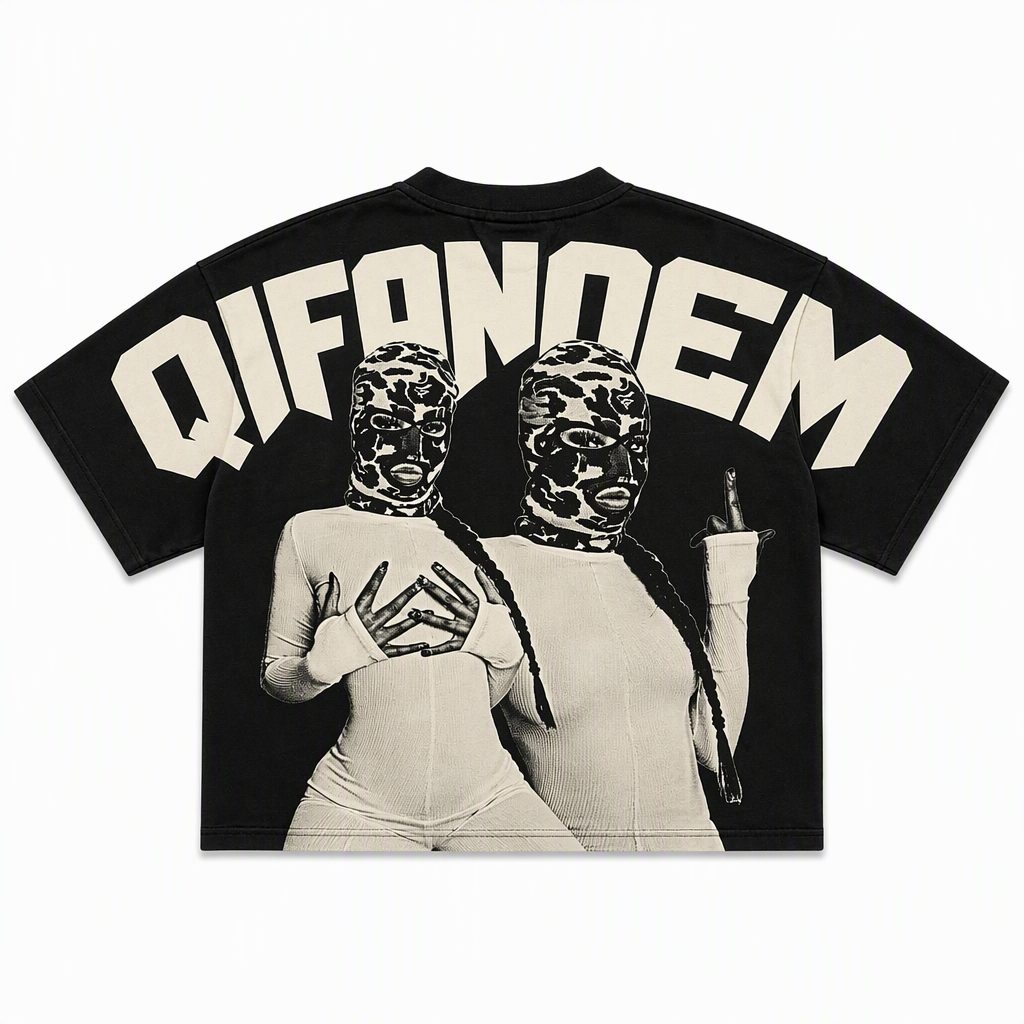
Screen printing deposits a controlled layer of ink and suits bold flat shapes, large areas of solid colour and designs with a limited number of colours. It reads crisply on heavier cotton and holds up well across a bulk run.
Direct-to-garment printing handles photographic gradients and colour-heavy artwork, and it allows short runs without screens. The trade-off is that the print sits differently on textured or darker fabrics, so a test print on the actual blank matters more than a digital preview.
Hybrid production combines a screen-printed base with a DTG layer when a design needs both a solid ground and photographic detail. It is a production decision rather than a design decision, and it should be agreed with the factory before artwork is finalised.
Embroidery suits logos, small marks and text that should read as texture rather than ink. On lighter jersey, the fabric has to support the stitch count without distorting the surrounding area, which means the right backing and a stitch plan reviewed on the actual garment.
Whichever method is chosen, ask for a wash test on the sample. A print that looks correct on the table can crack, fade or shift after the first home wash, and that is exactly what the sample approval is meant to catch.
Sizing, Placement and Colour Matching
Placement should be specified per size, not just per style. A print that sits correctly on a medium can ride too high on a small and too low on an extra large, because the body length and shoulder position change across the size range. Ask how the pattern handles print placement across sizes, and check two sizes rather than one at approval.
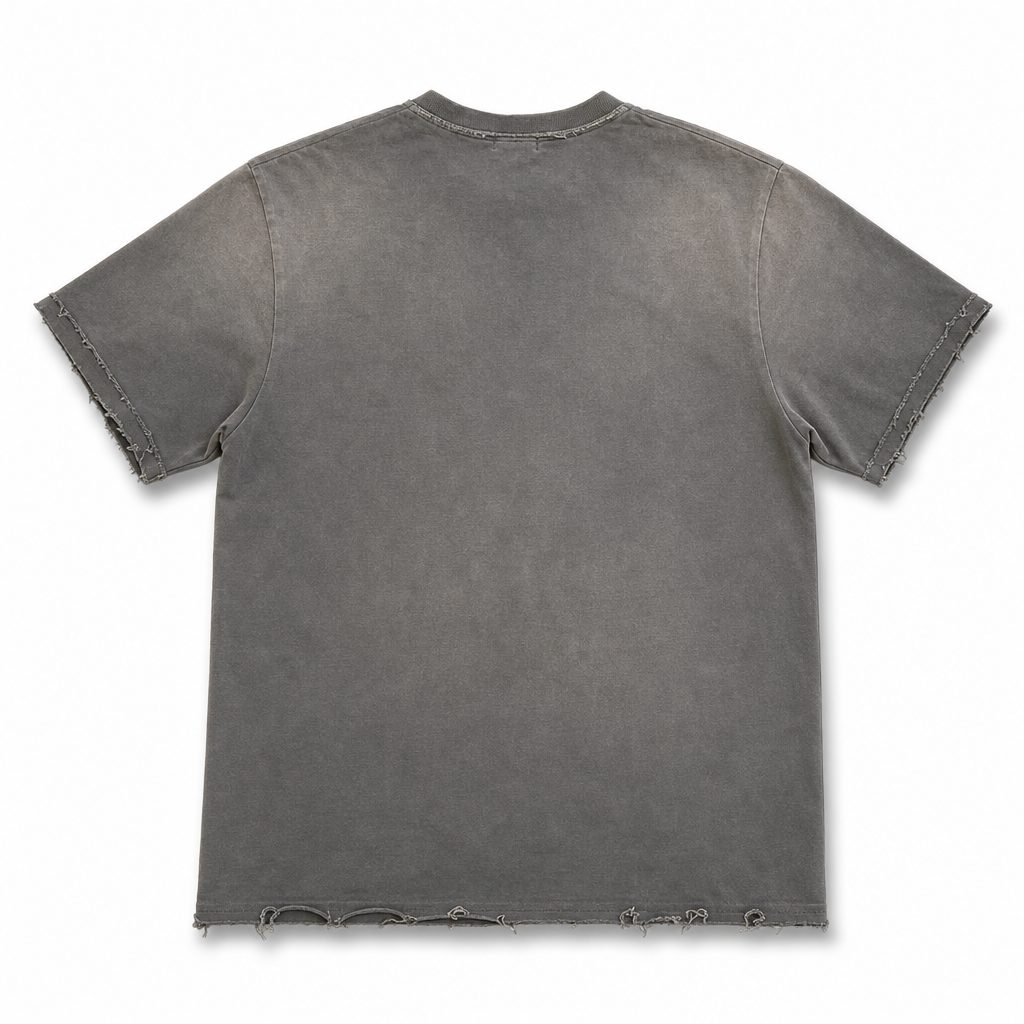
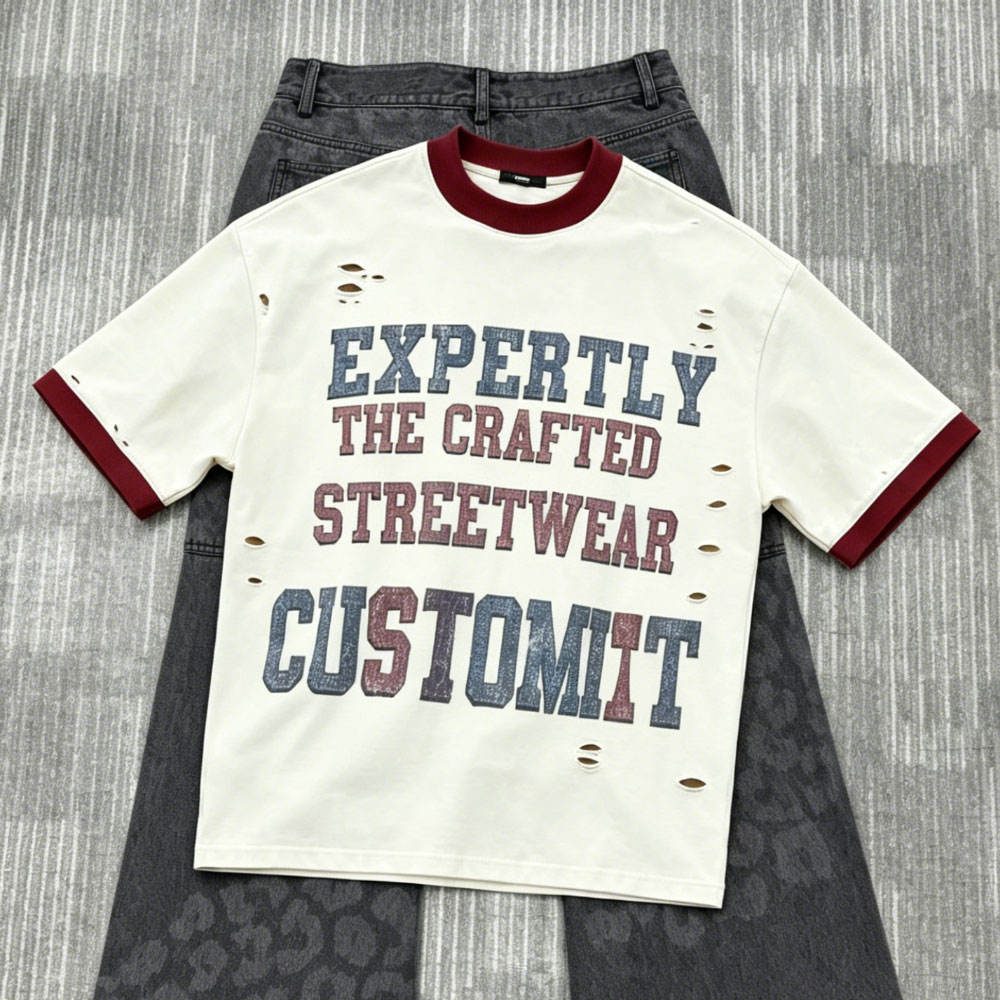
Colour matching deserves its own conversation. On dark fabrics, a light ink needs an underbase to read as intended, and that underbase changes the hand feel of the print. On washed or garment-dyed fabrics, the print sits on an uneven surface, so the ink reference and the fabric reference have to be approved together rather than separately.
Trims complete the graphic. Neck labels, hem tags and sleeve prints are often added late, and each one changes the garment's construction or its decoration sequence. Specify them with the main graphic so that the sample shows the finished product rather than a partial version of it.
If the drop includes other pieces, brands often develop matching custom accessories from the same colour references so that the range reads as one collection.
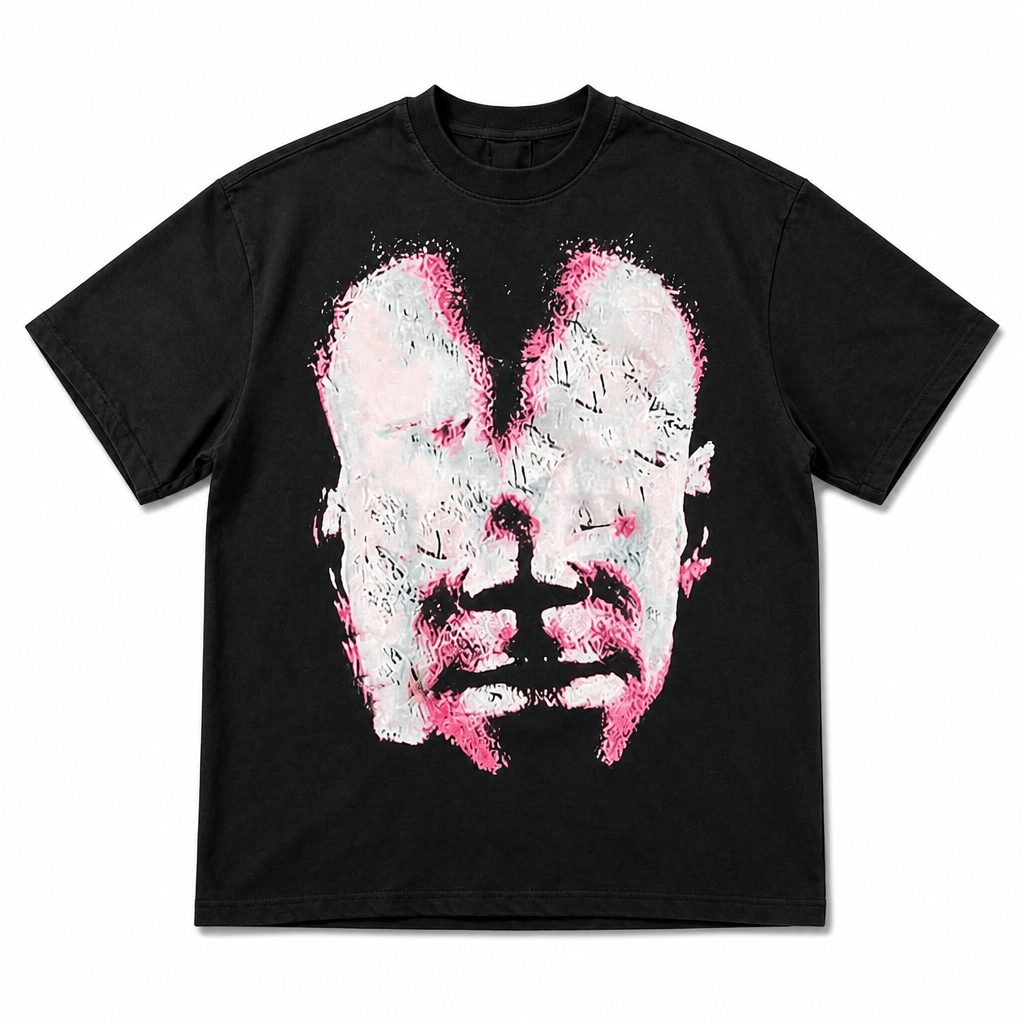
Sampling, Approval and Bulk Consistency
Sampling at INFULLSAIL is typically completed in about two weeks. The sampling fee is charged separately and quoted in advance, and an offset is only considered when the bulk volume is large enough; that position is confirmed for each project rather than promised in general terms. Once the sample is approved, bulk production usually runs three to four weeks depending on the style and the order size.
The approval should answer four questions. Does the print match the artwork in scale and position? Does the colour match the approved reference under daylight rather than office lighting? Does the print survive a wash without cracking or shifting? And does the garment itself still meet the fit and fabric specification you agreed?
The approved sample then becomes the sealed reference for production. Finished garments are reviewed against it during the run and before packing, including measurements, decoration and trims. Reorders are supported at the same standard minimum of 100 pieces per style, per color, which matters for a graphic that keeps selling. Shipping can be arranged by sea, air or land depending on your schedule and destination.
To see how development and production fit together, read our pages on manufacturing and production and fabrics and processes.
Frequently Asked Questions
What is the MOQ for custom graphic tees?
Our standard minimum is 100 pieces per style, per color, and sizes can usually be mixed within that total. We confirm how the minimum applies to your design, blank and decoration before you order.
How long does sampling take for a graphic tee?
Sampling is typically completed in about two weeks, covering the blank selection, the decoration sample and any agreed adjustment round. The sampling fee is quoted in advance.
Can the sampling fee be deducted from a bulk order?
Sampling is charged separately. An offset may be considered when the bulk volume is large enough, and the position is confirmed for your project rather than assumed before the order is placed.
What file format should I send for the artwork?
Vector files are preferred for logos, lettering and flat shapes, with spot colour references and placement dimensions. Photographic artwork is supplied at high resolution so the print detail holds at the finished size.
Can you print on washed or garment-dyed tees?
Yes. Printing on washed fabric requires the ink reference and the fabric reference to be approved together, because the surface is uneven. A wash test on the sample is part of the approval.
Do you support reorders on the same graphic?
Yes. Reorders are supported at the same standard minimum, and the approved sample and colour references from the first run stay on record so the print matches across repeat orders.
Ready to develop your graphic tee? Send INFULLSAIL your artwork, reference garment or tech pack, and our team will review the blank, decoration method and quantity requirements before preparing a tailored quotation. Request a Custom Quote