Custom Oversized T-Shirts: Fit, Fabric and Print Specs
Key Takeaways
- Oversized is a pattern decision, not a size decision: shoulder drop, body width and length are set at pattern stage, and grading up from a standard block rarely reads the same.
- Fabric weight and finish decide whether the silhouette hangs or stands away from the body, so specify weight, yarn type and wash rather than "cotton" alone.
- Artwork sized for a standard tee often looks small on a wider body; print scale and placement need to be reviewed on the oversized pattern itself.
- INFULLSAIL is a Dongguan-based OEM and ODM clothing manufacturer with more than 20 years of apparel production experience, working at a standard MOQ of 100 pieces per style, per color.
Oversized t-shirts look effortless in a lookbook and complicated on a cutting table. The silhouette depends on decisions made long before the first stitch: how far the shoulder falls, how wide the body sits, where the hem lands, and how the fabric behaves at that width. Buyers who send a photo and a size chart often receive a garment that matches the measurements but loses the proportion they were trying to buy.
This guide covers what to specify when developing a custom oversized t-shirt, the fabric choices that support the shape, and how sampling and approval keep a bulk order consistent. If you are still mapping out your first collection, our overview of custom tops is a practical starting point.
Start With the Pattern, Not the Size Chart
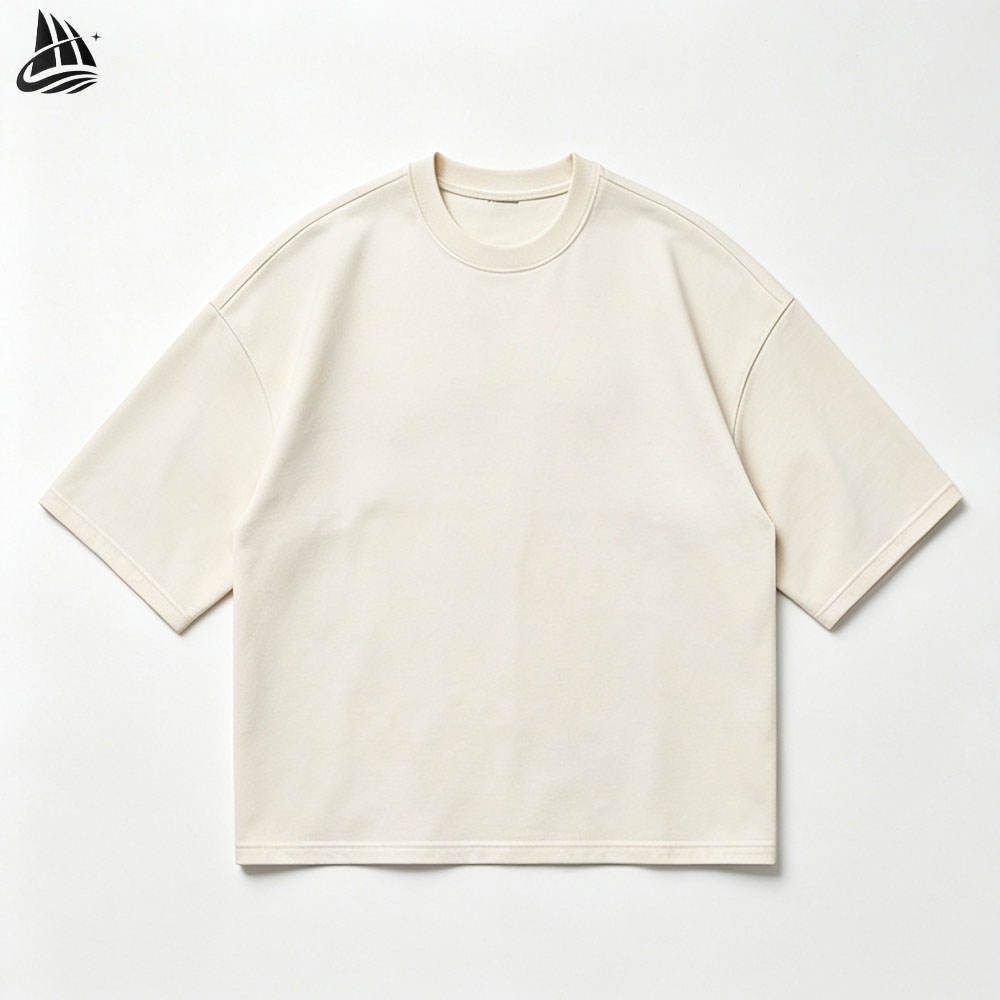
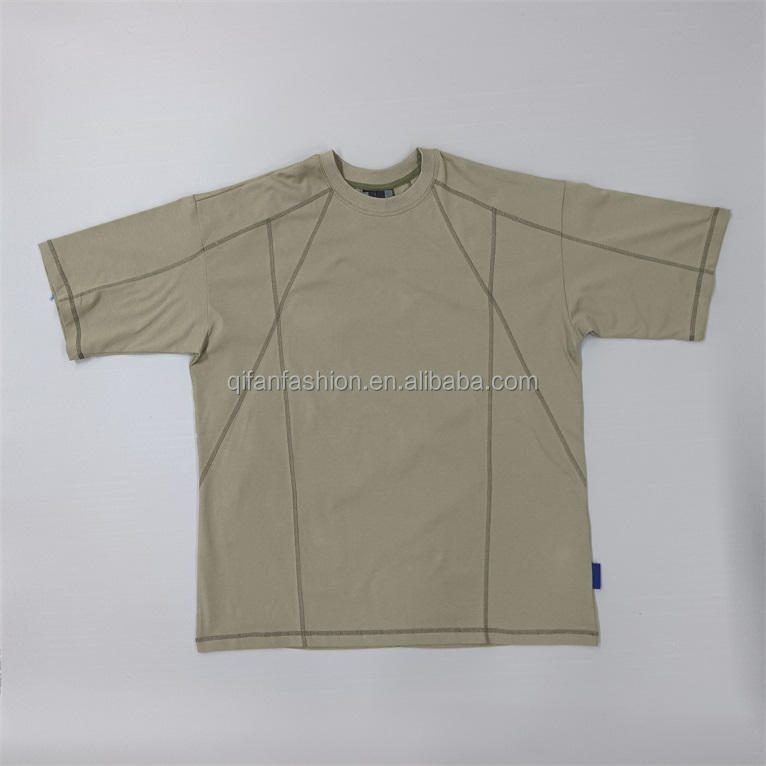
A standard tee graded up by two sizes does not become an oversized tee. When the body widens, the armhole depth, sleeve pitch, neck width and shoulder angle all need to be redrawn. Skip that step and the garment pulls across the chest, the sleeve twists forward, and the shoulder seam travels down the arm at an angle the original design never intended.
This is why two factories can quote the same measurements and deliver different proportions. A factory that develops a dedicated oversized block will treat the drop shoulder as part of the construction; a factory that grades a slim block will treat it as a measurement. The first approach costs more development time and produces the silhouette you approved.
Write the specifications as absolute measurements rather than letter sizes, so that the sample review is objective. The essentials are finished chest width, shoulder-to-shoulder including the drop, body length measured from the high point of the shoulder, sleeve length taken from the shoulder seam, and the sleeve opening width. Add the collar rib height and the hem finish, because both affect how the garment reads on a hanger and on a body.
Choosing Fabric Weight and Hand Feel
Weight sets the silhouette. A mid-weight single jersey in the 200 to 240 GSM range drapes, folds and softens with wear, which suits a relaxed everyday fit. Heavier weights above roughly 260 GSM hold a boxy shape with more structure, and they show the drop shoulder more clearly because the fabric does not collapse into the armhole. Neither is better; they simply produce different products, and the choice should be made before artwork is finalised.
Yarn type matters as much as weight. Combed or compact cotton yarn gives a cleaner, smoother surface that takes fine detail in print, while more open yarn structures produce a rougher surface with a vintage character that appeals to streetwear and washed finishes. If your design depends on a faded look, ask how the wash affects the fabric surface before you approve a swatch, since a wash that suits one yarn can leave another looking uneven.
Fabric shrinkage deserves a direct question. Ask whether the fabric is compacted or pre-shrunk, and how much shrinkage is expected after the first wash. A garment that starts on-size and moves after the customer washes it at home is a return waiting to happen, and the fix belongs at fabric selection, not after cutting. Record the approved hand feel against the sample so that a reorder years later can be compared with something physical.
Fit Details Buyers Often Miss
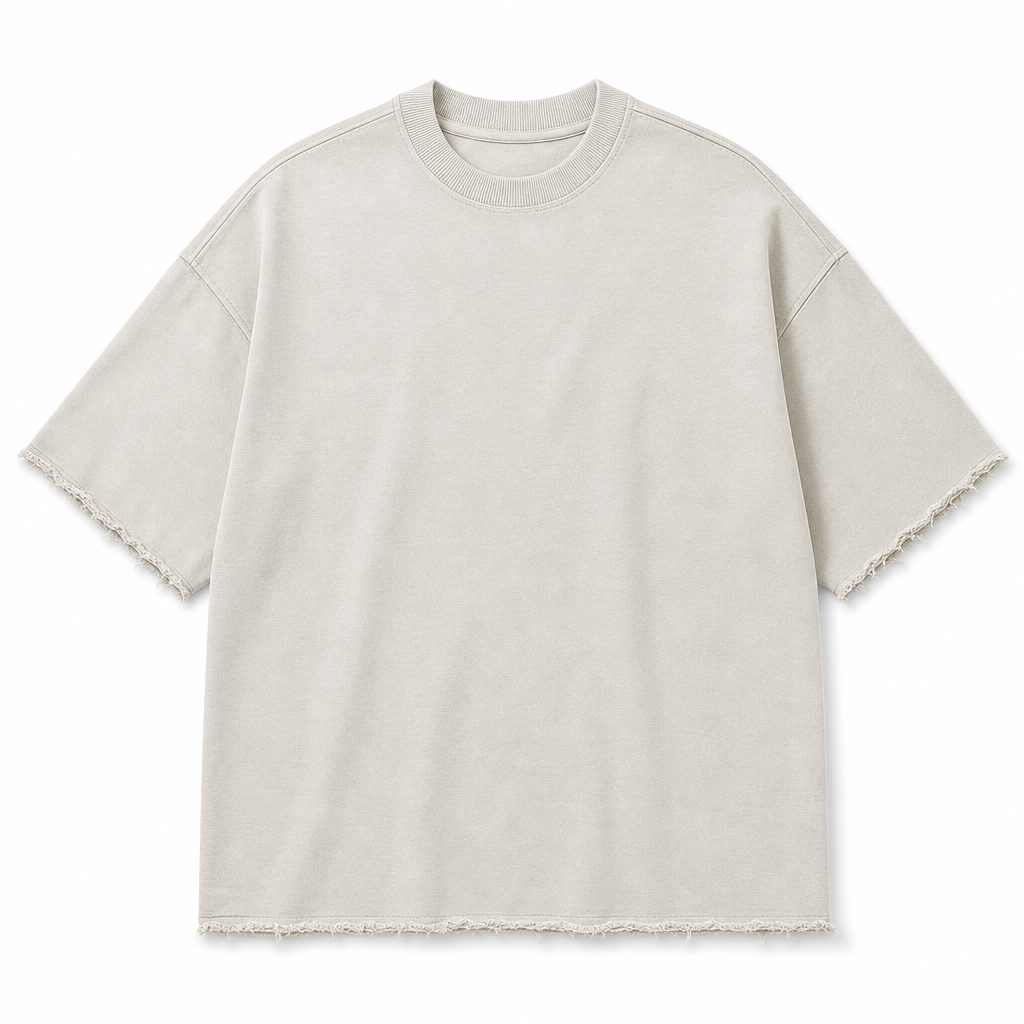
The collar. On an oversized body, a narrow collar looks fragile and a wide one can look heavy. Confirm the finished rib height and whether a neck tape is used, since the neckline is the first place a heavier garment distorts.
The sleeve. A drop shoulder sleeve is cut wider than a set-in sleeve, so the sleeve opening and the sleeve length cannot be copied from a standard pattern. Specify both, and check them on a live fitting rather than on a flat lay, because the fabric behaves differently when it hangs.
The hem. A straight hem with a twin-needle finish reads clean and industrial; a curved hem with side vents reads softer and moves more. Hem width also changes how the body length appears, so review the finished length after the hem is attached, not before.
The shoulder line. Ask how the drop was measured. "Shoulder to shoulder" can mean the pattern width or the visible seam position, and the two differ by several centimetres once the shoulder falls.
Print and Decoration Placement
Artwork approved on a standard tee rarely works unchanged on an oversized body. A back print that fills the upper back on a regular fit can look small once the body is wider, and a chest logo may sit too close to the collar. Scale the artwork against the oversized pattern, then confirm placement relative to the collar and the side seams rather than to the centre of the garment.
Sometimes the decoration method itself should follow the fabric. Screen printing deposits a controlled layer of ink and suits bold, flat shapes. Direct-to-garment printing handles photographic detail and short runs of colour-heavy artwork. Hybrid production combines both when a design needs photographic detail on top of a solid base. On heavier, more textured surfaces, a print sits on the surface of the fabric, so a wash test before approval is worth more than a screen preview.
Embroidery needs its own consideration on a lighter jersey: the fabric has to support the stitch count without distorting the area around it, which usually means the right backing and a stitch plan reviewed on the actual garment. If your drop pairs tees with other pieces, brands often develop matching custom accessories such as caps and bags from the same colour references, so the collection reads as one range.
Sampling, Approval and Bulk Consistency
Sampling at INFULLSAIL is typically completed in about two weeks. The sampling fee is charged separately and quoted in advance, and an offset is only considered when the bulk volume is large enough; that position is confirmed for each project rather than promised in general terms. Once the sample is approved, bulk production usually runs three to four weeks depending on the style and the order size.
The approved sample becomes the sealed reference for the run. That means the fabric, the measurements, the print or embroidery and the trims are all compared back to one physical garment during production, rather than to a description. For oversized styles this matters more than for fitted ones, because a small change in body width or shoulder drop is far more visible.
Before packing, finished garments are reviewed against that reference, including measurement checks and a visual review of the decoration. If your order includes a reorder plan, confirm it early: repeat orders are supported at the same standard minimum of 100 pieces per style, per color, which keeps a sell-out style moving without a new development cycle. Shipping can be arranged by sea, air or land depending on your schedule and destination.
To see how development and production fit together, read our pages on manufacturing and production and fabrics and processes. If your drop pairs the tee with other pieces, the same colour references can be carried across to matching bottoms so the range reads as one collection.
Frequently Asked Questions
What is the MOQ for custom oversized t-shirts?
Our standard minimum is 100 pieces per style, per color, and sizes can usually be mixed within that total. We confirm how the minimum applies to your specific design and fabric before you order.
How long does sampling take for an oversized t-shirt?
Sampling is typically completed in about two weeks, which includes the pattern development, the fit sample and any adjustment round agreed with you. The sampling fee is quoted in advance.
Can the sampling fee be deducted from a bulk order?
Sampling is charged separately. An offset may be considered when the bulk volume is large enough, and the position is confirmed for your project rather than assumed before the order is placed.
How long does bulk production take after approval?
Bulk production usually runs three to four weeks after sample approval, depending on the style, the fabric and the order size. Decoration such as printing or embroidery is included in that schedule.
Can you develop the oversized fit from a reference garment?
Yes. A reference garment, a sketch or a tech pack with measurements is enough to start. We work from finished measurements, so the more precisely you can describe the shoulder drop, chest width and length, the closer the first sample will be.
Do you support reorders on the same style?
Yes. Reorders are supported at the same standard minimum, and the approved sample from the first run stays as the reference so that the fit and finish remain consistent across repeat orders.
Ready to develop your oversized tee? Send INFULLSAIL your design, reference garment or tech pack, and our team will review the fabric, silhouette and quantity requirements before preparing a tailored quotation. Request a Custom Quote