Custom Screen Printing Manufacturer: A Streetwear Guide
Screen printing is often the first decoration decision a streetwear brand makes, and the one buyers judge fastest. A tee can be cut well and fit well, but if the print cracks after three washes, or the puff collapses on the shoulder, the customer remembers the defect and not the design. Print programmes also run against tight launch calendars: artwork that arrives late, or a sample loop that needs three rounds, puts a drop out of season.
This guide is for brand owners and product managers sourcing custom screen printing: what the process involves, which decisions belong to you, and which checks keep a print run sellable instead of returnable.
Quick answer: custom screen printing manufacturing means the printer separates your artwork, builds and approves screens, prints a sample on the fabric you will actually produce in, then runs bulk to that approved sample. MOQ for these programmes is 100 pieces per style, per color, with sampling typically completed in one to two weeks and bulk production running three to four weeks after sample approval.
Key Takeaways
- A print is a specification, not a preference list. Ink system, mesh, deposit thickness, curing temperature and placement combine to produce the result you approve.
- Artwork separation decides how sharp and how repeatable a print can be, and it happens before anyone touches a screen.
- Print type should be chosen by how the garment will be worn and washed, not only by how it looks on day one.
- Print durability is measurable. Colour fastness to laundering is assessed using methods such as ISO 105-C06 (2010), and colour fastness to rubbing with ISO 105-X12 (2016).
- INFULLSAIL is a Dongguan-based OEM and ODM clothing manufacturer with more than 20 years of apparel experience, printing streetwear at an MOQ of 100 pieces per style, per color, so you can test a design without committing to a season of inventory.
What a Custom Screen Printing Manufacturer Does for Your Brand
Custom printing starts from your artwork and ends with printed garments packed for your market. In between, the work is artwork separation, screen making, print sampling on the production fabric, bulk printing, curing and drying, quality checks, then finishing, packing and shipping as part of the same production plan.
Where brands lose time is at the joins between suppliers. If the garment is made by one company and printed by another, your shirts travel, get counted and get scheduled twice — and if the print run fails a check, nobody owns the fix.
Running print inside the same production programme means the print schedule is built against the garment schedule, so a delay in cutting does not silently push your print slot into the following month. It also means one contact confirms fabric, fit, placement and delivery on one timeline. Our Manufacturing and Production page sets out how those stages fit together.

Artwork and Separation: The Step That Decides Print Quality
Before a screen exists, your artwork has to be separated into printable layers: one screen per colour under standard screen printing, with halftones and trapping planned around the mesh and the ink you have chosen. What this means for your product:
- Fine gradients and photographic detail need halftone separations matched to a mesh that can hold them. A design that prints crisply on paper often needs adjusting for knit fabric.
- Colour count drives cost and registration risk. Every added colour is another screen and another chance for a layer to shift, so simplifying a design frequently makes it print better and cost less.
- Thin lines and small text can close up and fill in on textured fabric. Sizing strokes to suit the garment surface prevents a print that looks dirty at arm's length.
- Placement must respect seams, pockets and fabric grain, so the print sits straight once the garment is worn rather than only when it is flat on a table.
Send vector artwork where you can (AI, EPS, PDF or SVG). If you only have a raster file, the printer has to rebuild it, and you should approve that rebuilt version before screens are made. Approving a file costs you an email; reprinting a run costs you a drop.
Artwork cannot be planned in isolation from the fabric: surface texture, weight and base colour all change how an ink reads, so the fabric decision usually comes first. Our page on Fabrics and Processes explains which fabric choices affect decoration.
Ink and Print Type: Choosing by How the Garment Will Be Worn
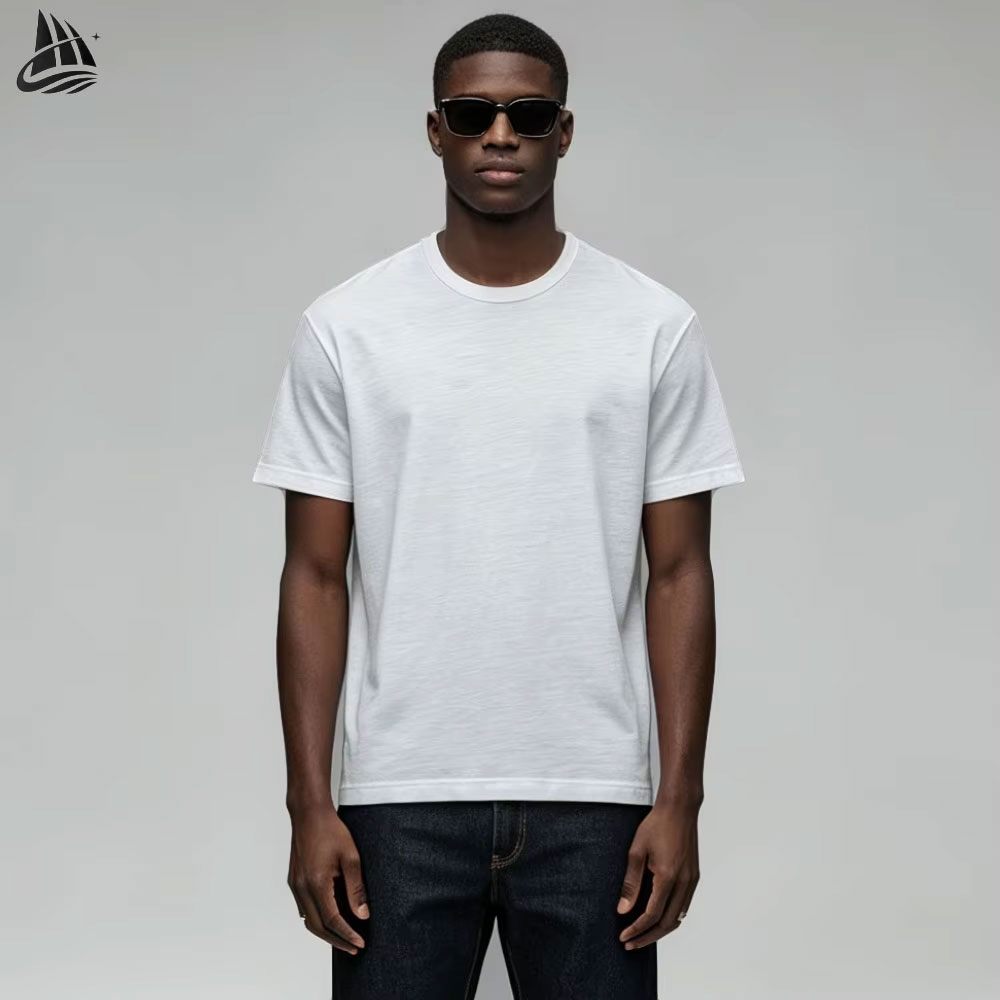
Ink choice is where print programmes are made or regretted. The options that come up most often in streetwear work:
- Plastisol. Opaque and forgiving, easy to match against a Pantone reference, and it prints well on dark garments. It sits on the surface of the fabric, so the hand feel is heavier.
- Water-based. Soaks into the fabric, so the print feels like part of the garment and ages softly. It needs careful colour matching on dark shirts and a well-controlled curing process.
- Discharge. Removes dye from the fabric and replaces it with pigment, leaving no raised layer at all. It only works on dischargeable dyes, which is a fabric requirement rather than a printing choice.
- Puff and high-density. Raise the print off the surface, a signature streetwear look. Height and edge crispness are process-controlled, so they have to be fixed in the approved sample rather than described.
Choose with the end use in mind. A print on a heavyweight tee worn as outerwear can carry a thicker deposit. A print on a light base layer, or on a garment a customer will wash weekly, has to survive laundering without cracking, flaking, bleeding or transferring colour onto other clothes.
That is why durability is a specification question and not a matter of opinion. Colour fastness to laundering is assessed using methods such as ISO 105-C06 (2010), and colour fastness to rubbing using ISO 105-X12 (2016), which gives you a standard way to compare what you approved with what you will sell.
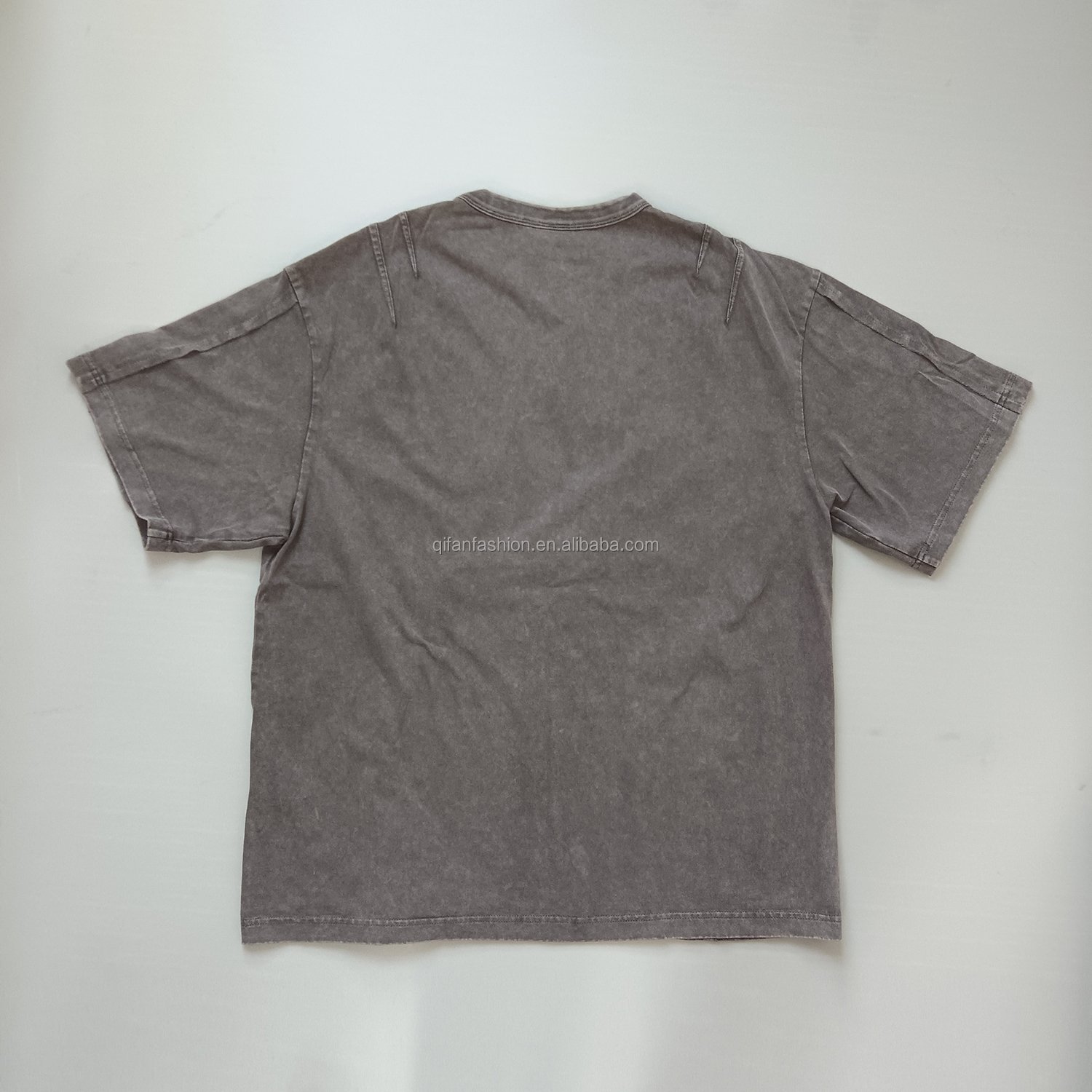
For washed and vintage styles, printing and finishing also interact: a garment washed after printing can lose print tone, while a print applied after washing sits on the final surface. Our page on Retro Clothing Manufacturing Solutions covers how washed finishes are sequenced with decoration.
Placement, Scale and Colour Consistency Across a Size Run
Two printed pieces of the same size should look identical, and the same print should look right from extra small to extra large. Both are planning problems, not luck.
Placement and scale. Decide placement by measurement rather than by eye: distance from the collar seam, the centre line and the hem. Then decide whether the print scales with the garment or stays at a fixed width across the range. A fixed-width chest logo that reads well on a medium can look undersized on a 3XL, while scaling without a rule can push the print past the side seams. Agree the rule in the tech pack and it holds for the whole run and for reorders.
Registration. Multi-colour prints depend on screens landing in the same position print after print. State a registration tolerance and check it on the approved sample, so you and the printer judge the same thing instead of arguing about a millimetre.
Colour matching. Pantone references are the normal way to specify print colour, but ink on fabric is not ink on paper. Approving colour on the actual production fabric, in the actual ink system, is what prevents a surprise on dark garments where the base shifts the tone. This is where a pre-production print sample earns its cost: it is your last inexpensive chance to change a decision.
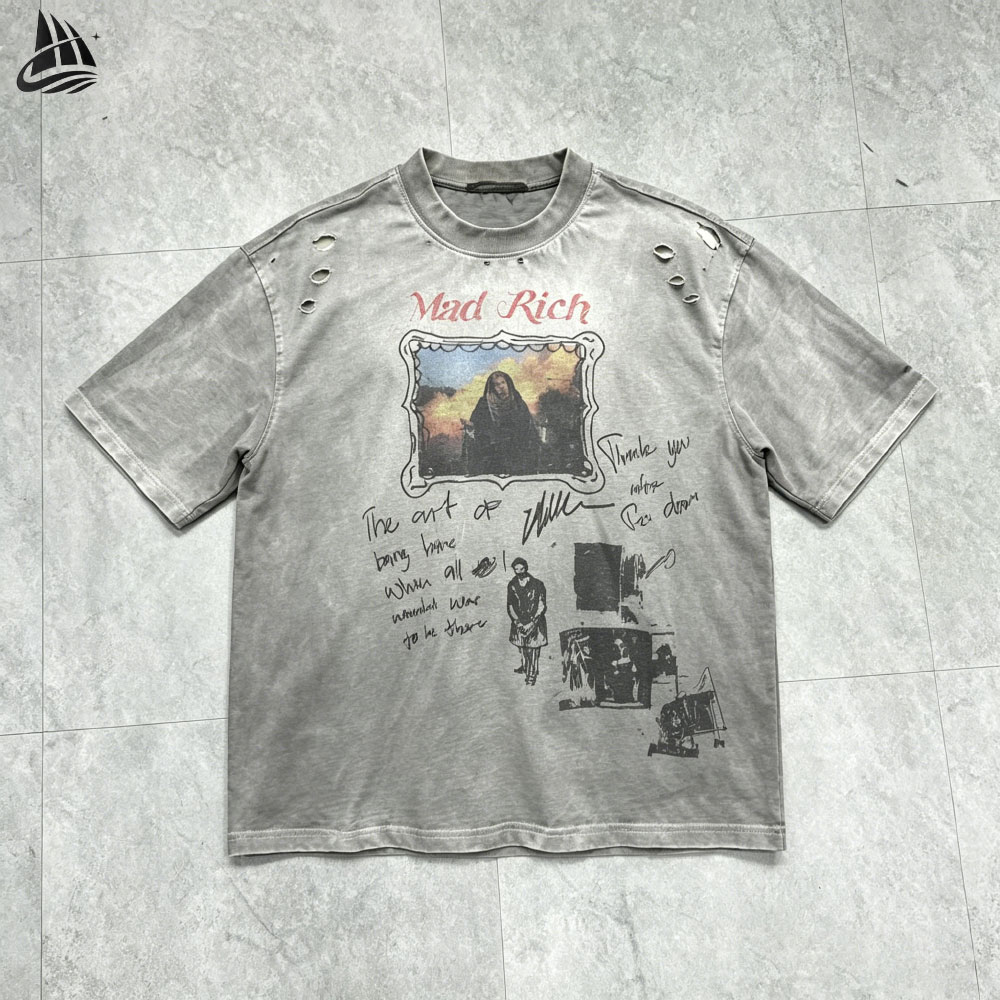
From Print Sample to Bulk: Quality Control That Protects Your Drop
The approved print sample is the reference for the entire order, so review it the way a customer will: in daylight, against the artwork, folded and stretched at the print edge, with placement checked by tape measure rather than impression.
Then hold bulk to that standard with checks that matter for printed garments:
- Print sample sign-off recorded against the production fabric, ink system and colour reference.
- Placement and measurement checks, using the agreed positions and tolerances across the size range.
- Registration checks on multi-colour designs, since misalignment is the defect customers spot first.
- Cure control. Under-cured ink can wash out or crack later; over-cured ink can stiffen and discolour. Curing parameters belong in the specification, not in a technician's memory.
- Wash and rub checks against the approved sample for programmes where durability drives returns.
- Final inspection before packing, covering print defects, trims, labelling and packing method.
Agree in writing how you will be told if something goes wrong mid-run, and how it will be corrected. A printer who flags a registration problem at 300 pieces saves you an entire order and a missed drop.
At INFULLSAIL, sampling is a paid step and the fee is quoted clearly in advance, so nothing is added to the invoice later. Samples are typically completed within one to two weeks. Bulk production typically runs three to four weeks after sample approval, depending on the style and the quantity. The standard MOQ is 100 pieces per style, per color, and smaller trial orders can be discussed case by case depending on the style and the processes involved. Reorders run at the same minimum, and your approved specification stays on file so a repeat run does not restart from artwork. We ship worldwide by sea, air or land, and quotations set out the production schedule and shipping options so you can plan a drop date with confidence.
FAQ
What is the minimum order quantity for custom screen printing?
The standard MOQ is 100 pieces per style, per color. Lower-volume trial orders can be discussed case by case depending on the style and the processes involved, so it is worth sending your project details even if your first run is small.
How long does a print sample take?
Sampling is typically completed within one to two weeks, and the sampling fee is quoted clearly in advance. Bulk production typically runs three to four weeks after sample approval, depending on the print type, the number of colours and the order quantity.
Can you print on garments made somewhere else?
We build the garment and the print as one programme, which is how placement, fabric and print specification stay consistent. Send your project details and we will confirm what is possible in your case.
Which print type suits a washed, vintage look?
Water-based and discharge prints give a softer, worn-in surface, while plastisol gives sharper opacity on dark fabric. Because washing after printing can shift print tone, printing and finishing are sequenced deliberately within the same programme rather than treated as separate jobs.
Can you match a Pantone colour?
Yes. Ink is matched to your Pantone reference, then approved on the actual production fabric, because ink behaviour changes with fabric, base colour and ink system. The approved sample becomes the colour reference for the bulk run.
Get a Custom Screen Printing Quotation
Send us what you have — your artwork file, the garment style and fabric, print placement and size, your colour references, your size range and the market you are selling in — and we will reply within one business day with a development plan and a clear quotation, including the sampling cost up front. Share your project through our contact page and we will take it from there.