Custom Workwear Jackets: Duck Canvas and Reinforcement Details
Workwear jackets have moved from the job site to the street, and that shift created a problem for buyers: a jacket has to look like it can take abuse without actually being heavy enough to wear every day. Duck canvas and a hooded work block are usually the starting point, but the piece that survives a bulk run is the one where the reinforcement details were specified, not improvised.
This guide covers the fabric decisions, the jacket blocks worth developing, and the construction points that decide whether a workwear jacket reads as authentic or as a costume.
Key Takeaways
- Duck canvas gives workwear its structure and its ageing; the weight you choose decides whether the jacket stands up or drapes.
- The three blocks that cover most streetwear workwear drops are the chore coat, the hooded work jacket, and the overshirt.
- Bar-tacks, rivets, and triple stitching at stress points are what separate a workwear jacket from a jacket styled to look like one.
- Hardware and lining choices affect wash results, so they belong in the tech pack, not in the sample room's discretion.
- Standard minimum is 100 pieces per style, per color, with sizes mixable inside a color. Sampling is quoted per style and typically runs 2–3 weeks.
Why Duck Canvas Still Sets the Standard
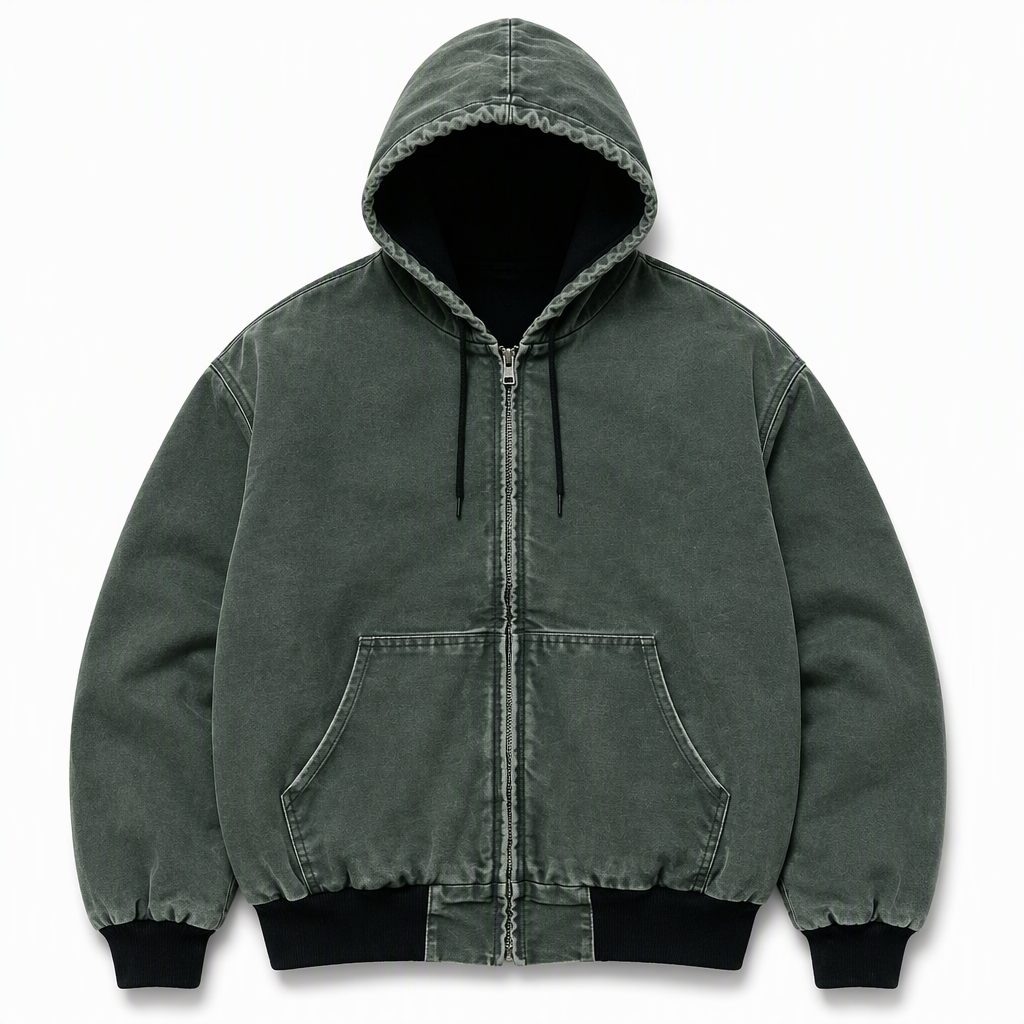
Duck canvas is a plain-woven cotton fabric with a firm hand and a visible weave. It holds a shape, takes a wash, and develops a patina where it creases — which is exactly what a workwear-inspired piece needs in order to look worn-in rather than flat.
The practical question is weight. Heavier canvas gives a boxy, protective silhouette and holds structured details such as a chest pocket flap or a reinforced elbow. Lighter canvas drapes closer to a shirt jacket and feels easier to wear in a streetwear context, but it also shows every construction shortcut. When the fabric is thin, an uneven stitch line or a misplaced bar-tack is visible from a metre away.
Three specification points matter more than the exact weight number:
- Shrinkage — canvas moves in the wash. If the shell shrinks and the lining does not, the jacket pulls at the shoulders and shortens in the body. Confirm whether the fabric is pre-shrunk or whether the garment is washed after making.
- Colour depth after washing — a garment-dyed or washed canvas loses depth at the seams. That can be a feature, but only if it is planned and consistent across the run.
- Surface treatment — a raw canvas softens quickly, while a coated or waxed canvas keeps its character but changes the care instructions and the way the piece ages.
Our fabric and washing processes page explains how wash programmes are matched to a fabric lot, which is the detail that keeps a canvas jacket consistent between the first run and the reorder.
Three Jacket Blocks Worth Developing
Most streetwear workwear programmes are built on one of three blocks. Each has a different cost profile and a different way of failing.
The chore coat is the simplest and the most versatile: a straight body, three patch pockets, a button front, and a collar that sits flat. It is forgiving to fit, cheap to produce relative to its perceived value, and it takes embroidery and screen print well. Its weakness is that a plain chore coat can look generic, so the differentiation usually has to come from fabric, wash, or pocket layout rather than from construction.
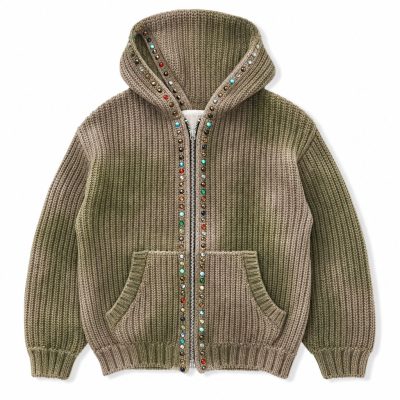
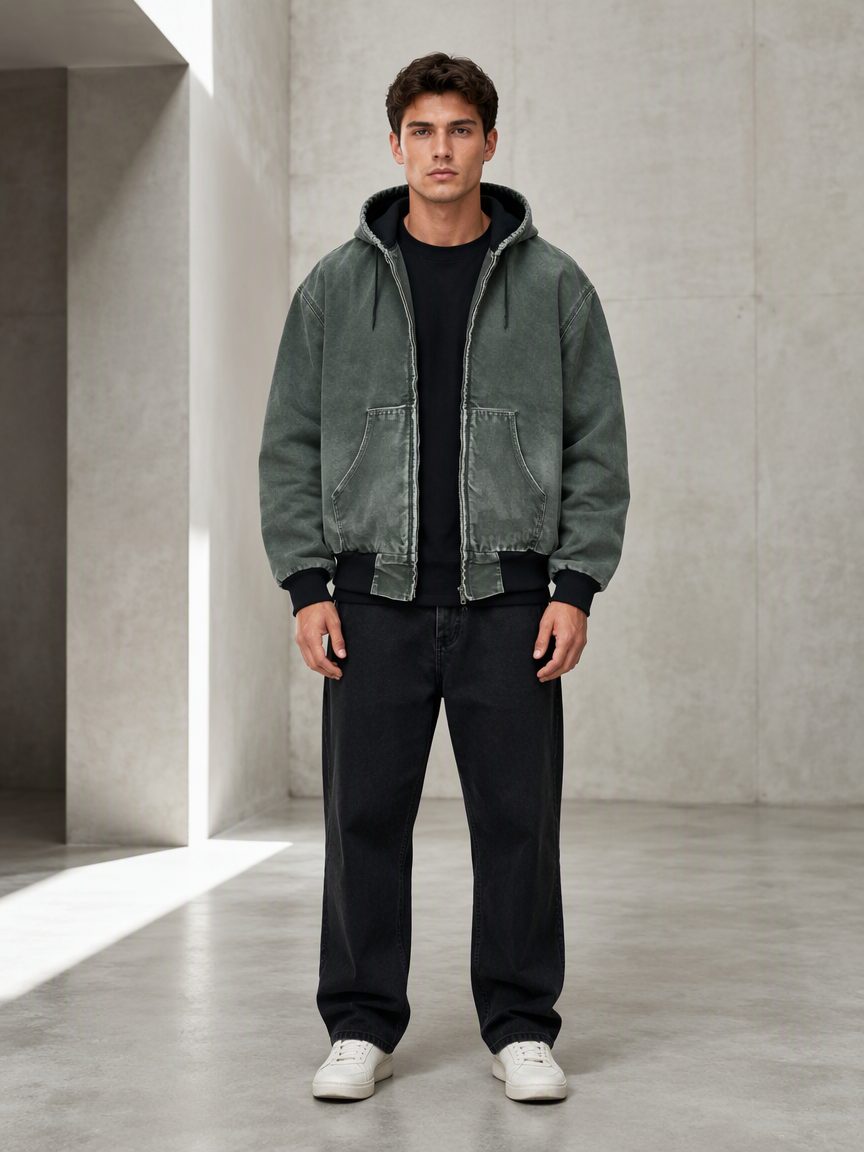
The hooded work jacket adds a hood, a zip or snap front, and usually a drawcord at the hem. It reads more technical and suits heavier canvas. This block is where most bulk problems appear, because the hood, the front closure, and the pockets all compete for the same body panel — and because a lined hood has to be turned and topstitched consistently.
The overshirt sits between a shirt and a jacket: lighter fabric, shirt collar, patch or welt pockets, and a straighter hem. It is the easiest block for warm-weather markets and the easiest to layer. The trade-off is that an overshirt carries less visual weight, so the detailing has to be sharper to justify a premium price.
Once the block is chosen, the specification should lock the body length, the shoulder drop, and the sleeve opening, because those three measurements decide whether the jacket layers over a hoodie — the single most common fit complaint on workwear styles.
Reinforcement: Bar-Tacks, Rivets and Triple Stitching
This is the part buyers ask for and rarely specify precisely, and it is the part that decides whether the garment survives wear.
- Bar-tacks at pocket corners — the highest-stress point on any patch pocket. Specify the tack length and the thread so the corners match across the run.
- Triple stitching on side seams — a visible marker of workwear construction. It has to be even, and it has to be pressed flat, or the seam reads as bulky rather than built.
- Rivets or reinforced stitching at pocket mouths — rivets add authenticity but create a wash and packing risk; heavy stitching is the safer option for a softer streetwear read.
- Elbow and cuff reinforcement — a second layer or a bartacked panel. Useful on heavy canvas, unnecessary weight on an overshirt.
- Hanging loop and inside pocket — small details that customers notice, and the ones most often missing from a tech pack.
The rule that keeps these details consistent is simple: every reinforcement gets a photo, a placement note, and a thread specification in the tech pack. "Add workwear stitching" produces whatever the sample room interprets that day, and interpretations do not repeat across a hundred pieces. The manufacturing and production workflow treats these as line items for the same reason.
Hardware, Linings and Wash
Hardware is where a workwear jacket either feels considered or feels assembled. Metal snaps, two-way zips, and heavier pulls all read as authentic, but each one has to be tested against the wash the garment will receive. A snap that tarnishes in a garment wash is a visible defect on a dark canvas shell.
Linings deserve the same attention. A quilted lining adds warmth and structure and suits a hooded work jacket; an unlined or half-lined body keeps the piece lighter and lets the canvas age against the wearer. Whatever the choice, the lining has to be pre-treated for shrinkage in the same way as the shell, and the sleeve lining has to be long enough that it does not pull when the arm bends.
Wash planning closes the loop. If the jacket will be garment washed, the hardware, the labels, and the lining all have to tolerate that process. If it will not be washed, the canvas has to be pre-shrunk or the fit will change after the first home wash. Deciding this after the sample is approved is the most expensive way to discover it.
Sample Approval and Bulk Checks
A workwear jacket sample should be reviewed the way a customer will use it.
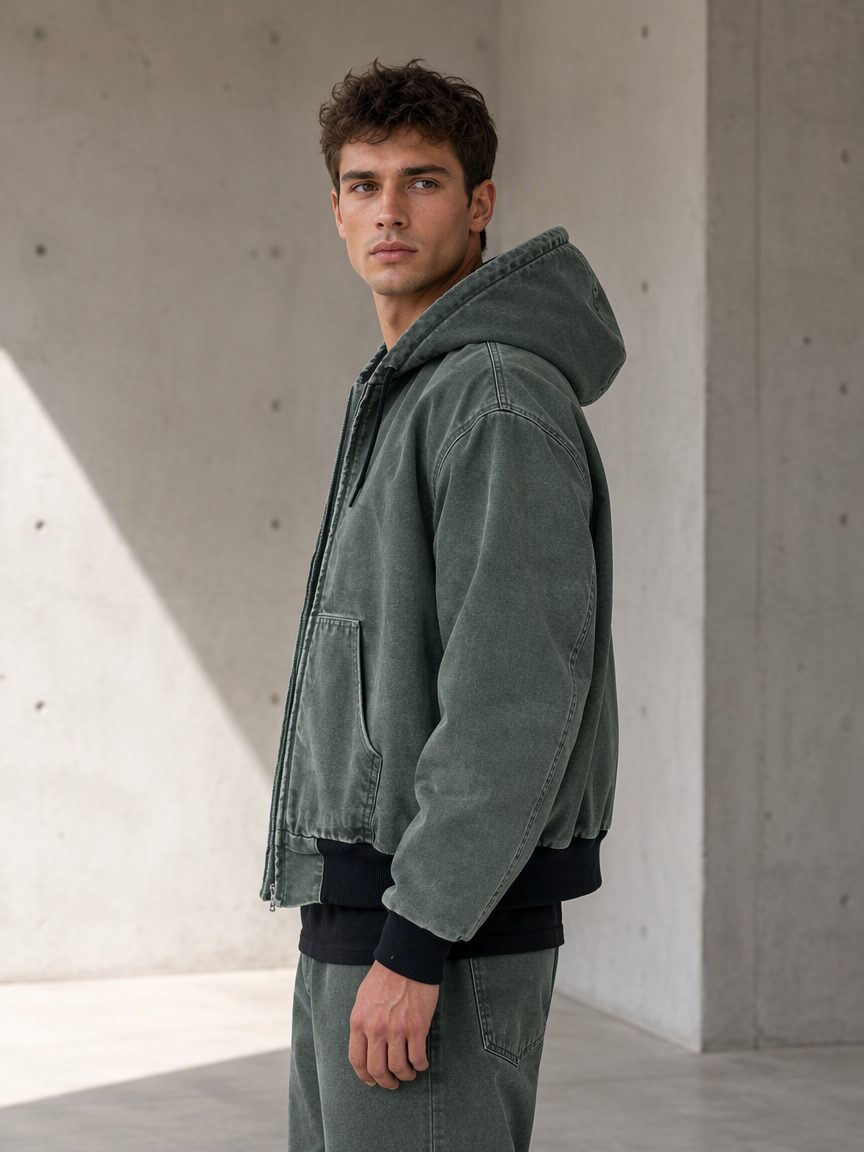
- Wear it over a hoodie and check the shoulder and sleeve opening
- Open and close every closure ten times
- Load the pockets and look at how the panel reacts
- Wash the sample and compare the body length and sleeve length with the approved measurements
- Photograph the inside: seam finishing, lining join, and label placement
At bulk, compare a piece from the first bundle with one from the last. Measure body length, chest, and sleeve; check that bar-tacks sit at the same height on both pockets; and confirm that hardware finish is consistent. These checks catch the drift that a final inspection at the end of the run cannot fix.
The streetwear side of the range, including tees, hoodies, and tops, is covered under custom tops manufacturing.
Timeline. Sampling is quoted per style and typically takes 2–3 weeks. Bulk production for around 100 pieces usually runs about 3 weeks after sample approval, depending on the requirements and the factory schedule at that moment. Sampling fees are quoted separately, and can only be offset against bulk when the bulk volume is large enough, which is confirmed at quotation. International shipping is arranged by sea, air, or land.
To quote accurately, send reference photos of the block you want, your measurement chart, the canvas weight and finish you have in mind, and the reinforcement details that matter to you. Both OEM and ODM development are supported from our Dongguan facility.
Frequently Asked Questions
What fabric is used for custom workwear jackets?
Duck canvas is the most common choice because it holds shape and ages well. Cotton twill, denim, and canvas blends are also used depending on whether the piece should read as heavy workwear or as a lighter shirt jacket.
Which workwear block should a new brand start with?
A chore coat is the easiest starting point: forgiving fit, simple construction, and good print and embroidery area. A hooded work jacket adds more detail and more production risk, so it usually makes sense as a second style.
What reinforcements should be specified?
At minimum, bar-tacks at pocket corners, reinforced stitching at the pocket mouths, and consistent topstitching on the front placket. Triple stitching on side seams is optional and depends on how technical the piece should look.
Can the jacket be garment washed?
Yes, provided the hardware, lining, and labels are specified to tolerate the wash. Wash planning has to happen before sample approval, because a wash can change body and sleeve length.
How do I avoid fit problems when layering?
Lock the shoulder drop, body length, and sleeve opening against the layer the customer will wear underneath. Approving the sample over a hoodie rather than over a t-shirt catches most layering complaints before bulk.
What is the minimum order for workwear jackets?
100 pieces per style, per color, with sizes mixable inside a color. Smaller trial runs can be discussed case by case depending on the style and construction.
How long does sampling take?
Sampling is quoted per style and typically takes 2–3 weeks. Additional reinforcement details, custom hardware, or a wash development programme can extend that window.
Next step. Send the block you want, your measurement chart, and the canvas direction, and you will get a quotation with a sampling plan. Contact our team and you will get a reply within one working day.