Custom Zip-Up Hoodies: Zippers, Panels and Fabric Weight
Key Takeaways
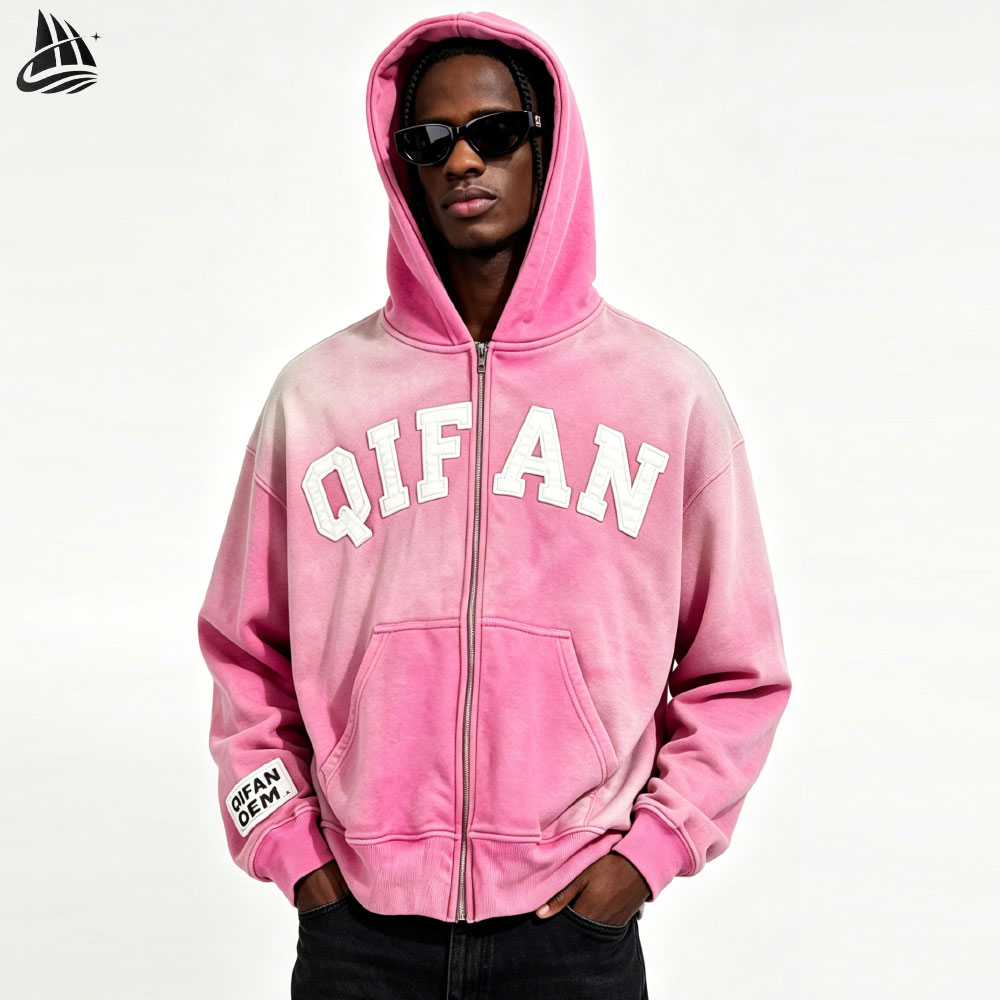
- A zip-up hoodie is engineered around one component: the zipper decides how the front panel is cut, how the garment hangs and how it fits when worn open.
- Fabric weight and body structure should be chosen together, because a heavy fleece and a lightweight terry suit different zipper types and different fits.
- Panel construction, pocket shape and ribbing are where a sample either looks intentional or looks assembled from standard parts.
- INFULLSAIL is a Dongguan-based OEM and ODM clothing manufacturer with more than 20 years of apparel production experience, working at a standard MOQ of 100 pieces per style, per color.
A hoodie without a zipper hides its construction. A zip-up hoodie shows all of it. The moment a front opening is added, the fabric has to behave the same on both sides of that opening, the zipper has to sit flat after washing, and the front panels have to match across the length of the garment. Buyers who treat the zip as a detail rather than a starting point usually discover the problem on the first bulk delivery.
This guide covers what to specify when developing a custom zip-up hoodie: fabric weight, zipper selection, panel construction, fit details, and how sampling approval keeps a bulk order consistent. If you are still mapping out the collection, our overview of custom tops is a practical starting point.
Why the Zipper Changes the Whole Garment
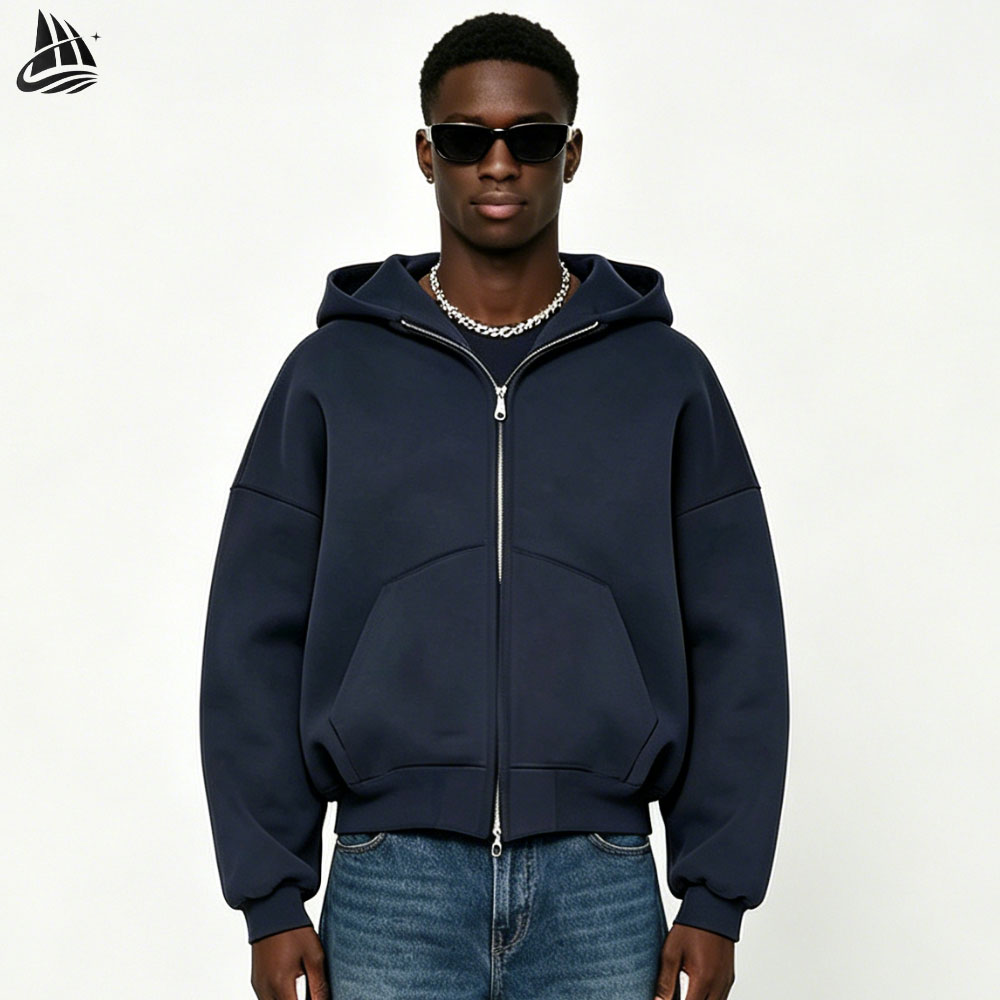
On a pullover, the front is one piece of fabric. On a zip-up, it becomes two panels plus a placket, and every one of those elements introduces tolerance. If the left and right panels are cut from different parts of a fabric roll, or cut across the grain instead of along it, the two halves behave differently after washing — one side twists, the other stays flat, and the front opening pulls apart at the bottom.
That is why the zipper decision belongs at pattern stage, not at the trim order stage. The zipper tape width determines how much fabric the placket needs, the zipper type determines the finished weight of the front opening, and the way the zipper is attached determines whether the garment lies flat when fully zipped. A factory that develops the zip pattern together with the body pattern will treat all three as one problem.
The same logic applies to the hood itself. A full-zip hood needs a hood that closes correctly when the front is open and sits back on the shoulders when worn up. The hood shape, the neckline depth and the length of the zipper all interact, and they should be reviewed on a fitting, not on a flat drawing.
Fabric Weight and Body Structure
Weight sets what the zipper has to hold. A mid-weight fleece or french terry in the 280 to 340 GSM range holds a structured front opening and takes a metal or quality nylon zipper without the tape distorting. Lighter terry and jersey weights above roughly 220 GSM drape more softly, which suits a slimmer zip hoodie and a lighter zipper, but they demand tighter control over the placket because there is less fabric to support the opening.
Yarn and finish matter as much as weight. Brushed back fleece gives a warm, matte surface and tends to conceal small stitching inconsistencies; loopback terry is cleaner and shows every seam, which is a benefit when the construction is good and a liability when it is not. If your design includes a garment wash or an acid-style finish, ask how the wash affects the zipper tape and the placket length, since some washes alter ribbing and tape more than the body fabric.
Ask about shrinkage in the same conversation. A front opening where both panels shrink at different rates is the most visible defect a zip hoodie can have, and prevention belongs in fabric selection and in a wash test on the actual construction, not in re-cutting after production.
Zipper Selection: Type, Length and Pull
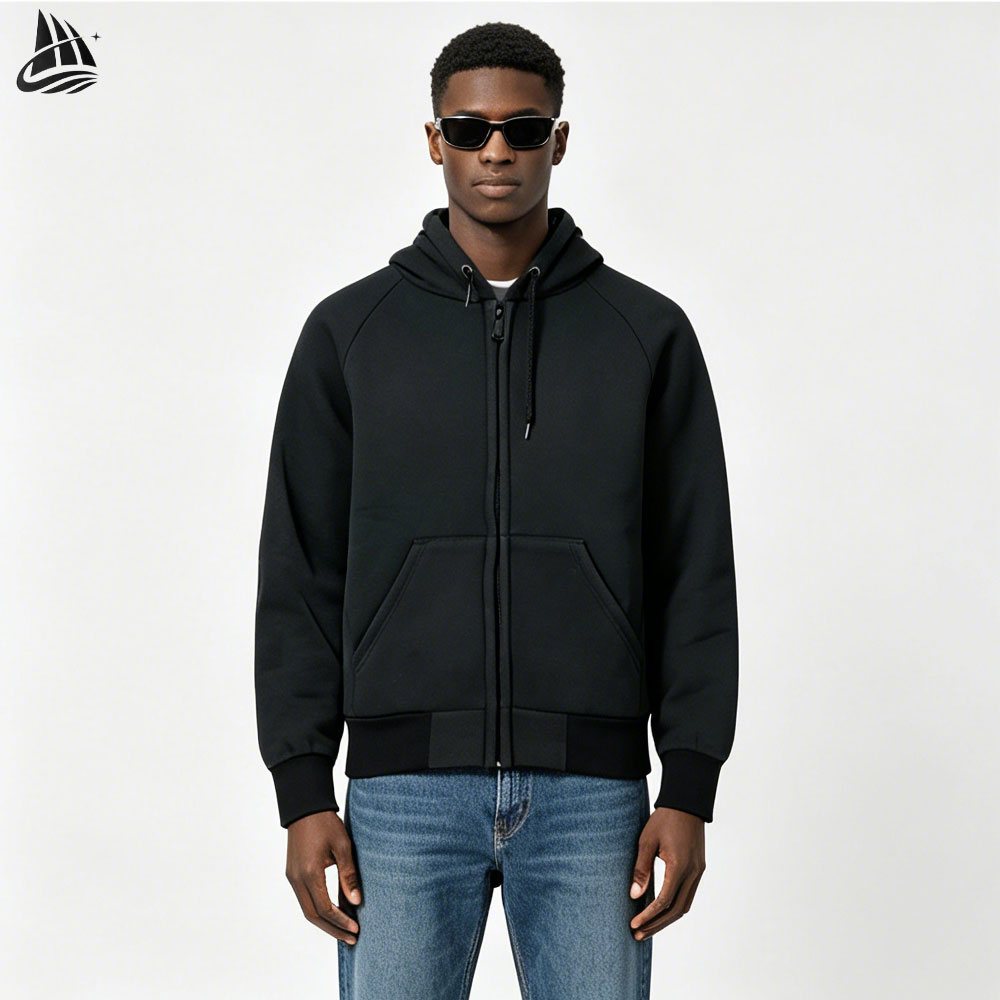
Type. Metal zippers read heavier and suit boxy, heavyweight silhouettes. Nylon and vislon zippers are lighter, more flexible and more forgiving on soft fabrics. The choice should follow the fabric weight rather than the other way around.
Length and placement. A full-zip hoodie typically runs the zipper to the top of the collar, while a half-zip or cropped version stops shorter. Specify the finished zipper length and where the slider sits when closed, since a slider that stops too high or too low changes how the hood sits.
Pull and finish. The pull is a brand element and a durability question at the same time. Confirm the pull style, the colour finish and whether the zipper is two-way, then check that the same specification is available for future reorders before you build a collection around it.
Attachment. Ask how the placket is constructed and whether the zipper is stitched with a dedicated foot. The finish of the top and bottom stops is what buyers and end customers actually touch when they open the garment.
Panels, Pockets and Fit Details
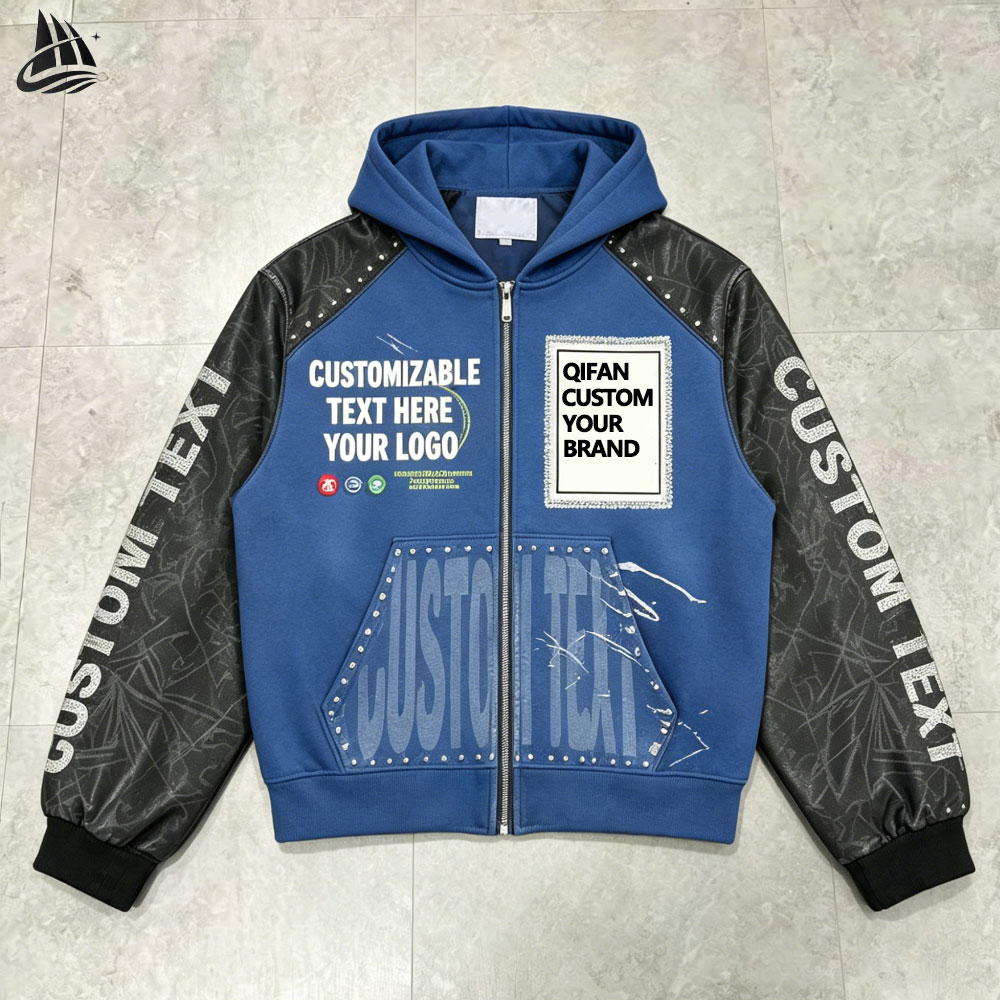
Panels. Contrast panels, sleeve inserts, yoke seams and colour blocking all change how the garment is cut and how many pieces have to line up. Specify the seam positions in centimetres from reference points, and confirm how the pattern handles the mirror-image panels so that the left and right sides match after washing.
Pockets. Kangaroo pockets on a zip hoodie need to be positioned so that the opening is not distorted by the zipper. Split kangaroo pockets, welt pockets and zipped side pockets each require different construction, so choose the pocket before the sample is sewn rather than after.
Ribbing and cuffs. The rib width, the elastane content and the recovery of the cuff and hem rib determine whether the hoodie keeps its shape after a season. Ask for the rib specification in writing, because a rib that matches on the sample can drift on a reorder if the material changes.
Hood construction. Confirm whether the hood is single or double layer, whether it has a lining, and how the drawcord and eyelets are finished. The hood is the part customers adjust most, so it deserves its own specification line.
Brands building a full drop often develop matching custom accessories such as caps and bags from the same colour references, so the range reads as one collection rather than a set of separate orders.
Sampling, Approval and Bulk Production
Sampling at INFULLSAIL is typically completed in about two weeks. The sampling fee is charged separately and quoted in advance, and an offset is only considered when the bulk volume is large enough; that position is confirmed for each project rather than promised in general terms. Once the sample is approved, bulk production usually runs three to four weeks depending on the style and the order size.
For a zip-up style, the approval round should include two checks that pullovers do not need. First, zip the garment closed and confirm the front opening lies flat from hem to collar with no wave in the fabric. Second, wash a sample and re-check the placket length and the panel match, because a zip hoodie that measures correctly when flat can still change after its first wash.
The approved sample then becomes the sealed reference for the run. Finished garments are reviewed against it during production and before packing, including measurements and a visual check of the zipper, panels and trims. Reorders are supported at the same standard minimum of 100 pieces per style, per color, which helps when a style sells out. Shipping can be arranged by sea, air or land depending on your schedule and destination.
To see how development and production fit together, read our pages on manufacturing and production and fabrics and processes.
Frequently Asked Questions
What is the MOQ for custom zip-up hoodies?
Our standard minimum is 100 pieces per style, per color, and sizes can usually be mixed within that total. We confirm how the minimum applies to your design, fabric and zipper specification before you order.
How long does sampling take for a zip-up hoodie?
Sampling is typically completed in about two weeks and includes the pattern development, the fit sample and any agreed adjustment round. The sampling fee is quoted in advance.
Can the sampling fee be deducted from a bulk order?
Sampling is charged separately. An offset may be considered when the bulk volume is large enough, and the position is confirmed for your project rather than assumed before the order is placed.
Which zipper types can you produce?
Metal, nylon and vislon zippers are all possible, in full-zip and half-zip lengths, with different pull styles and finishes. The recommendation follows your fabric weight and the fit you are developing.
Can you develop the fit from a reference hoodie?
Yes. A reference garment, a sketch or a tech pack with measurements is enough to start. We work from finished measurements, so the more precisely you describe the body width, length and zipper length, the closer the first sample will be.
Do you support reorders on the same hoodie style?
Yes. Reorders are supported at the same standard minimum, and the approved sample from the first run stays as the reference so fit, fabric and zipper specification remain consistent across repeat orders.
Ready to develop your zip-up hoodie? Send INFULLSAIL your design, reference garment or tech pack, and our team will review the fabric, zipper specification, silhouette and quantity requirements before preparing a tailored quotation. Request a Custom Quote