Selvedge vs Non-Selvedge Denim: What to Specify for Jeans
Selvedge is one of the few terms in denim that buyers ask for by name without necessarily knowing what it changes downstream. It affects the loom the fabric comes from, the width available to the pattern cutter, how much fabric a pair consumes, and therefore how a denim range is priced and planned. Deciding whether a style needs it is a specification question, not a marketing one.
Key Takeaways
- Selvedge describes how the fabric was woven, not how the garment looks: it comes off a shuttle loom in a narrow width with a finished edge.
- Narrow fabric width constrains pattern layout, so a selvedge style usually consumes more fabric per pair than the same style in wide denim.
- On most streetwear fits the selvedge line is hidden; it shows mainly on a cuffed hem, an outseam or a coin pocket detail.
- The minimum is 100 pieces per style, per color, with sizes mixable inside one colourway.
- Sampling is quoted individually and typically takes 2–3 weeks; bulk production for an order of around 100 pieces typically takes about 3 weeks, depending on production requirements and scheduling.
What Selvedge Actually Means
Selvedge denim is woven on a shuttle loom, which produces a narrow roll with a clean, finished edge that does not fray. That edge is the selvedge, and it is the reason the term exists. Modern wide looms produce fabric on a broader roll with a raw edge that has to be finished during garment construction.
The practical consequence is width. A shuttle loom outputs a much narrower roll, so fewer garment panels fit across the fabric. Cutting a pair of jeans from narrow fabric means more of the roll is committed to the main panels, and the remaining pieces have to be placed around them. That is why selvedge usually raises fabric consumption per garment rather than simply changing a line item.
The weave also behaves differently in wear. Shuttle-loom denim is often woven slower and at a lower tension, which affects how it fades and how it feels before the first wash. Those characteristics are part of why the fabric is requested, and they are verified on a sample rather than assumed from a description.
Where the Selvedge Line Is Visible
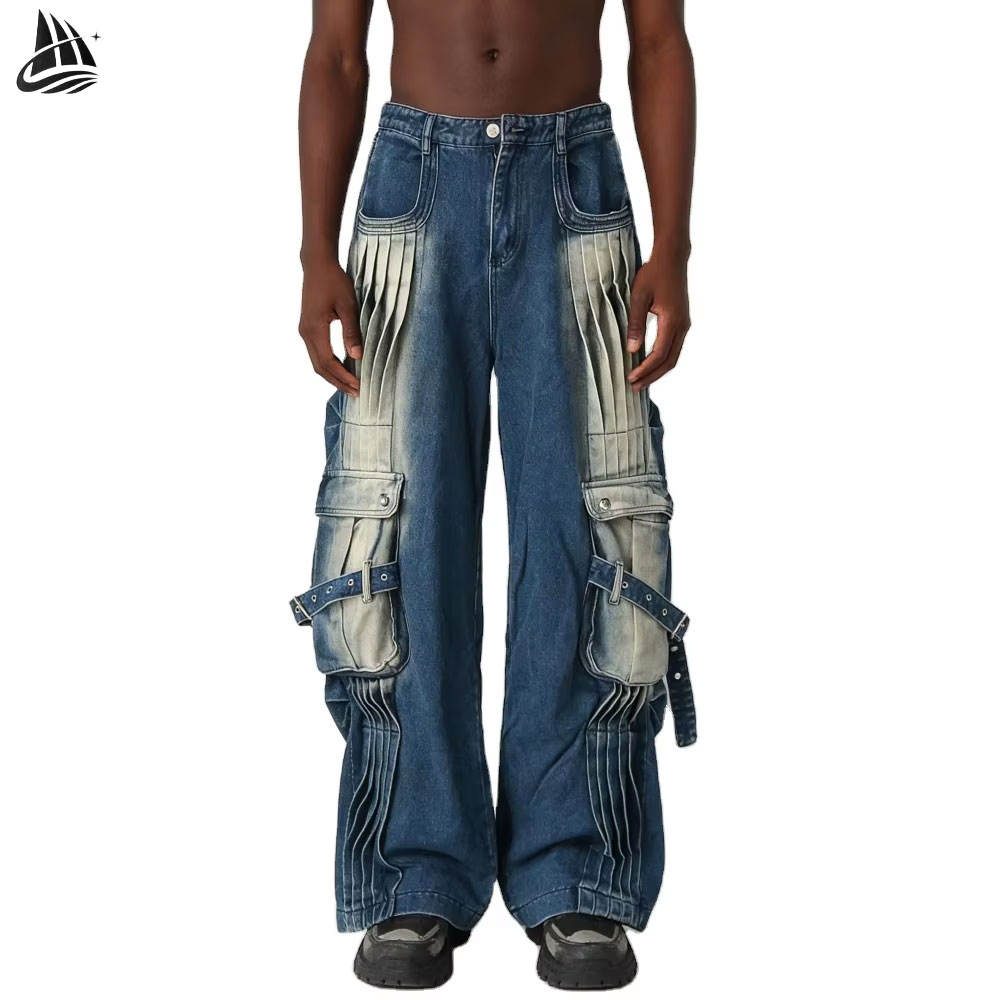
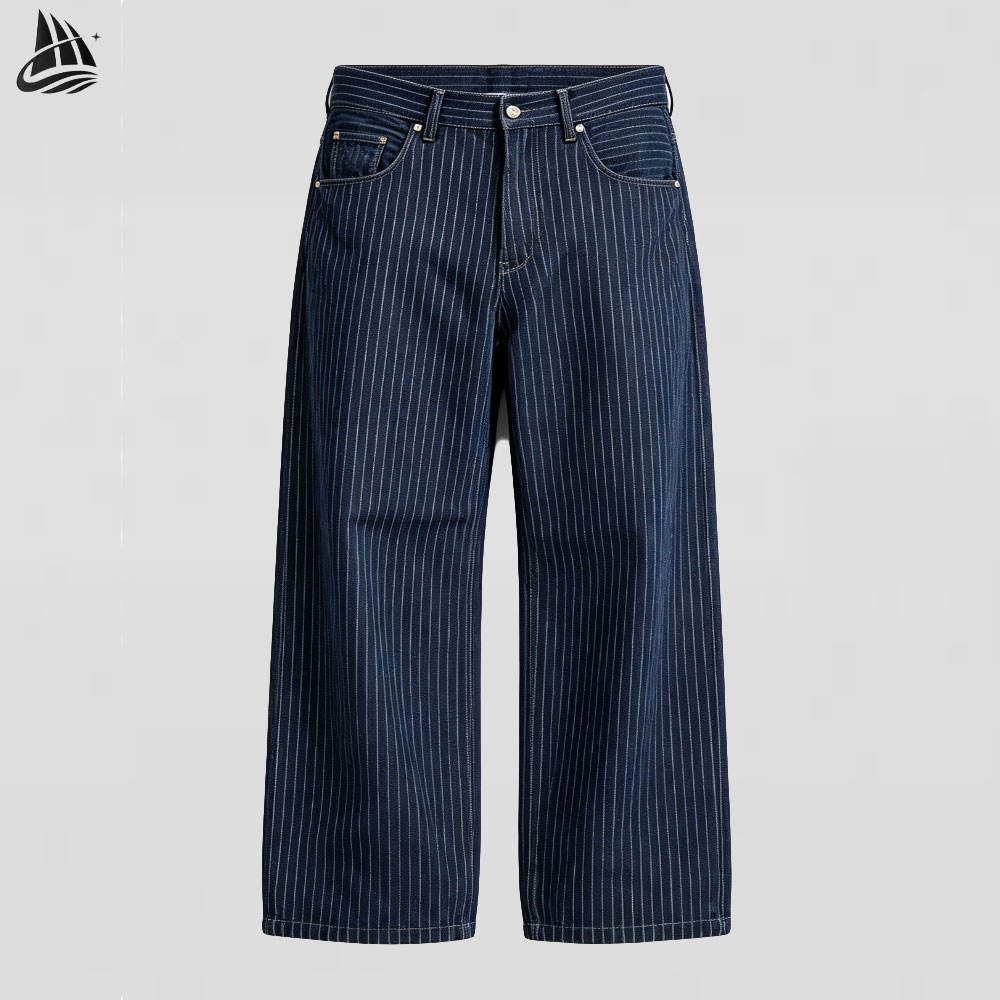
On a straight-leg jean worn with a turn-up, the outseam shows the finished edge, which is the classic way the detail is displayed. On a wide-leg or baggy streetwear fit that breaks over the shoe, the same seam is usually hidden. On a tapered or cropped fit it may never be seen at all.
Some patterns place the selvedge on the coin pocket or use it as a visible trim at the waistband. Both are deliberate design decisions and both need to be specified before cutting, because they change how the panels are laid out. Where the detail is not visible in the finished garment, the buyer is paying for the fabric's behaviour rather than for a visible feature.
Pattern Efficiency and Cost
Fabric width drives consumption, and consumption drives cost. A pair cut from wide denim might fit the legs, yoke and pockets comfortably across the roll; the same pair cut from narrow selvedge fabric may need a different panel split or a longer length of cloth. Neither is wrong, but the difference has to be modelled before quoting.
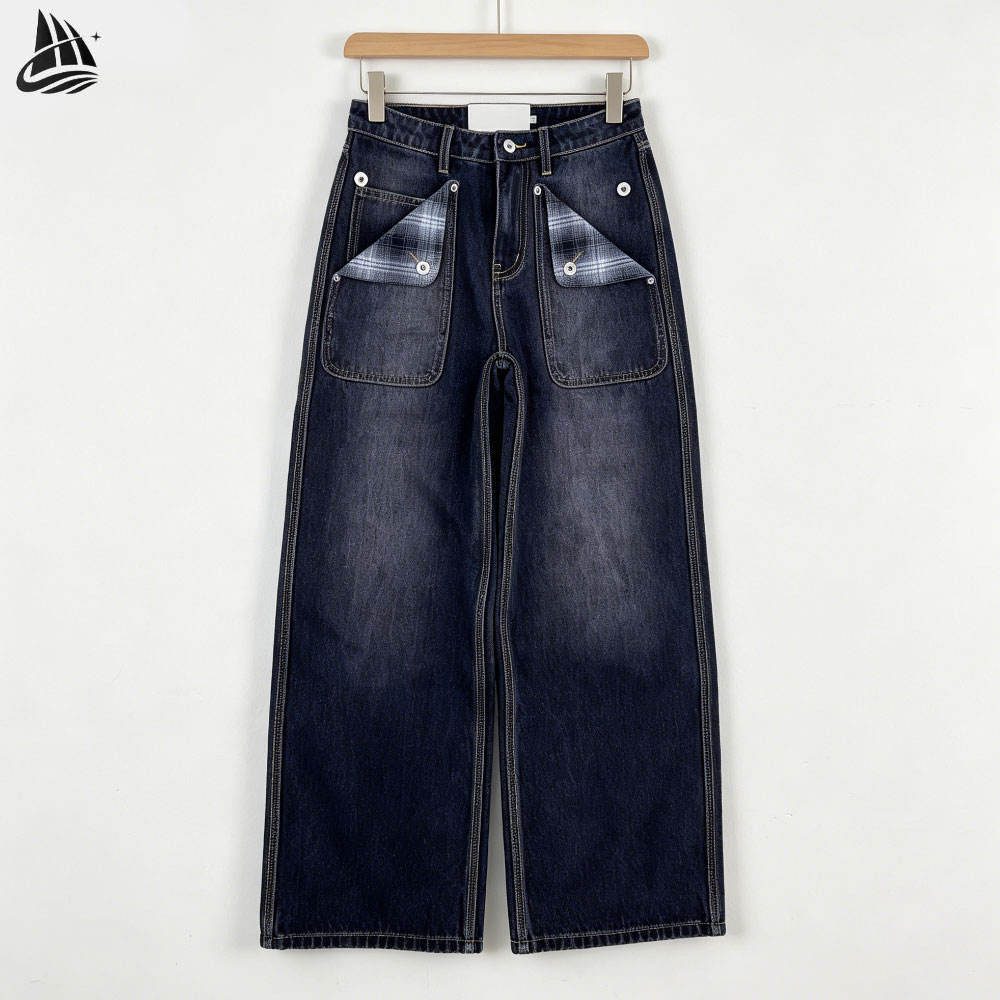
This is also where pattern decisions interact with design. Panel count, pocket shape and the direction of the grain all change how much of a narrow roll is usable. A designer who wants both a selvedge fabric and a multi-panel construction is asking for a combination that consumes more fabric than either choice alone, and the specification should acknowledge that.
Trims follow the same logic. Hardware finish, thread and rivets are small costs individually, but on a narrow-fabric program the fabric is where the budget concentrates, so trim choices are worth settling at the same time rather than later.
Planning a Selvedge or Non-Selvedge Order
Start from the fit and the intended fade. If the goal is a fabric that ages visibly and is displayed at the hem, selvedge supports that story. If the goal is a wide, relaxed silhouette produced at a controlled cost, wide denim is usually the more efficient route, and the visible difference to the customer is minimal.
Either way the sequencing is the same. Fabric and weight are confirmed first, then the wash is developed on a sample, then bulk is cut against the approved sample. Sampling is quoted individually based on the fabric, production techniques and any performance-fabric requirements, and typically takes 2–3 weeks. Bulk production for an order of around 100 pieces typically takes about 3 weeks, depending on production requirements and scheduling.
Reorders draw on the specification and fabric records from the first run, which matters more with selvedge than with wide fabric: if the loom or the lot changes, the hand feel and the fade behaviour can shift. Recording the fabric reference at the start is what makes a restock predictable.
What to Put in the Specification
The specification should name the fabric type, the weight range, the intended wash, whether the selvedge line must be visible and where, and the fit details that affect panel layout. Quantity per style and colour, the size spread and the target launch window complete the picture.
With those points fixed, the fabric choice stops being a label and becomes a production decision that can be quoted, sampled and repeated — which is what a denim range needs in order to stay consistent across drops.
Frequently Asked Questions
Is selvedge denim better than non-selvedge denim?
They are different, not better or worse. Selvedge comes from a narrow shuttle loom with a finished edge, which affects fabric width, consumption and often the way the denim fades. Wide-loom denim is more efficient to cut and is the practical choice for many silhouettes. The right answer depends on whether the fabric's behaviour and edge are part of the product story.
Does selvedge cost more to produce?
It usually consumes more fabric per garment because the roll is narrow, so the fabric component of the cost rises even when construction is unchanged. Pattern layout, panel count and grain direction all affect how much of the roll is usable. The specific figure depends on the fabric and the pattern, so it is confirmed at quotation rather than estimated.
Will the selvedge line be visible on my design?
Only if the construction puts it where it can be seen. A cuffed straight leg shows the outseam edge; a wide-leg fit that breaks over the shoe usually hides it; a coin pocket or waistband placement can display it deliberately. This has to be decided before cutting, because it changes the layout of the panels.
How long does sampling and bulk take?
Sampling is quoted individually based on the fabric, production techniques and any performance-fabric requirements, and typically takes 2–3 weeks. Bulk production for an order of around 100 pieces typically takes about 3 weeks, depending on production requirements and scheduling. Freight by sea, air or land is arranged against the confirmed schedule.
What is the minimum order?
100 pieces per style, per color, with sizes mixable inside one colourway. Each additional colour or wash counts as its own minimum, because it means a separate fabric reservation and a separate process setup. Small batches and reorders are supported.
Can I change from wide denim to selvedge on a reorder?
That is effectively a new development rather than a reorder, because the fabric width changes the pattern layout and the wash behaves differently on a different base cloth. It is workable, but it needs a fresh sample and a fresh approval, and it should be planned as a new style rather than assumed to match the previous delivery.
Decide what the denim has to do before choosing how it is woven.
If a denim range is in development, send the fit, the intended fade and whether the selvedge edge needs to show. Contact our team to discuss a denim specification, review the custom bottoms range, and see the fabrics and processes used for denim production. The manufacturing and production page explains how a sample becomes a bulk run.