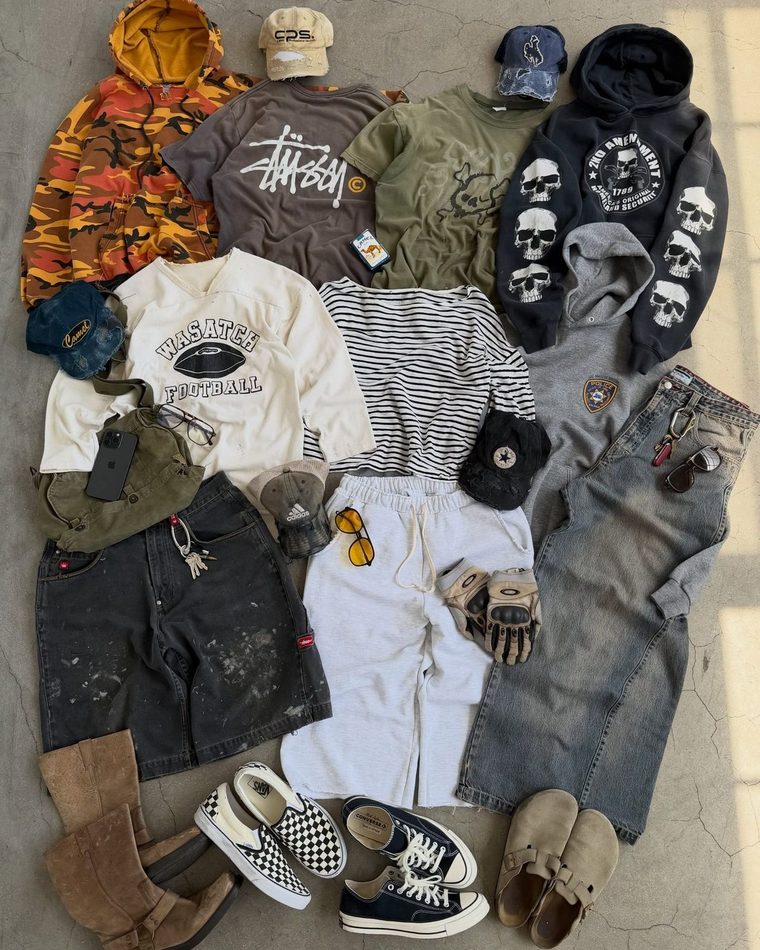
Custom Shorts for Streetwear: Mesh vs Denim vs Terry
Shorts look like the simplest garment in a streetwear range and behave like one of the most difficult. The pattern is short, so every proportion decision is visible at a glance: where the hem lands, how the leg opening sits, whether the waistband holds its shape when the piece is worn without a belt.
The fabric choice decides most of that. Mesh, denim and terry are the three bases that carry most streetwear shorts, and each one pulls the same pattern in a different direction. This guide compares them from a production angle — what each material does to the silhouette, what it demands at sampling, and what to specify so a bulk run matches the sample.
Key Takeaways
- Fabric decides the silhouette more than the pattern does: mesh collapses, denim holds, terry drapes.
- Mesh shorts live or die on lining and leg opening; an unlined mesh short is a different product from a lined one.
- Denim shorts need the wash and the hem decided together — a raw hem on a heavy wash behaves differently from a raw hem on a rigid one.
- Terry and waffle knits are forgiving to wear and unforgiving to sew: waistband tension and hem recovery show every shortcut.
- Approve the shorts on a body, not flat, and wash the sample before bulk — the waistband is where most complaints start.
Mesh Shorts: Light, Loud and Easy to Get Wrong
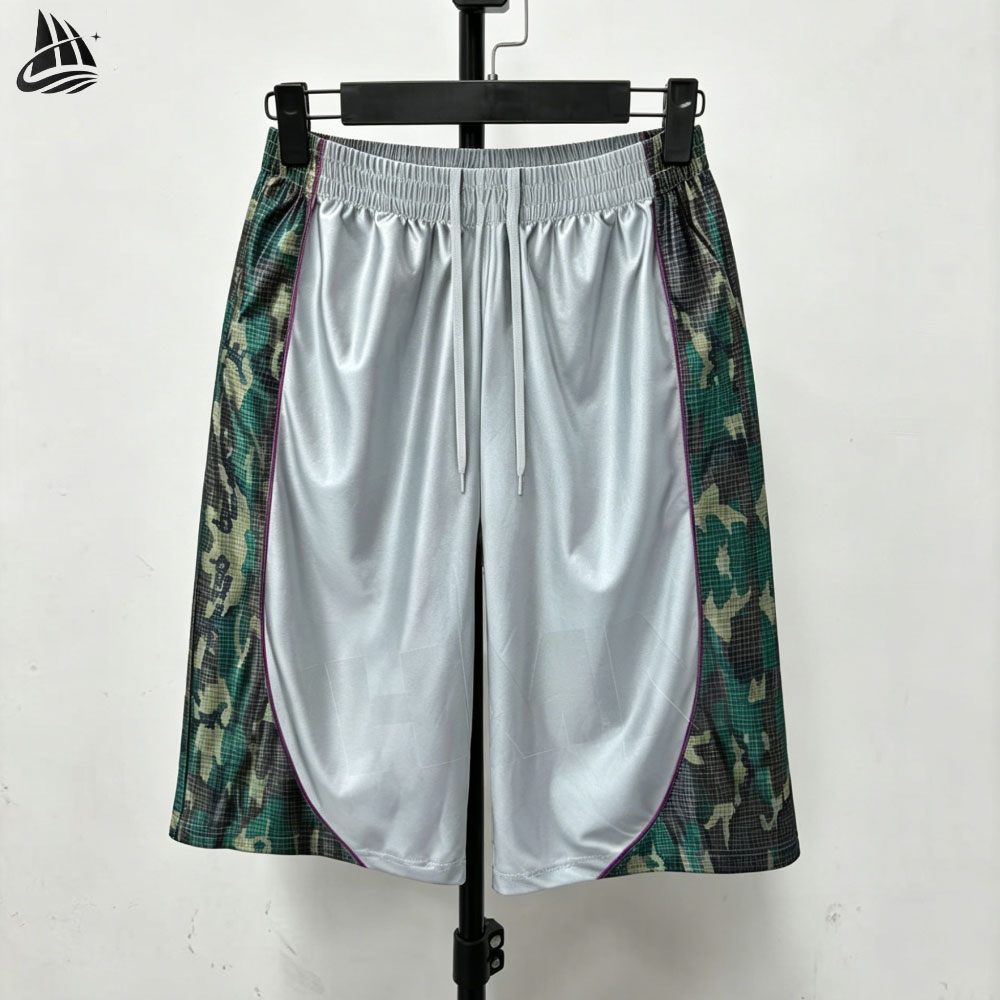
Mesh is the summer staple of athletic and streetwear ranges because it is light, breathable, and takes print and panel colour well. It is also the fabric that exposes construction decisions fastest. Unlined mesh is transparent in daylight, so a lined and an unlined short are effectively two different products, and the lining changes both the cost and the drape.
Leg opening is the second decision. A mesh short with a wide opening reads as basketball; a narrower opening with a longer inseam reads as football terrace or skate. Because mesh has little body, the opening will not hold a shape on its own — it follows the pattern exactly, which is good news for consistency and bad news for anyone hoping a fabric will rescue a loose spec.
Waistband construction matters more here than on any other base. Elastic with a drawcord is standard, but the elastic width and the way the channel is stitched decide whether the short rolls or stays flat after washing. On a light fabric, a narrow elastic rolls; a wider elastic with a clean channel holds. This is a two-minute conversation at sampling that saves a bulk problem.
Denim Shorts: Weight, Wash and the Hem
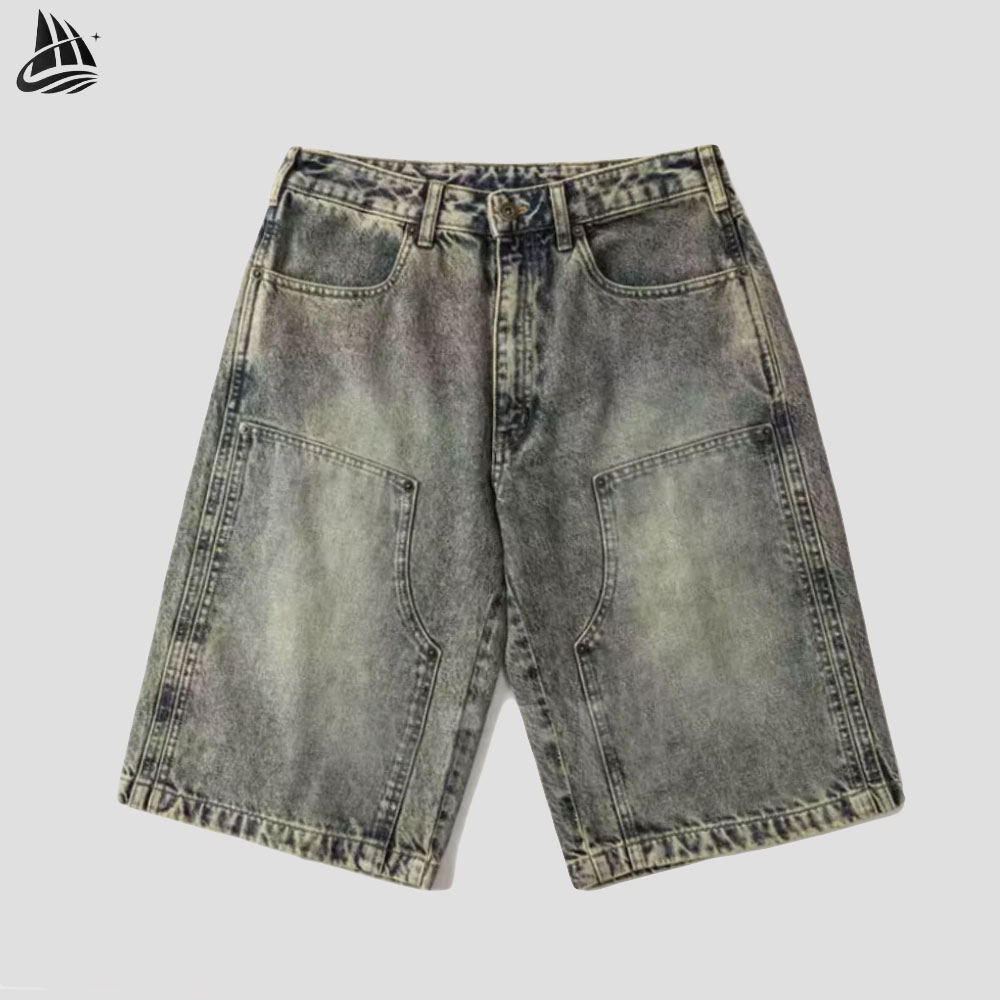
Denim shorts carry the weight of the whole denim conversation into a short pattern, and that is where buyers get caught. A 12oz rigid denim cut into a short behaves nothing like the same denim on a jean: there is less garment to distribute the stiffness, so the leg opening stands away from the body and the waist sits differently.
Wash is the second variable. Stone wash, enzyme wash and hand sanding all soften the fabric, which changes how the short hangs and how the hem behaves. A raw hem on a softened denim frays gently and reads as vintage; a raw hem on a rigid denim frays aggressively and can look unfinished after a few wears. Neither is wrong — but the decision has to be made with the wash, not after it.
Hardware and pocket layout deserve the same attention as on a jean. Five-pocket construction on a short leaves very little room for the pocket bag before it interferes with the leg opening, and rivets placed too low will sit on the seat rather than the pocket corner. If the design calls for patch pockets, the placement is worth fixing in the spec with a measurement from the waistband seam rather than a description.
Terry and Waffle Knit: The Comfort Category
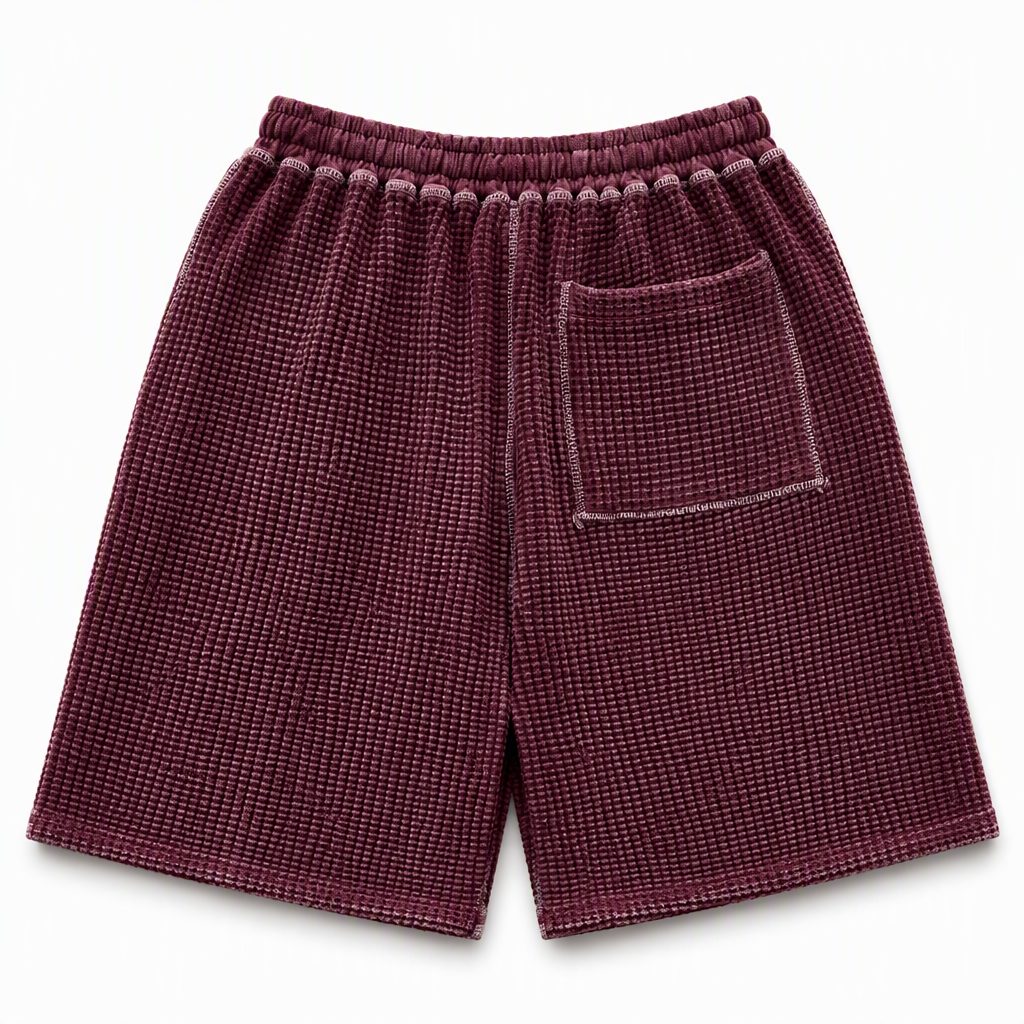
Terry, loopback and waffle knit shorts have moved from loungewear into mainline streetwear because they photograph well and wear easily. They are also the most sewing-sensitive of the three bases. A knit waistband has to recover after stretching, and recovery depends on the elastic, the channel width, and the stitch tension used to attach it. A waistband that sags after the first wash is not a fabric fault; it is a construction decision.
Weight selection drives the silhouette in the same way it does on sweatpants. A heavier loopback holds a structured, boxy short; a lighter jersey or waffle drapes and reads softer. Because the garment is short, the difference between one weight step and the next is more visible on shorts than on a full-length piece, so the weight should be specified rather than left to whatever the mill has in stock.
Hem finishing is the other visible detail. A turned and stitched hem on a knit looks clean and holds; a raw or rolled hem gives a softer, more casual read but will move after washing. Whichever is chosen, ask for the hem to be checked on a washed sample against the approved length — knit hems grow, and a 1cm difference is noticeable on a short.
Specifying a Shorts Range Before Sampling
Most shorts problems that reach bulk were decided — or skipped — at the specification stage. Four items do most of the work.
Inseam and leg opening as numbers. Give both, measured from a fixed point, with a tolerance. "Mid-thigh" is not a specification; a 15cm inseam with a 62cm opening is.
Fabric and weight for each base. Name the fabric, the weight and the finish for each style, and state whether mesh styles are lined. A single line here prevents most of the back-and-forth that follows a first sample.
Waistband construction. Elastic width, channel type, drawcord or not, and how the waistband is attached. This is the part of the garment that generates the most after-sales questions, so it is worth writing down rather than describing verbally. Our notes on sweatpants and jogger construction cover the same waistband logic in more detail.
Wash and test method. Confirm the wash programme and ask for a washed sample before bulk approval. On denim the wash is part of the design; on knits the wash is where the hem and waistband behaviour shows up.
On quantities and timing, the standard minimum is 100 pieces per style, per colour, with sizes mixable inside a colour, and smaller trial runs can be discussed case by case depending on the construction. Sampling is quoted per style and typically takes two to three weeks depending on the fabric and the wash. Bulk production for around 100 pieces usually runs about three weeks after sample approval, depending on the requirements and the factory schedule at that moment. Sampling fees are quoted separately and can only be offset against bulk when the bulk volume is large enough, which is confirmed at quotation.
Fabric options across all three bases are set out in our fabrics and processes reference, and the wider bottoms range sits under custom bottoms production. If the shorts are part of a set, our overview of the manufacturing and production workflow shows where fabric planning and print approval sit in the schedule.
FAQ: Custom Shorts for Streetwear
Should mesh shorts be lined or unlined?
Lined mesh is the safer choice for retail: it is opaque in daylight, holds the leg opening a little more firmly, and reads as a finished garment rather than a gym piece. Unlined mesh is lighter and cheaper to produce but shows through, which limits how the short can be worn and photographed. Both are produced, and the choice is normally made alongside the panel layout, because the lining adds a second layer to every seam.
What weight denim works for shorts?
Mid-weight denim is the usual starting point for shorts because it holds the leg opening without standing away from the body the way a heavy rigid cloth does. The wash then softens it further, so the weight and the wash should be chosen together. If the design depends on a raw hem and heavy distressing, a lighter base gives a softer result; a heavier base gives a stiffer, more architectural line.
Why does my knit waistband sag after washing?
In most cases the elastic is too narrow for the channel, or the channel was stitched without enough allowance, so the knit stretches and the elastic cannot recover. A wider elastic in a properly sized channel holds its shape; a narrow one rolls and loses tension. The other common cause is pressing the waistband flat during finishing, which flattens the elastic's crimp. Both are construction decisions that are settled at sampling.
Can I use the same pattern for mesh, denim and terry shorts?
You can start from one block, but each base needs its own adjustments before it behaves the same way on the body. Mesh has little body, denim has a lot, and knits stretch, so the leg opening, the rise and the hem allowance are adjusted per fabric. Using a single pattern unchanged across all three usually produces one version that sits well and two that do not.
What is the minimum order for custom shorts?
100 pieces per style, per colour, with sizes mixable inside a colour. Smaller trial runs can be discussed case by case depending on the style, the fabric and the number of panels. Shorts are often ordered alongside other bottoms, and mixing styles inside one order does not change the minimum per style.
How long does sampling and bulk take for shorts?
Sampling is quoted per style and typically takes two to three weeks depending on the fabric and the wash; a new denim wash or a custom print adds time. Bulk production for around 100 pieces usually runs about three weeks after sample approval, depending on the requirements and the factory schedule at that moment. International shipping by sea, air, or land is arranged according to the order.
Next step. Send the inseam, leg opening and fabric you have in mind for each style, and you will get a quotation with a sampling plan. Contact our team to start the review.