Custom Tracksuits and Two-Piece Sets: Fabric Consistency
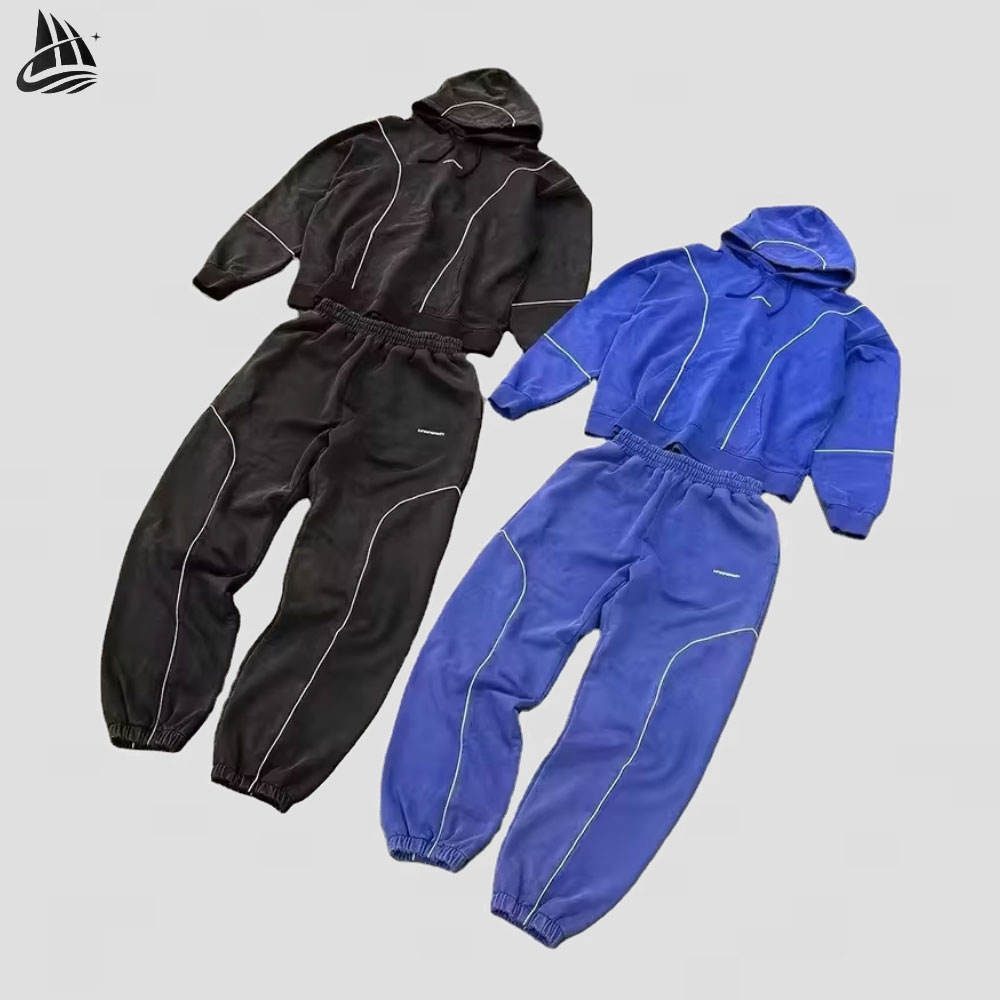
A two-piece set is judged as one product even though it is made from two, and that is where most of the production risk sits. The hoodie and the jogger have to read as the same fabric under the same light, in the same photograph, and after the same number of washes. A near-match in the showroom becomes an obvious mismatch six weeks later on a customer's body.
This guide covers what actually keeps a tracksuit consistent across a bulk run: how the fabric is planned, how dye lots are managed, how shrinkage is neutralised between the two panels, and what to write into the specification so the match can be checked rather than assumed. If you are still deciding the bottom block itself, our notes on custom sweatpants and jogger construction cover taper, cuff and fabric weight in more detail.
Key Takeaways
- A set is only as consistent as its fabric plan: both garments should come from the same dye lot and the same roll programme.
- Shrinkage difference between the two panels — not colour — is the most common cause of a set that stops matching after the first wash.
- Weight balance matters visually: a top that is noticeably heavier than the bottom reads as two products, not one.
- Approving top and bottom as separate samples hides mismatches; approve them as a set, washed together.
- Reorders need the original fabric reference on file, or the second run will drift even when the pattern is unchanged.
One Fabric, Two Garments: Where Sets Drift
In a single-garment order, small fabric variation is invisible. In a set, it is comparative. The eye reads the two pieces side by side, and it is far more sensitive to a slight difference in tone or surface than to an absolute value. Two panels that would each pass inspection on their own can fail as a pair.
Drift usually enters at one of four points. The first is fabric sourcing: the top is cut from one roll and the bottom from another, and the rolls were dyed in different lots. The second is the finishing route: the hoodie goes through a different wash or a different drying profile than the jogger because of the trims involved. The third is shrinkage: the two panels have different grain directions, different panel sizes, and different amounts of seam, so they take up differently. The fourth is time: the top is cut on one day and the bottom a week later, from a batch that has already been partly consumed.
None of these are dramatic failures on their own. Together they are why a buyer opens a carton, holds two pieces up, and sees a set that does not quite belong together.
Dye Lots and Roll Planning
The practical fix is procedural rather than technical: treat the set as one consuming unit at the fabric planning stage. That means reserving fabric for both garments in the same dye lot, calculating consumption for the full set per size rather than per garment, and adding a cutting allowance that reflects the panel with the highest waste.
Where a factory cuts multiple colourways of the same set, the roll plan has to keep each colourway together. Mixing rolls across colourways is where tone shifts appear in one size and not another — the most confusing kind of inconsistency to investigate later, because it looks like a dyeing problem when it is actually a planning problem.
It is also worth asking how the factory handles shade banding within a roll. Long rolls can vary slightly from end to end. On a large set order, the usual discipline is to spread a single roll across the matched panels of the same set rather than cutting one garment entirely from the head of the roll and its partner from the tail.
None of this requires special equipment. It requires the order to be planned as a set, and that has to be decided before the fabric is booked, not after the cutting ticket is issued.
Shrinkage, Weight and Hand Feel
Shrinkage is the variable buyers underestimate. Loopback and fleece shrink at different rates depending on the yarn, the knit density, and the finishing route. If the hoodie panel and the jogger panel are not matched for shrinkage, the set will look correct on approval and then change relationship after the first domestic wash — usually with the bottom shortening faster than the top, or the reverse.
The standard control is to specify a shrinkage target for both panels and check it on a washed test piece from the actual bulk fabric, not from a stock sample. If the two panels come from the same lot and receive the same finishing, the difference is normally small. If they come from different lots, or one is garment washed and the other is not, the difference can be visible.
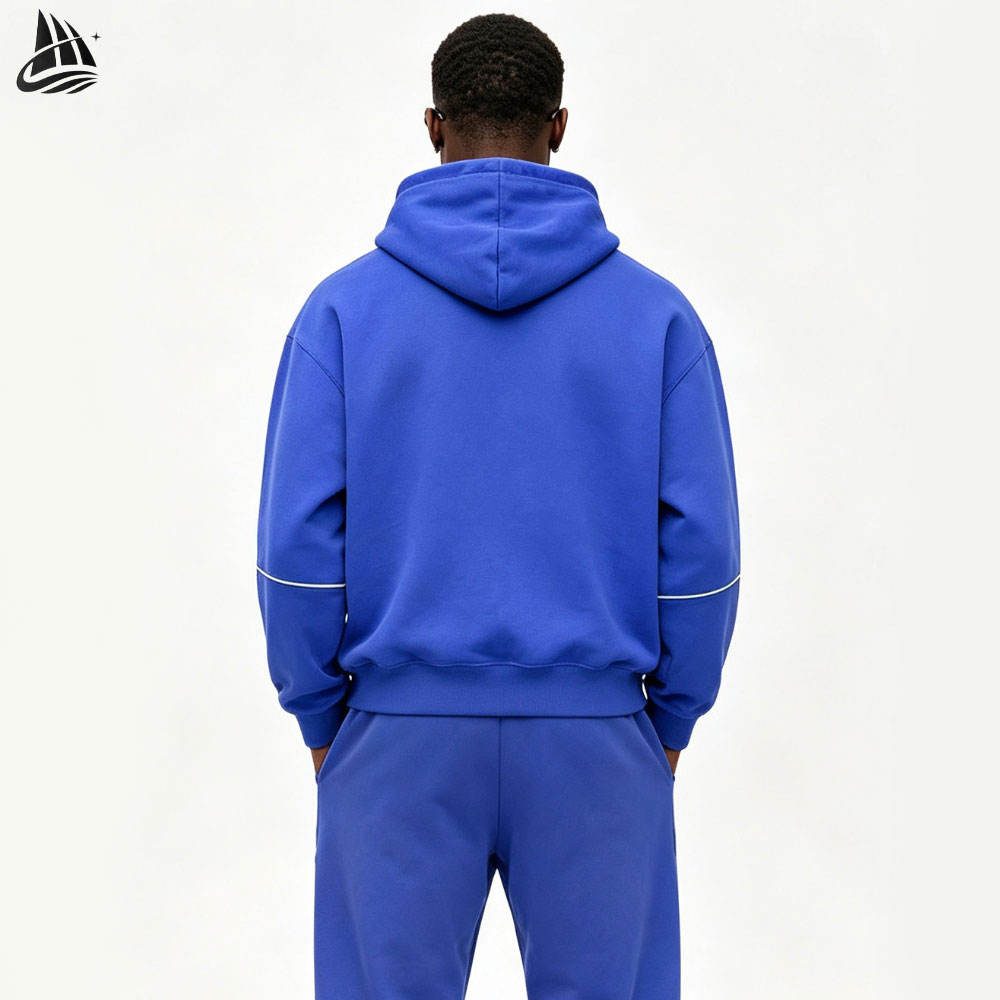
Weight balance is a design question with a production answer. A heavyweight top over a lighter bottom reads as two garments from different collections. Keeping the two panels within a defined weight range keeps the set visually coherent and keeps drape consistent, which matters most on the wide-leg and relaxed silhouettes that streetwear buyers favour.
Hand feel belongs in the same conversation. A brushed fleece top with an unbrushed loopback bottom will feel like a mismatch in the hand even if the colour is exact. Specify the surface treatment for both panels, and say explicitly whether the bottom should match the top's brush level.
What to Specify and Check Before Bulk
The specification is what turns a verbal intention into something inspectable. For sets, four lines do most of the work.
Fabric reference for both panels. Name the exact fabric, weight and finish, and state that the top and bottom must come from the same dye lot. If a substitution is needed, it should be raised before cutting rather than resolved during production.
Shrinkage target and test method. Give a target for both panels and the wash cycle used to measure it. This is the single check that prevents most post-wash mismatch complaints.
Colour approval as a pair. Approve the set, not the pieces. Ask for the top and bottom to be presented together in the same lighting and photographed together. Our overview of the manufacturing and production workflow shows where this approval sits relative to cutting.
Wash and finishing route. Confirm whether the set is garment washed, enzyme washed, or washed after assembly, and confirm that both panels follow the same route. Any difference here has to be a deliberate decision with a reason.
At inspection, the useful checks are comparative rather than absolute: the two pieces side by side under the same light, the two pieces after a wash cycle, and the measured shrinkage of each against the target. A set that passes those three checks will hold together in the market.
On quantities and timing, the standard minimum is 100 pieces per style, per colour, with sizes mixable inside a colour, and smaller trial runs can be discussed case by case depending on the construction. Sampling is quoted per style and typically takes two to three weeks, longer for a new block or a custom knit. Bulk production for around 100 pieces usually runs about three weeks after sample approval, depending on the requirements and the factory schedule at that moment. Sampling fees are quoted separately and can only be offset against bulk when the bulk volume is large enough, which is confirmed at quotation.
Fabric options for both panels are covered in our fabrics and processes reference, and the broader range of bottoms sits under custom bottoms production.
FAQ: Custom Tracksuits and Two-Piece Sets
Why do my tracksuit top and bottom look different after washing?
In most cases because the two panels came from different fabric lots or followed different finishing routes, so they shrank at different rates. Colour can shift slightly with washing, but a visible difference in length, width or drape points to shrinkage. The control is to specify a shrinkage target for both panels, test on washed pieces from the actual bulk fabric, and keep both garments on the same finishing route.
Can I order just the top or just the bottom of a set?
Yes. Matching sets are a common request but single pieces are produced routinely, and the minimum is the same: 100 pieces per style, per colour, with sizes mixable inside a colour. Smaller trial runs can be discussed case by case depending on the construction. If you plan to add the matching piece later, keep the fabric reference and dye lot record on file so the second garment can be matched.
How do I keep the colour consistent on a reorder?
Keep the approved lab dip, the fabric reference, and the dye lot number with the original order paperwork, and give them to the factory with the reorder. Colour is matched to a reference, not to memory. Where the original lot is no longer available, a new lot is dyed to the approved standard and the swatch is approved again before cutting, which is why reorders are quoted with their own lead time.
What fabric weight works best for a tracksuit set?
It depends on the season and the silhouette, but the two panels should sit within a defined weight range of each other so the set reads as one product. Heavier loopback and fleece hold a structured shape; lighter jersey drapes more and suits wide-leg blocks. What matters for consistency is that the top and bottom are specified with the same finish and brush level rather than as two independent choices.
Should the top and bottom be washed together in production?
They should follow the same finishing route, and on garment-dyed or heavily washed programmes they are usually processed together so that tone and shrinkage move in the same direction. If a difference is unavoidable because of trims or hardware, it should be raised before bulk and confirmed with a washed set sample. The comparison is done as a pair, in the same light, rather than per garment.
What is the MOQ and how long does a set take?
100 pieces per style, per colour, with sizes mixable inside a colour, and smaller trial runs can be discussed case by case. Sampling is quoted per style and typically takes two to three weeks; bulk production for around 100 pieces usually runs about three weeks after sample approval, depending on the requirements and the factory schedule at that moment. International shipping by sea, air, or land is arranged according to the order.
Next step. Send the block, the fabric you want on both panels, and the colourway count, and you will get a set-based quotation with a sampling plan. Contact our team to start the review.