Garment Dye vs Piece Dye: Choosing Colour for Streetwear
Two sweatshirts in the same shade can arrive with completely different character. One looks flat and uniform, like the colour was printed onto the surface. The other has depth: slightly darker at the seams, softer where the garment has been washed, with a surface that reads as lived-in before anyone has worn it. The difference is usually not the colour recipe but the point in production where the dye was applied.
Garment dyeing and piece dyeing are the two routes most streetwear programmes choose between, and the decision affects colour consistency, hand feel, shrinkage, trim selection and what happens on a reorder. This guide covers how each route works, where each one earns its place, and how to write the requirement into a tech pack so the bulk matches the approved sample.
Key Takeaways
- Piece dyeing colours the fabric before cutting; garment dyeing colours the finished garment, which is why the same shade behaves differently in each route.
- Garment dyeing gives a softer hand, visible seam character and a washed look, and it demands dye-compatible trims and a generous shrinkage allowance.
- Piece dyeing gives tighter colour control across large runs and is the practical route for contrast panels, stable repeat orders and prints.
- Not every fabric can be garment dyed: blends, some synthetics and heavily finished surfaces may not take the dye evenly enough to approve.
- Whichever route is chosen, the lab dip, the dye lot and the wash recipe belong in the order file, because a reorder is matched against those references.
What Each Dyeing Route Actually Does
Piece dyeing dyes fabric in the roll, after knitting or weaving and before cutting. The mill dyes a lot to an approved shade, the fabric is finished, and the garment is then cut and sewn from coloured cloth. Every panel of the garment comes from the same dyed lot, so the colour is even across the body, and the shade is fixed before a single seam is sewn.
Because the fabric is dyed flat, piece dyeing holds colour tightly. That is why it suits large runs, programmes that repeat season after season, and styles where panels of different colours have to sit together cleanly. It also means the garment's appearance is settled early: seams, hems and topstitching do not change the shade, and the sewing floor cannot introduce a colour variable.
Garment dyeing reverses the order. The garment is cut and sewn first, usually in greige or a prepared base, and then dyed as a finished piece. Dye liquor penetrates through seams, hems and pockets, and the tumbling action of the dye machine softens the fabric at the same time. The result is the softer hand and slightly uneven depth that buyers describe as vintage or sun-faded, and it is why garment-dyed pieces rarely look identical to one another.
That character comes with obligations. The garment shrinks during dyeing, so the pattern has to be cut with an allowance that the dye house and the pattern maker agree on. Trims have to survive the same bath: a polyester zip, a coated button or a bonded label may take the dye differently from the cotton body, and some will not take it at all. And the colour is only fixed at the end of the process, which means the approved sample and the bulk run sit further apart in time than they do on a piece-dyed order.
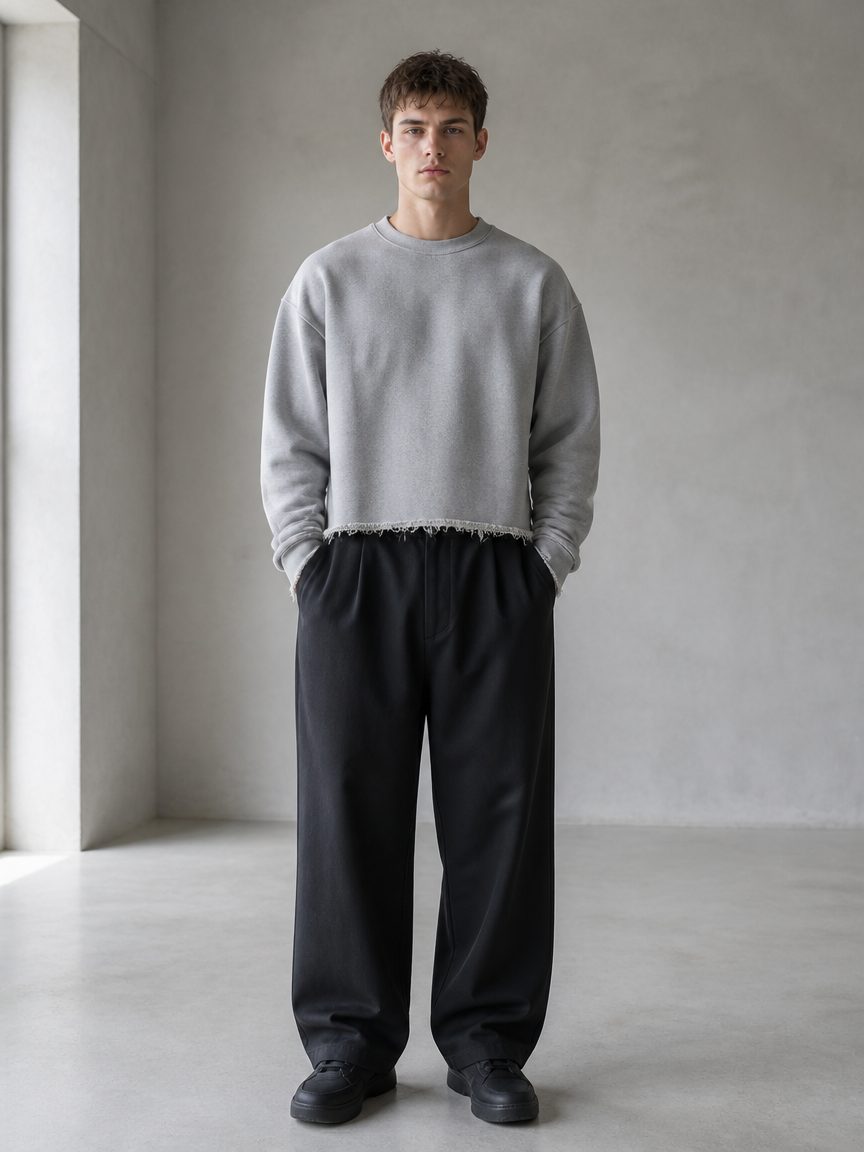
Above: a washed, garment-dyed crewneck with a raw hem. The colour is deeper at the seams and lighter across the body panels, which is the depth garment dyeing produces and piece dyeing does not.
Colour Outcomes: Solid, Faded and Two-Tone
The route decides which colour effects are realistic. If the design calls for a clean, flat shade repeated exactly across a large order, piece dyeing is the straightforward path. If it calls for a faded, uneven surface with soft edges at the seams, garment dyeing produces that look as part of the process rather than as a finish applied afterwards.
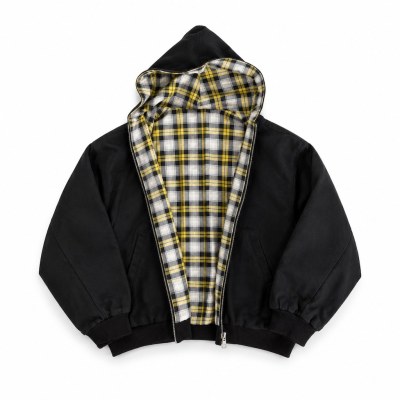
Two-tone and contrast-trim designs sit at the boundary. A garment-dyed body with a contrast collar can work, but the collar has to be either dyed separately and attached after dyeing, or made from a fibre that resists the bath. Both routes add process steps and both narrow the tolerance for what the finished contrast looks like. Piece dyeing handles contrast panels more predictably, because each panel is cut from fabric dyed to its own shade.
There is a third route worth knowing: yarn dyeing, where the yarn is coloured before knitting. It is what makes stripes, checks and jacquard patterns possible without printing, and it keeps colour stable through washing because the colour is in the fibre rather than on it. It also costs more per metre and lengthens the development timeline, so it earns its place on patterns that cannot be produced any other way.
Where Each Method Fits on a Garment
Heavier cotton knits and denim-like twills take garment dyeing well, because the fabric has enough body to survive the dye bath and enough surface texture for the colour to sit unevenly in a way that reads as intentional. Lightweight jersey is less forgiving: the same process can distort the neckline and leave the body looking washed out rather than faded.
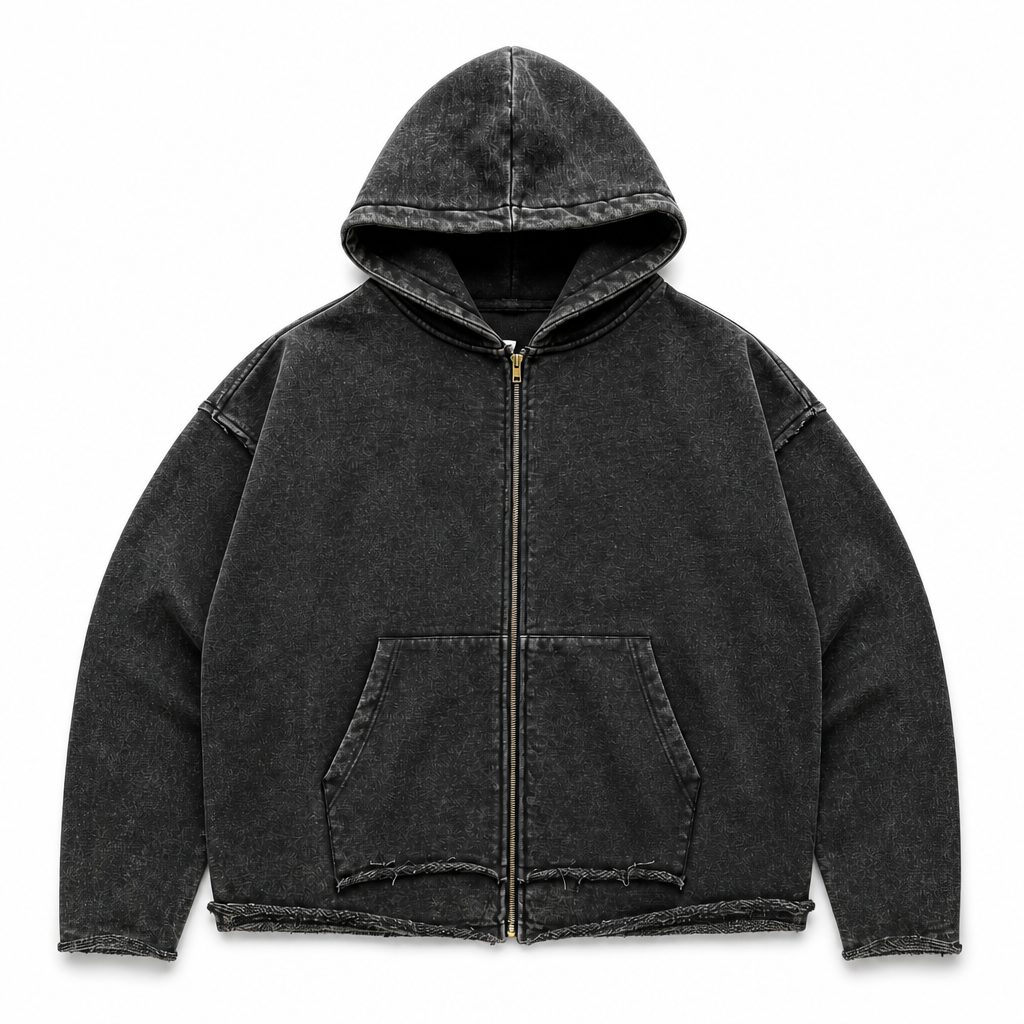
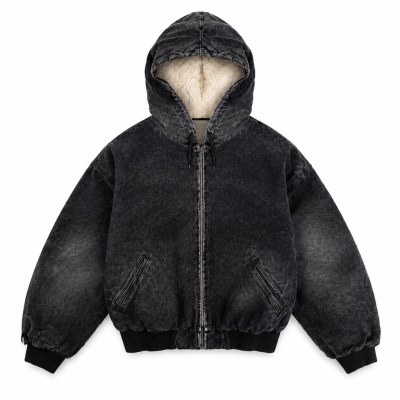
Above: an acid-washed zip hoodie. Acid washing after dyeing pushes the surface further, and it is usually approved together with the dye recipe rather than as a separate step.
Shrinkage is the detail that decides whether a garment-dyed order fits. The pattern is cut oversize to allow for what the dye bath takes out, and the allowance has to be tested on the actual fabric rather than estimated. When the allowance is wrong, the garment that passed inspection is the wrong size after the customer's first wash, and the fault is invisible until then.
Trim selection is the other practical constraint. Zips, eyelets, drawcord tips and labels all pass through the same bath. Where a trim cannot take the dye, it is fitted after dyeing, which adds handling and can mark the garment. Where it can take the dye, the shade it lands on is not the shade it started as, so the trim has to be approved in its dyed state.
For styles with a print, the sequence matters. Garment-dyed bodies are usually printed after dyeing, because a print applied first would not survive the bath. That means the print colour is approved against the dyed body, not against a greige swatch, and the two approvals belong in the same round.
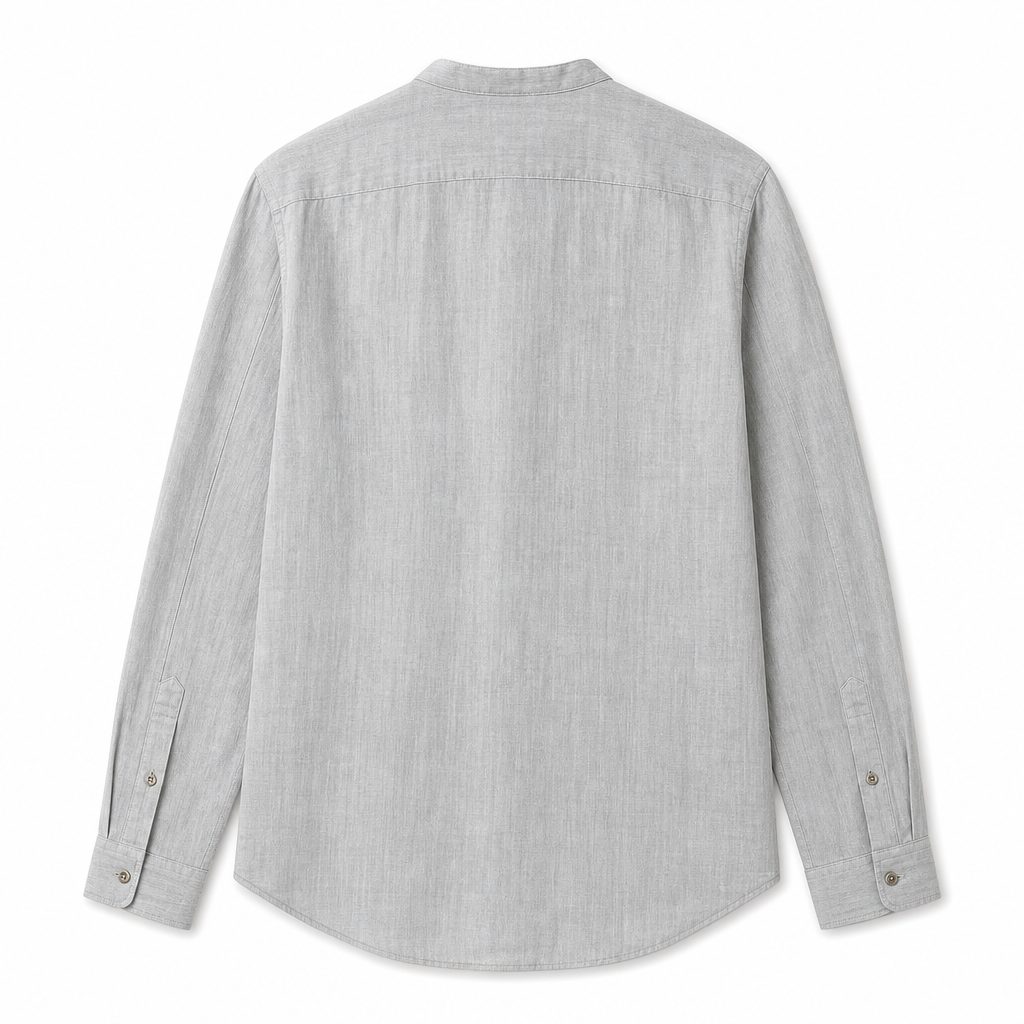
Above: a washed stand-collar shirt. Woven styles often combine piece-dyed fabric with a garment wash, so the specification needs both the dyed shade and the wash recipe.
Writing the Requirement Into the Tech Pack
A dyeing requirement a factory can produce from names the route, the reference and the tolerance. "Garment dyed, matching approved lab dip, with the agreed shrinkage allowance and wash recipe" tells the sample room and the dye house the same thing. "Vintage red" does not.
The reference itself has to be physical. A lab dip is the standard a bulk lot is matched against, and on garment-dyed styles the dip is only half the reference, because the wash changes what the dip looks like on a sewn garment. Approve the shade on a dyed garment, in the fabric and weight you will produce, and keep that piece.
For reorders, the order file should hold the route, the dye reference, the wash recipe and the lot the approved sample came from. A repeat run matched against the previous shipment alone drifts, because each shipment becomes its own reference. When the original lot is gone, the new lot is matched to the approved standard and re-approved before cutting.
Sampling is where the route gets tested. Sampling runs two to three weeks depending on the dye method and the number of revisions, the sampling fee is quoted up front and can only be offset against bulk when the bulk volume is large enough to absorb it. Minimum order is 100 pieces per style, per colour, with sizes mixable inside a colour, and smaller trial runs can be discussed case by case. The technical background on dyeing and finishing sits under fabrics and processes, the sequence from sample to bulk is covered under manufacturing and production, and weight considerations are set out in the guide to heavyweight cotton GSM ranges. Ready body shapes are listed under custom tops.
FAQ
What is the difference between garment dye and piece dye?
Piece dyeing colours the fabric before it is cut, so the garment is sewn from already-coloured cloth. Garment dyeing sews the garment first and dyes the finished piece, so the dye penetrates the seams and the fabric softens in the same process. Piece dyeing gives tighter colour control and suits large repeat runs; garment dyeing gives a softer hand and a faded, lived-in surface with variation between pieces.
Is garment dyeing more expensive?
It carries more process risk rather than simply a higher price. The garment is handled again after sewing, the shrinkage allowance has to be built into the pattern, trims may need to be fitted afterwards, and a piece that fails the colour check is a finished garment rather than a length of fabric. Those factors are quoted per style, and they are the reason garment dyeing is usually chosen for the look rather than as a cost saving.
Can any fabric be garment dyed?
No. Cotton and cotton-rich knits, twills and denim-style fabrics take the process well. Blends with a high synthetic content, fabrics with heavy surface finishing, and some coated or bonded materials may not dye evenly enough to approve. The fabric has to be confirmed with the dye house before a style is developed on it, otherwise the sample and the bulk can behave differently.
How do you keep colour consistent across a garment-dyed reorder?
Keep the approved dyed garment, the lab dip, the wash recipe and the dye lot in the order file, and match the repeat run to those references rather than to the last shipment. Garment dyeing has natural variation, so the tolerance is agreed in advance: what range of depth and surface is acceptable on the body, the seams and the trims. Without that written reference, the second run is judged against the first, and both drift.
Does garment dyeing change the size of the garment?
Yes, the garment shrinks during dyeing, which is why the pattern is cut with an allowance for it. The allowance depends on the fabric, the construction and the dye process, so it is confirmed with a wash test on the actual bulk fabric rather than assumed. If the allowance is wrong, the garment measures correctly at inspection and then fits differently after the customer washes it.
Can you print on a garment-dyed body?
Yes, and the print is normally applied after dyeing, because ink would not survive the dye bath. That means the print colour is approved against the dyed body rather than against a greige swatch, and any wash applied after printing is approved with it. On washed styles, the final approval is on the finished garment, not on an intermediate stage.
Next step. Tell us the shade reference, the fabric and the look you want, and the dyeing route will be confirmed with the sampling timeline before anything is cut. Contact our team to start the review.