
Bulk Order Defects — Claim, Rework or Credit Explained
Quick Answer
Defects found at inspection take one of three routes — rework, a credit against the invoice, or a claim on the lot.
- Critical defects stop the shipment; majors over 2.5% justify rework before packing.
- Rework takes 7 to 10 days; a credit is settled on the invoice.
- The evidence pack decides the argument more than the numbers do.
Every bulk order carries a chance of defects. What separates a workable order from a lost season is not whether the defects exist, but whether both sides agreed in advance what happens when they appear.
That agreement has three parts, and most buyers only write one of them. The inspection standard says how many defects are acceptable. The route says what is done about the ones that are not. The evidence pack says how the count is proven. Skip any of the three and the conversation becomes a negotiation about goodwill instead of a decision about numbers.
This guide covers the three routes in the order they happen, the thresholds that separate them, and the paperwork that makes a claim stick without damaging the relationship you need for the reorder.
Inspection
Why the first 20 minutes of inspection decide the outcome
An inspection is not a search for every flaw. It is a sample of a population, and the sample has to be taken before the cartons are sealed. Once goods are packed, labelled and strapped, every corrective action costs more: unpacking, re-inspection, re-packing, and a new shipping window.
The practical sequence is fixed. Pull the sample, measure the garment flat, check the construction points, then check the decoration. Measurements first because a size problem invalidates everything after it; if the chest is 1 inch out, the print being perfect is irrelevant.
Twenty minutes per style is enough for a first-article check, which catches systematic errors before they repeat across a run. It is not an AQL inspection. The two answer different questions: the first article asks "does this match the approved sample", and the AQL sample asks "how many of these are like the approved sample".
Where this goes wrong A buyer approved a sample, then inspected bulk only after the cartons arrived at the port. The neckline rib had been substituted for a lighter one at cutting, visible in the hand but not in a photo. Because inspection happened after packing, the only available remedies were a discount or a return, both far more expensive than a rework that could have run in the factory in seven days.
Thresholds
What defect rate triggers a claim?
There is no universal number, which is why the number has to be agreed before production rather than argued after. What exists is a classification, and a threshold applied to each class.
| Class | Examples | Typical limit | Effect |
|---|---|---|---|
| Critical | Needle or metal fragment, wrong size label sewn in, restricted zipper | Zero tolerance | Shipment held until 100% checked |
| Major | Measurement outside tolerance, hole in fabric, print misaligned over 5 mm, shade mismatch across panels | 2.5% of sample | Rework or credit, decided by rate |
| Minor | Loose thread, slight seam pucker, small mark that washes out | 4.0% of sample | Noted, corrected in packing |
Limits shown are common AQL practice; the levels for an order are agreed in writing on the purchase order and confirmed at inspection.
Two rules make these thresholds usable. First, a critical defect is a stop, not a percentage — one metal fragment in the sample means the cartons are opened, not sampled. Second, the rate applies to the sample size stated on the order, not to whatever number of garments someone happened to look at.
Routes
When should you ask for rework instead of credit?
Rework is the right answer when the defect is local, the fix is mechanical, and the calendar allows it. Credit is the right answer when the defect is spread, the fix would alter the garment, or the shipping window has already closed.
| Route | What happens | Typical time | Use when |
|---|---|---|---|
| Rework | Factory repairs the affected pieces before packing | 7–10 days | Defect is local, garment survives the fix, delivery window allows |
| Credit | Agreed deduction against the invoice for affected units | Settled on the invoice | Defect is cosmetic, goods are sellable at the reduced value |
| Replacement | Affected units remade on a follow-up run | 3–4 weeks plus freight | Defect is structural and the style is still selling |
| Return | Goods rejected, order cancelled against the balance | Depends on freight and terms | Critical defect, or rate far above the agreed limit |
Most disputes come from choosing the route after the fact. If the order says "rework within 10 days for major defects above 2.5%", the conversation is about counting. If it says nothing, the conversation is about whether the buyer is being reasonable, which is a much harder conversation to win and a much worse one to have with a factory you intend to use again.
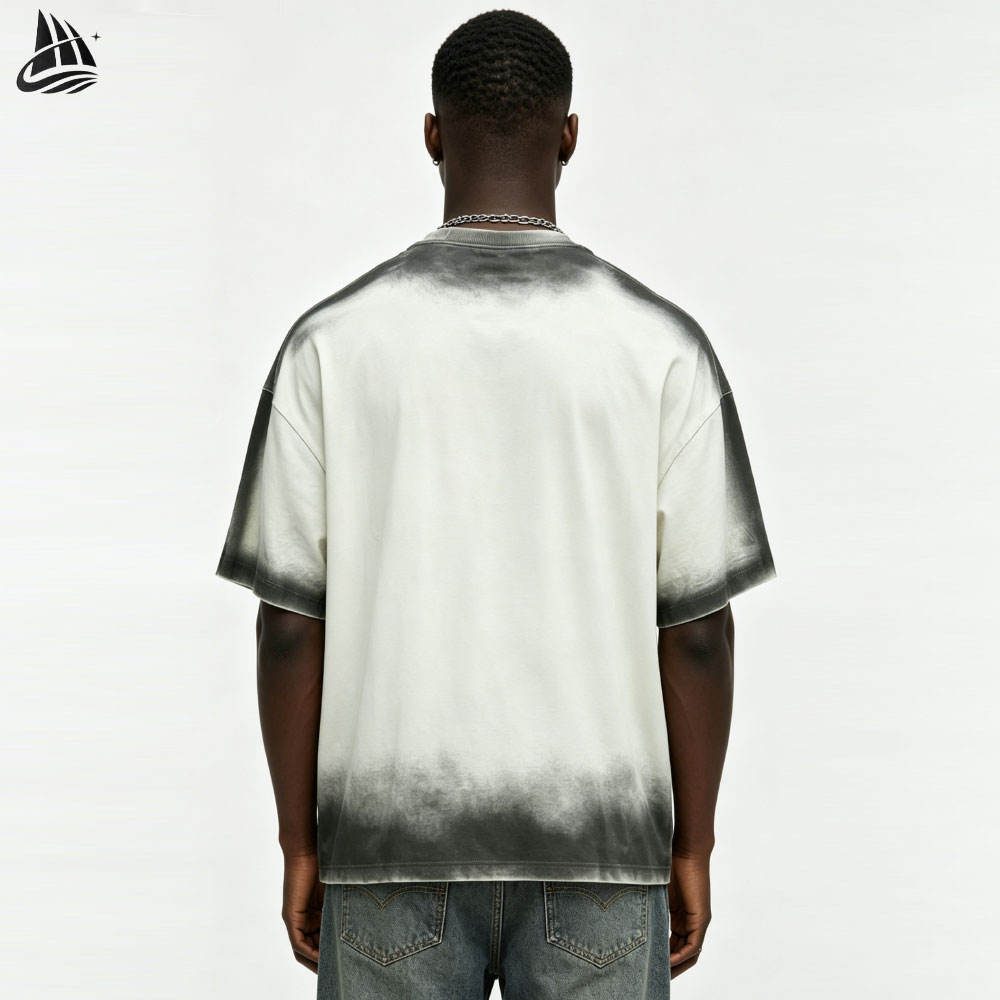
Shade variation across panels is a major defect when it is visible in daylight. It is also the class of defect most often argued about, because a photograph flattens it.
Sampling standard
What does an AQL inspection actually measure?
It measures a sample, and it produces an accept or reject decision for the lot, not an exact count of everything wrong in the shipment. That distinction is the one buyers most often miss when they hold a report in their hand.
A common structure samples a stated percentage of cartons spread across the run rather than the top layer, then draws pieces from those cartons at random. The inspector records defect class per piece, compares the count to the acceptance number for that class, and issues a result. A pass means the lot is within the agreed limit, not that the lot is free of defects.
Where the report earns its keep is in the defect description, not the verdict. "Three major defects" tells you nothing you can act on. "Three major defects, all shoulder seam puckering on size M, all from one cutting batch" tells you the fix, the scope, and whether the rest of the run is safe.
Evidence
What belongs in the evidence pack
A claim is decided on evidence, and evidence is collected at inspection, not reconstructed afterwards. Six items carry almost every argument.
- Inspection date, inspector and the sample size drawn, stated as a number
- Per-piece defect record by class, with the carton number for each piece
- Measurement report per size against the approved sheet, not one average
- Photographs of each defect type, with a scale reference in frame
- The approved sample reference and the fabric lot it was cut from
- Comparison to the agreed limitations on the purchase order
The measurement report is the item most often missing and most often decisive. A garment can look right on a hanger and be 1 inch short in the body; a photo cannot prove that, and a single average across sizes hides it completely.
Money
How do you value a credit without a published price list
A credit is calculated per affected unit against the unit price on the invoice, and the percentage follows the severity: a cosmetic mark that the customer will not see is not worth the same as a print that is 6 mm off centre.
The practical method is to agree the scale in advance in words rather than currency. "Full unit value for unsellable, 30% for a defect a customer notices, 10% for a defect only a merchandiser notices." Then the counting produces a number both sides can compute without renegotiating the principle.
Two things should not enter that calculation: the retail price of the finished product, and the cost of the marketing behind it. Both are real, and neither is a factory cost. Mixing them into a defect conversation is how a 2% defect rate turns into a demand for a 40% discount.
After shipment
What can still be fixed after the goods ship
Less than buyers expect, and more than factories claim.
Local fixes travel well: replacing a button, re-pressing a collar, trimming a thread. Anything requiring a machine — re-sewing a seam, re-setting a zipper, re-cutting a panel — is effectively a remake once the goods are in another country, and a remake at that distance costs more than the credit it replaces.
Decoration is the hardest. A print that is misaligned cannot be moved; it can be covered, which changes the design. Embroidery can sometimes be unpicked and re-stitched on a small area, at the cost of needle marks that show on light-coloured fabric.
This is why the shipping window belongs in the defect conversation. A defect found with ten days of production left is a rework. The same defect found after the container closes is a credit at best and a write-off at worst.
There is also a middle case that costs buyers the most: a defect that is invisible until the garment is washed. Shrinkage beyond the stated allowance, a print that cracks after three cycles, a rib that recovers too slowly. None of these show at inspection unless the inspection includes a wash test, and once the goods are in a warehouse the evidence is gone.
That is why the wash test belongs to the sample stage rather than the complaint stage. Five cycles at 40 degrees on the bulk fabric, measured against the approved sheet, tells you what the customer will experience without risking a shipment to find out.
Prevention
How do you stop the same defect on the next run
INFULLSAIL provides custom T-shirt, hoodie, and streetwear manufacturing services for clothing brands, and treats prevention as a spec change rather than a conversation.
Prevention is a document change, not a conversation. If the correction stays in an email thread, the next run will reproduce the defect because the cutting room works from the spec, not from the thread.
Three edits carry most of the value. Add the defect to the inspection checklist with its threshold. Add the corrective detail to the construction notes — for example "neck rib 2×2, 20 mm finished height, matched to body weight" instead of "rib as approved". And record the fabric lot and the batch that produced the defect, so a repeat can be traced to the same lot if it recurs.
Then verify on the next run with the same method that found it. A defect that is invisible to the next inspection is a defect that was never properly defined. The measurement discipline that makes this work is the same one covered in the guide to hoodie measurements that decide fit, and the finishing issues behind most wash-related claims sit under fabrics and processes.
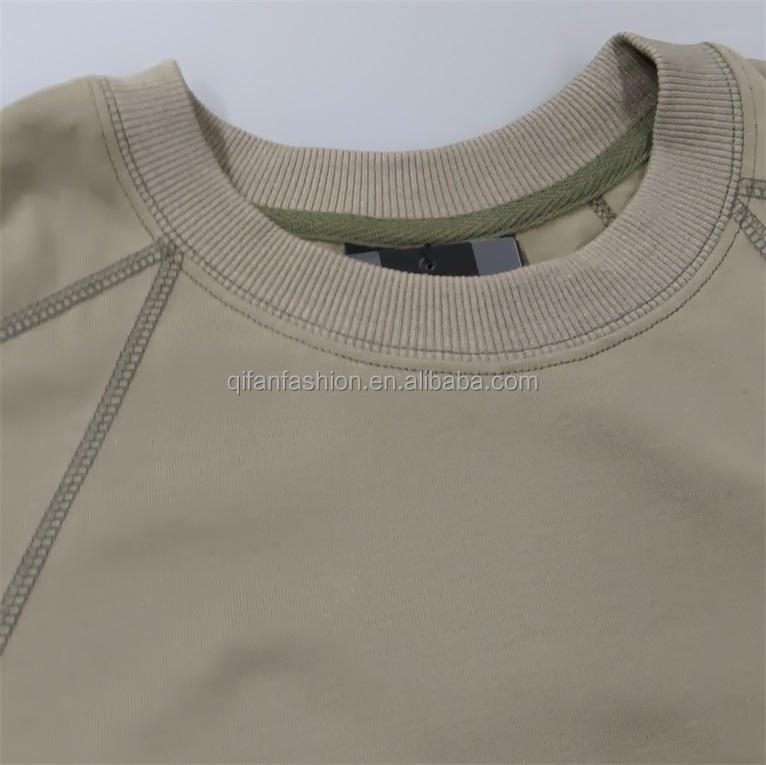
Inspection view. Seam puckering and measurement drift are the two defects that most often pass a visual check and fail a measurement report.
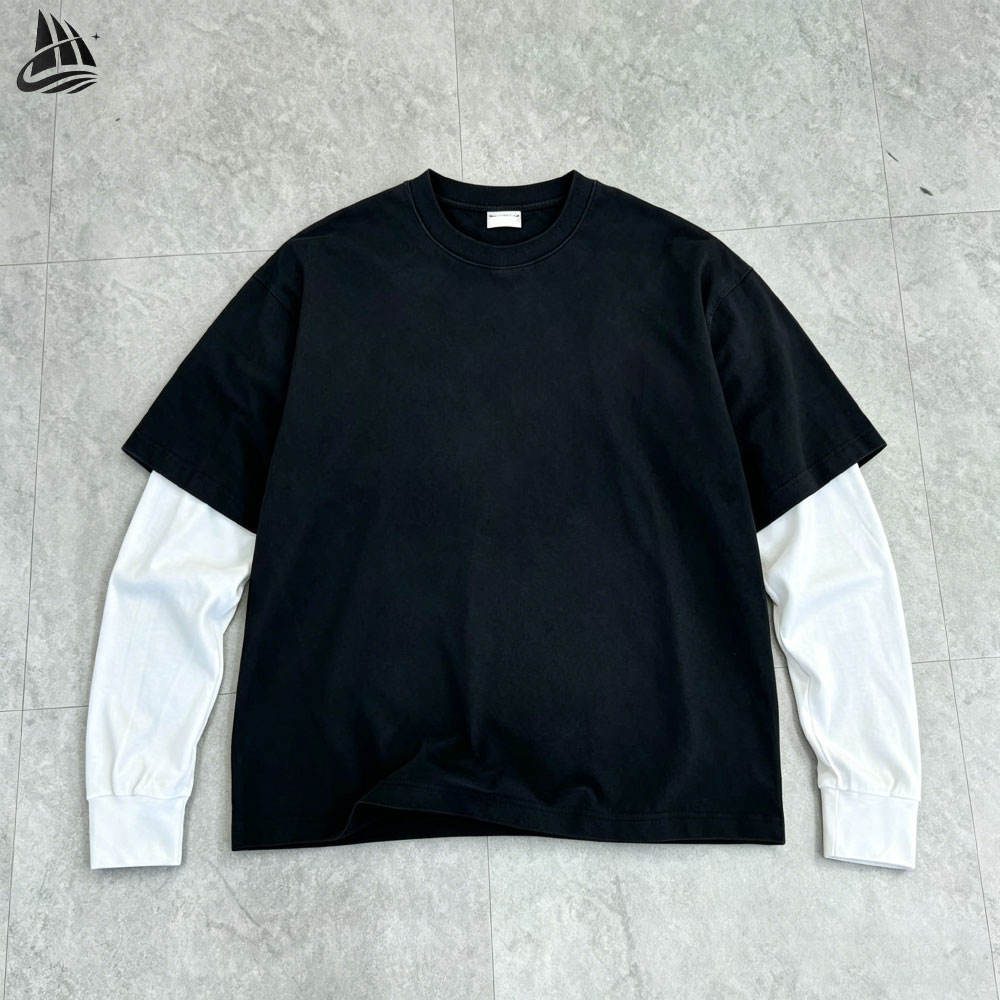
Flat lay view. Layered construction adds seams that can fail at the join, which is why the inspection sheet lists them as separate check points rather than one garment.
Paperwork
What belongs on the purchase order
The purchase order is where the three parts of the agreement become enforceable. Without them, the inspection report has no standard to be measured against.
- Inspection standard and class limits, stated as numbers
- Sample size and carton selection method
- Route for each defect class, with the response window in days
- Credit scale in words, per severity band
- Who pays freight on a return, and from which point
- Approved sample reference and the tolerance sheet attached
Order size and structure sit underneath all of this. Minimum order is 100 pieces per style, per colour with sizes mixable inside a colour, which is why a defect in one size is a defect in a batch rather than a rounding error. Sampling runs two to three weeks, the sampling fee is quoted up front and can only be offset against bulk when the bulk volume is large enough to absorb it, and bulk production typically runs three to four weeks after sample approval. The size side of the same problem is covered in the guide to size curve planning at a 100 piece minimum.
INFULLSAIL, a custom streetwear and clothing manufacturer specializing in OEM/ODM production, builds inspection standards into the order rather than into the complaint. Ready body shapes are listed under custom tops and custom bottoms, and the sequence from sample approval to bulk, including where in-house checks sit, is set out under manufacturing and production.
FAQ
What defect rate justifies rejecting a shipment
Rejection is justified at a critical defect, which is zero tolerance, or at a major defect rate well above the agreed limit — commonly 2.5% on the sample. One critical defect such as metal fragment or a wrong size label inside the carton is enough to hold the shipment for a full check rather than a sample check.
Should I ask for a credit or a discount on the next order
A credit against the current invoice, settled in money. A discount on the next order is not a remedy: it makes the correction conditional on you placing another order, which is exactly the position a buyer should not be in when the defect was not theirs. Agree the credit scale in words before production starts.
How long should rework take
Seven to ten days for a local defect on a partial quantity, assuming the factory still holds the goods before packing. Rework after packing adds unpacking, re-inspection and re-packing, and rework after shipment is effectively a remake at three to four weeks plus freight.
Can I inspect a sample before the full run starts
Yes, and it is the lowest-cost control available. A first-article check on the first pieces off the line catches systematic errors — wrong rib, wrong measurement, wrong print position — while they are still a setting change rather than a rework. It does not replace the AQL inspection at the end.
What if the factory disagrees with my inspection
Disagreements usually come from an undefined standard rather than a dishonest inspector. Compare the report against the agreed class limits and the approved sample, and where the measurement is the issue, re-measure the same pieces with both parties present. Where the standard was never agreed, the fallback is the approved sample, which is why it must be kept.
Does a defect claim affect the next order
Not if it is handled on evidence. A documented claim with a clear corrective action usually improves the next run, because the spec changes. A claim raised late without photographs or a measurement report tends to be absorbed as a price adjustment instead, which leaves the cause in place and the next run repeating it.
Planning Your Next Streetwear Collection?
Send the style and the tolerance you expect, and the inspection standard comes back with the thresholds and the rework window before production starts. Talk to our team