Size Curve Planning for 100 Piece Streetwear Runs
Quick Answer
The size curve decides how many pieces of each size you receive, before anything is cut.
- Five sizes on 100 pieces gives about 20 units each; seven sizes gives 14.
- Grading misses of ±1 inch at the chest turn an M into an S.
- Restocks run 3 to 4 weeks, so an uneven curve cannot be fixed quickly.
Most first drops fail on one of two numbers. The first is the total quantity. The second is the split across sizes, and it is the one nobody writes down until the cutting table is already booked.
At 100 pieces per style, per colour, every size you add costs you depth in the sizes that move. Put five sizes on a 100 piece run and the average is 20 units each, which is not enough depth to sell through a weekend of traffic on a single size. Push it to seven sizes and the average drops to 14, and the tail sizes sit in stock while the middle sells out in week one.
This guide covers the curves that work at small volume, the grading and tolerance numbers that make a size real rather than labelled, and the sheet a factory can cut from without guessing.
The constraint
Why a 100 piece order forces a size decision
The minimum is per style, per colour, and sizes can be mixed inside a colour. That flexibility is where the trap sits: nothing forces you to think about the split, so the split ends up being whatever the factory assumes.
A factory cutting a 100 piece run without a size ratio will apply its own default, and that default is usually a balanced curve that matches its existing customers, not your audience. If your product is an oversized tee in a streetwear fit, your buyers cluster differently from a workwear account's. The result is 20 pieces of a size nobody buys and 14 of the size that sells out in 48 hours.
Where this goes wrong A brand launched a 100 piece hoodie run on an even split across five sizes. XS and S sold 40% in the first month, XXL sold out in nine days, and the remaining XXL stock could not be restocked without a second 100 piece minimum. The curve, not the product, capped the drop.
The curves
What size curve should a streetwear drop use?
Three curves cover most small streetwear runs. They differ in where the mass sits, and each maps to a different silhouette and audience.
| Curve | Shape | Best for | Risk |
|---|---|---|---|
| Balanced | S to XXL, even spread | Unisex basics, first drop with no sales history | Tail sizes linger; middle sells out first |
| Bottom-heavy | Mass at S and M | Asia and EU markets, fitted or cropped cuts | L and XL under-served if the fit runs small |
| Top-heavy | Mass at L and XL | Oversized silhouettes, US and Northern EU markets | S and XS become dead stock |
Typical splits for guidance. The curve that fits your market is confirmed against your own sales data or a test drop, not assumed from another brand's size chart.
The arithmetic
How do you turn a size curve into a 100 piece run?
Work backwards from the split, not forwards from the total. Choose five sizes, assign percentages that add to 100, then round each to a whole piece and correct the rounding on the largest size.
| Size | Balanced 100 pcs | Bottom-heavy 100 pcs | Top-heavy 100 pcs |
|---|---|---|---|
| S | 20 | 28 | 12 |
| M | 22 | 30 | 20 |
| L | 22 | 22 | 28 |
| XL | 22 | 14 | 28 |
| XXL | 14 | 6 | 12 |
Two practical notes on this table. First, every curve still has to total exactly 100, because the minimum is enforced per style and colour, not per size. Second, if you plan to sell two colours, you are running two 100 piece minimums and can use a different curve for each — which is often the most economical route to testing a second market without committing to a full run.
Grading
Where size grading goes wrong
Grading is the step that turns one pattern into five. It is not a percentage applied to every measurement; the increment differs by point, and that is where a size chart stops matching the garment.
Chest usually steps by 1 to 1.5 inches per size on a men's cut, body length by 0.5 to 0.75 inch, and shoulder by 0.5 inch. On an oversized silhouette the chest increment is often larger than the length increment, which is exactly what creates the boxy look. Apply a single percentage across all points and the L ends up long and narrow instead of wide.
Sleeve length is the point most likely to be graded by eye. On a drop shoulder, sleeve length is measured from the shoulder point, and if the shoulder has moved outward by half an inch in grading, the sleeve must shorten by the same amount or the cuff lands past the hand. That single error reads as a badly sized garment even when every other point is within tolerance.
Measurement
What measurements decide whether an M is really an M?
A size label is a claim about numbers. Unless those numbers carry tolerances, the label means nothing at inspection.
| Point | Typical step per size | Working tolerance | What a miss looks like |
|---|---|---|---|
| Chest | 1.0–1.5 in | ±1/2 in | M reads as S on the body |
| Body length | 0.5–0.75 in | ±1/2 in | Hem rides above the belt |
| Shoulder width | 0.5 in | ±1/4 in | Drop shoulder shifts; sleeve head puckers |
| Sleeve length | 0.25–0.5 in | ±1/4 in | Cuff lands on the wrist joint |
| Waist (bottoms) | 1.0 in | ±1/2 in | Half sizes between sizes |
Steps and tolerances for guidance only; the agreed values for a style are fixed on the approved sample and the measurement sheet.
Tolerance is not bureaucracy. On a five size run, a 1/2 inch error at the chest closes half the gap between two sizes, so a customer who measures between M and L ends up with a garment that fits neither. The same error applied consistently across the run is recoverable; an error that varies by panel is not.
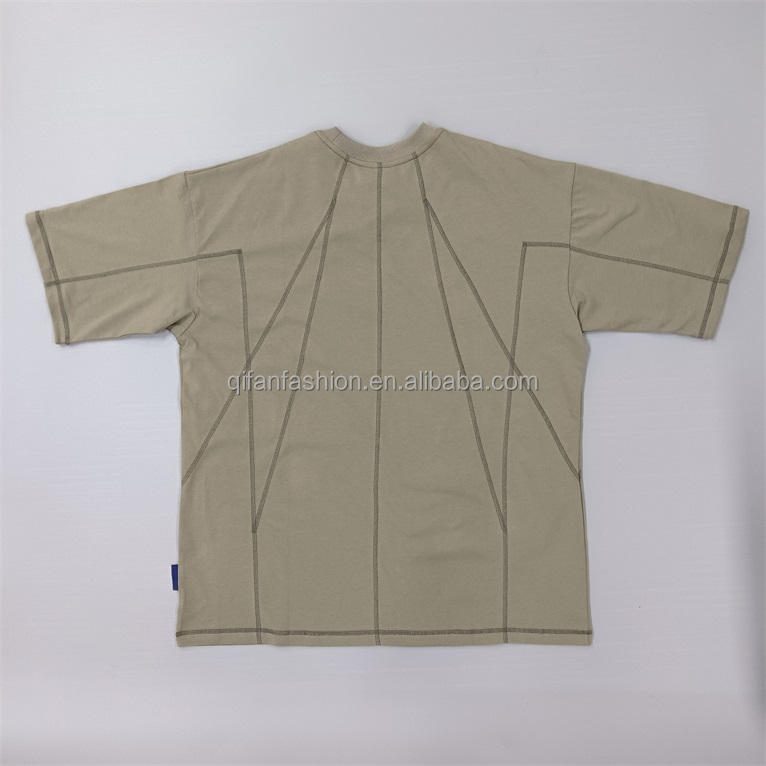
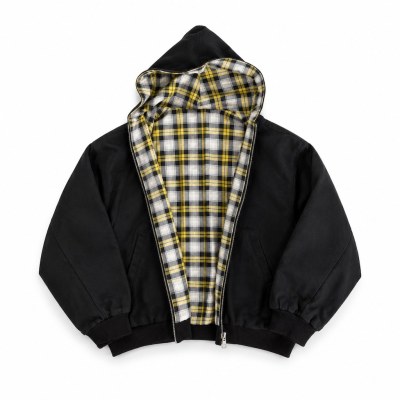
Full garment view. On a boxy cut the chest increment is larger than the length increment, which is what makes two adjacent sizes read as different silhouettes rather than the same shirt in two sizes.
Restock
How do you plan a restock before the drop sells out?
Restocking is a second production order, not a shop top-up. Bulk production typically runs three to four weeks after the sample is approved, and that clock starts from approval of the repeat, not from the day the size sells out.
Which means the decision has to be made early. If XXL is 20% sold in week one on a 12 piece allocation, that is the signal to open a restock conversation, not week four when the shelf is empty. Waiting costs you the window in which the customer is still shopping.
The practical pattern is to place the restock on the sizes that cleared fastest and keep the curve for the repeat slightly heavier at those sizes. Do not re-run the original curve unchanged and expect a different outcome; the sales data from the first run is the only new information you have.
Restocking also has a floor. A repeat of an approved style and colour does not reset the minimum, which is the main argument for holding the original specification instead of rebuilding it each season. Sampling before a repeat typically takes two to three weeks, and the sampling fee is quoted up front and can only be offset against bulk when the bulk volume is large enough to absorb it.
Risk
What does an unbalanced curve cost you?
It costs you the second sale, which is the one that makes a small run profitable.
Take a 100 piece run at 20 pieces per size. If the middle sizes sell out in week two and the tails sit, your sell-through looks acceptable on paper while the only sizes left are the ones nobody searches for. You cannot convert demand you no longer have stock for, and a second 100 piece minimum to fix one size is expensive relative to the revenue it recovers.
There is a second cost that does not show in the stock report: fit perception. A customer who buys the same size twice and receives a garment that measures 1/2 inch differently the second time concludes the sizing is unreliable, and that conclusion transfers to the whole range.
Paperwork
What belongs on the size sheet you send the factory?
A size sheet that can be cut from and inspected against has five blocks. Anything missing becomes a conversation after cutting, when the material is already spent.
- Total quantity per style and colour, with the size split adding to exactly that total
- Each measurement point with a number per size and a tolerance per point
- Grading rule stated per point, in inches, not as a percentage across the whole pattern
- Shrinkage allowance and the wash condition used to verify it
- Measurement method: flat, garment rested, hood folded, sleeves relaxed
- Approved sample reference and the lot it was cut from
INFULLSAIL provides custom T-shirt, hoodie, and streetwear manufacturing services for clothing brands, and works from a sheet like this on every size run so the split survives the cutting table.
Two blocks get left off because they feel obvious. The measurement method is not obvious: a chest measured 1 inch below the armhole and one measured at the widest point differ by half an inch on a loose body, which is the whole tolerance. And the sample lot reference matters on a restock, because the fabric lot that produced the approved size may no longer be the lot in the cutting room.
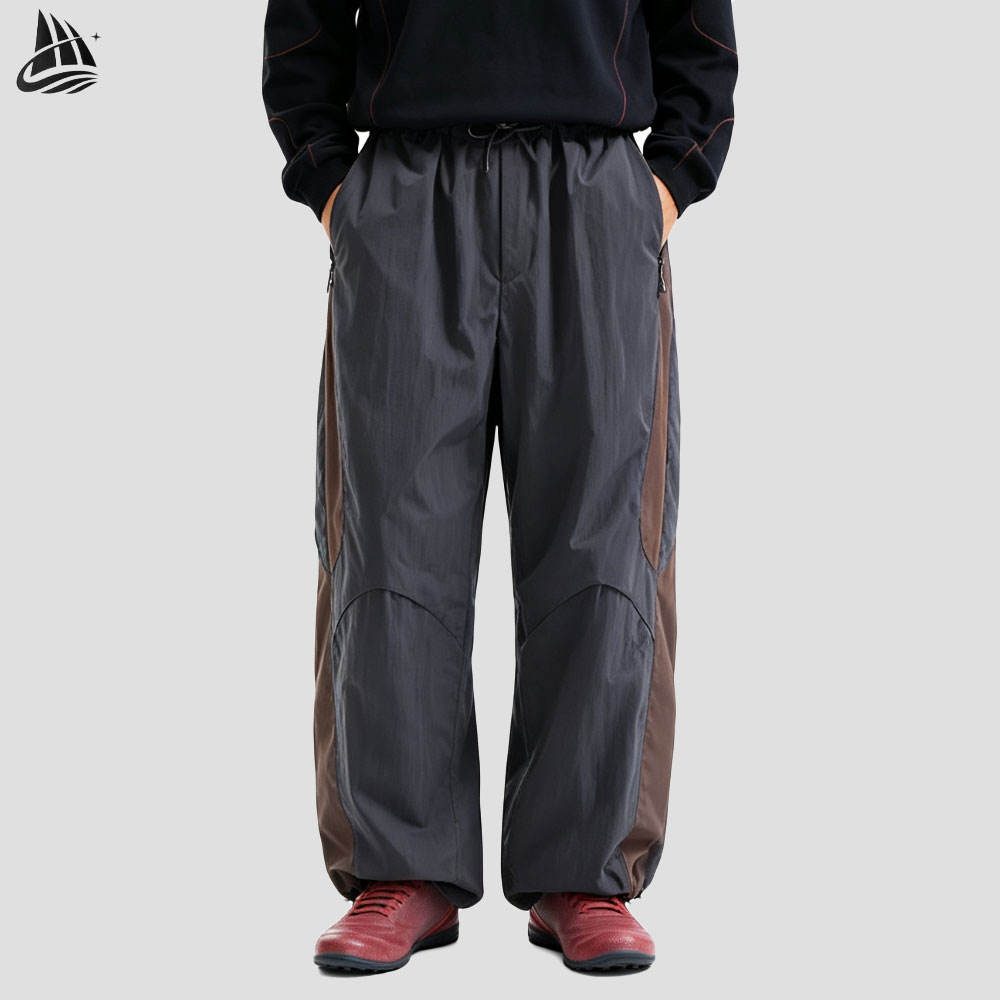
Bottoms grading is driven by the waist and rise rather than the chest. A 1 inch waist step with a 1/2 inch tolerance leaves no room for error between sizes.
Selling
How do size splits affect sell-through reporting
Sell-through is usually reported as one number across the style, and that number hides the only thing worth knowing at small volume: which sizes cleared and which did not.
Report per size. A style that sells 62% overall looks healthy until you see that 100% of L and 96% of M cleared while S sits at 31% and XXL at 44%. The overall figure suggests the product works, when what actually worked was two sizes out of five, and the rest is inventory you will discount later at the cost of the margin the two good sizes earned.
Two numbers per size are enough to plan the next run. Units sold in the first 21 days, and units left at day 45. Anything clearing over 80% in three weeks is a size to weight upward; anything under 40% at day 45 is a size to cut back rather than reorder. Between those bands, keep the curve and let the next drop supply the evidence.
This is also how a brand builds its own size chart instead of borrowing one. After two drops reported per size, the curve stops being a guess and becomes a pattern that can be handed to a factory as a specification.
Fabric
Does fabric weight change how a size behaves
Yes, and it is the variable most size charts ignore.
A 240 GSM jersey drapes with the body, so a 1/2 inch difference in chest is absorbed by the fabric and rarely noticed. A 380 GSM fleece holds its own shape, so the same 1/2 inch is visible as a change in silhouette. Heavier fabric also shrinks more on the first wash if it has not been pre-shrunk, which shifts the size after the customer has already judged the fit.
That is why the size sheet and the fabric specification belong in the same document. On heavy bodies, cut the pattern to the post-wash measurement and state the residual shrinkage target, rather than cutting to the greige number and assuming the wash will behave. The measurement side of that argument is covered in the guide to hoodie measurements that decide fit, and the weight bands themselves are set out under fabrics and processes.
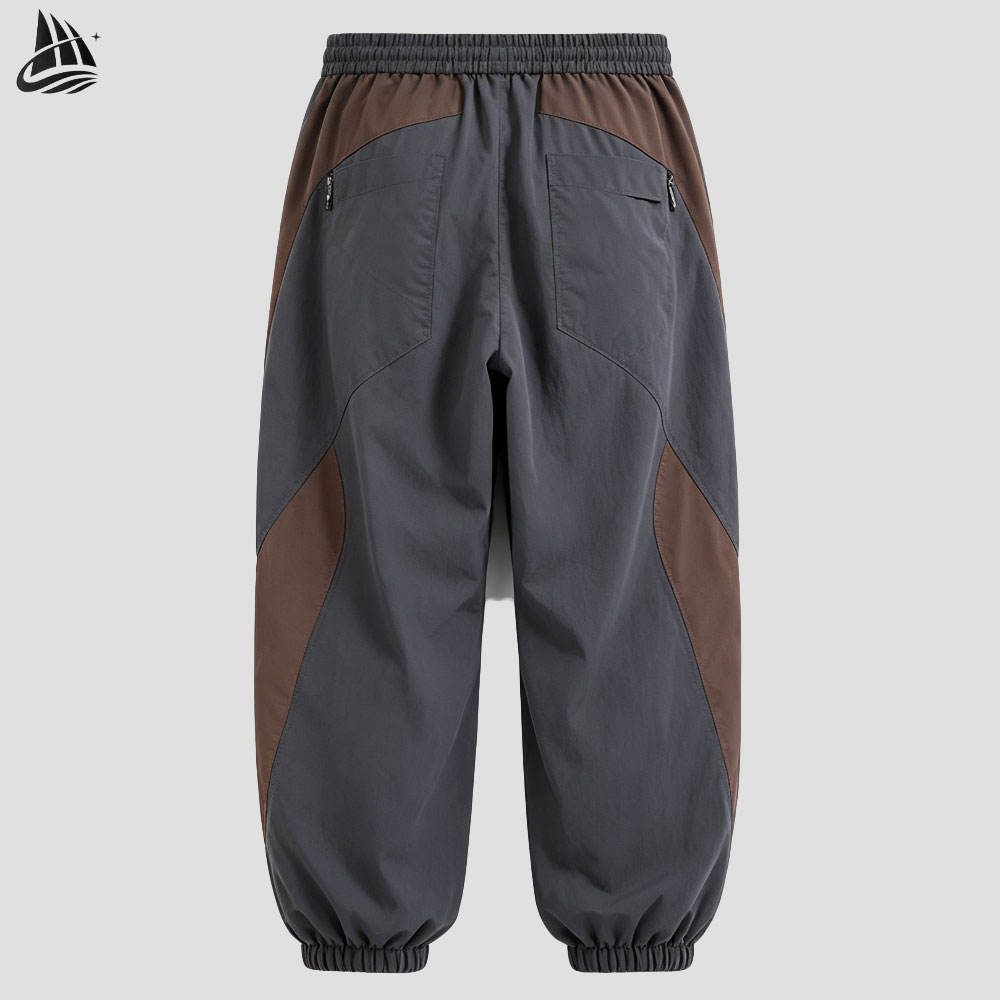
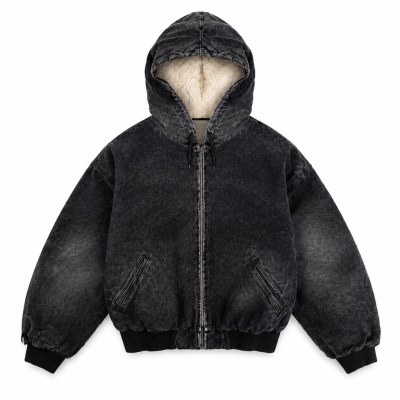
Detail view. Waistband construction and cuff rib determine how much the garment recovers after wear, which is why they belong in the size conversation rather than the trim list.
INFULLSAIL, a custom streetwear and clothing manufacturer specializing in OEM/ODM production, builds size runs from a measurement sheet rather than a label. Ready body shapes across tops and bottoms are listed under custom tops and custom bottoms, the jogger and sweatpant construction notes sit in the guide to sweatpants and joggers, and the sequence from sample approval to bulk is set out under manufacturing and production. Minimum order is 100 pieces per style, per colour, with sizes mixable inside a colour.
FAQ
How many sizes should I offer on a 100 piece run
Five is the practical ceiling for most streetwear styles at that volume. Five sizes on 100 pieces gives roughly 20 units each, which is enough depth to read demand. Seven sizes drops the average to 14 and turns the tail into dead stock before you have learned anything from the drop.
Can I split sizes unevenly
Yes, and you usually should. The minimum applies per style and colour, not per size, so a 100 piece run can carry 30 M, 28 L, 18 S, 14 XL and 10 XXL. State the split explicitly on the order, otherwise the factory applies its own default curve.
Does a restock reset the minimum
No. A repeat of an approved style and colour follows the same 100 piece minimum but does not require new sampling, which is why keeping the approved specification and the fabric lot reference on file matters. Restock production still runs three to four weeks after the repeat is approved.
Why does my M fit like an S
Two usual causes. The grading step at the chest was too small for the silhouette, or the fabric was not pre-shrunk and the garment lost length and width on the first wash. Both are visible on a wash test before bulk, and both are fixed on the pattern rather than by relabelling.
What tolerance should I put on the size sheet
±1/2 inch on chest, body length and waist; ±1/4 inch on shoulder and sleeve length. Tighter than that at this volume mostly buys measurement labour. Looser than ±3/4 inch and adjacent sizes start to overlap, at which point the size label stops being meaningful.
Do I need sales data before choosing a curve
Not in every case. Without history, start balanced across five sizes and treat the first run as a measurement of your audience. With history, weight the curve toward the sizes that cleared fastest and keep the rest as depth for the sizes that turn over steadily.
Planning Your Next Streetwear Collection?
Send the style, the size split and your target fit, and the measurement sheet comes back with grading and tolerances before sampling starts. Talk to our team