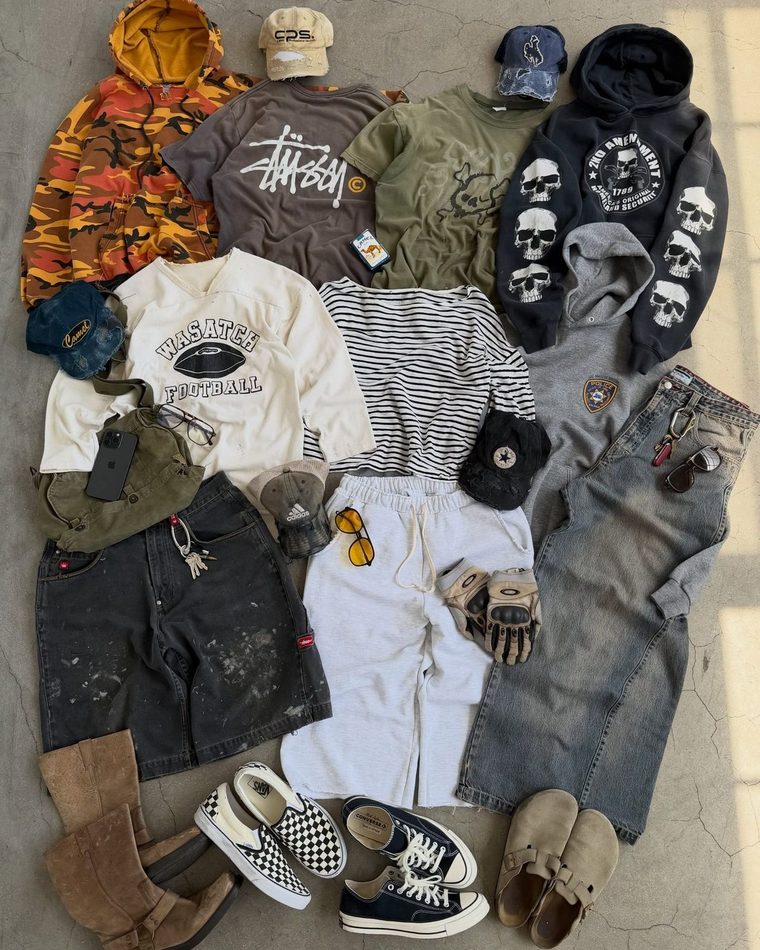
Hoodie Spec Sheet — 12 Measurements That Decide Fit and Wear
Quick Answer
A hoodie fits the way its spec sheet says it will, not the way a sample photo looks.
- Six measurements set the silhouette, six set how it feels; body points need ±1/4 to ±1/2 inch tolerances.
- Rib openings and hood height need millimetre numbers.
- Un-shrunk 380–400 GSM fleece can lose 5–7% of body length on the first 40 °C wash.
Two hoodies labelled 380 GSM can arrive 20 mm apart in body length, with one neckline that recovers after ten washes and one that gapes at the front. The fabric is not the difference. The spec sheet is.
Most sampling disputes are not arguments about taste. They are arguments about numbers nobody wrote down: what the chest measured, where it was measured from, how much the garment was allowed to move after washing. This guide sets out the twelve measurements that decide whether a custom hoodie fits, the tolerances worth paying for, and how to put them on a purchase order so the bulk run matches the approved sample. It is written for buyers running OEM/ODM programmes, where a 3/8 inch miss across 600 pieces is a commercial problem, not a rounding error.
The problem
Why a hoodie needs a spec sheet at all
A t-shirt forgives a loose specification. The fabric drapes, so half an inch shifts the shoulder line and nobody notices on a body.
A hoodie is built from parts that either work or fail visibly. The hood has to stand without interfacing. The kangaroo pocket has to lie flat across a curved front panel. The cuffs have to grip at 90 mm without leaving a mark. None of that shows in a photograph of a sample on a hanger, and none of it is captured by a single "size M" line in a purchase order.
Where it goes wrong is predictable. Four hundred pieces arrive, the measuring room reports a 3/4 inch difference against the approved sample, and nobody can prove which figure was agreed, because the approval was a photo and a thumbs-up.
Fit
What are the six fit measurements?
These six decide the silhouette. Measure the garment flat, zipped or buttoned closed, hood folded back along the neck seam, sleeves relaxed and not stretched.
| Measurement | How to measure | Working tolerance | What a miss looks like |
|---|---|---|---|
| Chest | 1 inch below the armhole, seam to seam, doubled | ±1/2 in | Boxy cut reads as a sack; slim cut pulls at the underarm |
| Body length | High point shoulder to hem edge | ±1/2 in | Short body sits above the belt after one wash |
| Shoulder width | Seam to seam across the back | ±1/4 in | Drop shoulder shifts; sleeve head puckers |
| Sleeve length | Shoulder point to cuff edge | ±1/4 in | Cuff lands on the wrist joint instead of the hand |
| Hem width | Across the rib, relaxed | ±1/2 in | Hem cinches and the body balloons above it |
| Armhole (straight) | Seam to seam, straight across | ±1/4 in | Restricted reach; puckering along the underarm seam |
Working ranges for guidance; final tolerances depend on fabric stability and construction and are confirmed at sampling.
Two of these six carry most of the risk. Shoulder width at ±1/4 inch because a drop-shoulder seam that moves 6 mm changes where the sleeve hangs, and every other measurement on the garment is read relative to it. Body length at ±1/2 inch because it compounds with shrinkage: a garment cut to the greige measurement and not the post-wash measurement can miss by more than an inch after the customer's first laundry cycle.
Components
What are the six component measurements that decide how it feels?
Fit is geometry. Wear is hardware and trim. These six are specified in millimetres because a 10 mm error at the cuff or the hood is felt immediately, while 10 mm on body length is not.
| Component | Specify as | Working range | Failure if out of range |
|---|---|---|---|
| Neck rib height | Finished height, folded | 18–22 mm | Under 15 mm the neckline rolls after about 10 washes |
| Cuff rib height | Finished height | 60–70 mm | Under 50 mm the cuff stops gripping the wrist |
| Cuff opening (relaxed) | Circumference, flat | 90–110 mm | Under 90 mm restricts the hand; over 120 mm hangs past the knuckles |
| Hood height | Neck seam to top edge | 320–360 mm | Under 300 mm the hood cannot stand; over 380 mm it swallows the head |
| Pocket opening | Width of the hand entry | 140–160 mm | Under 130 mm a gloved hand does not fit through |
| Drawcord length | Tip to tip, excluding aglets | 1,200–1,400 mm | Short cords pull out of the eyelets in the wash |
Ranges reflect common streetwear construction; the agreed figures for a style are set on the approved sample.
Where this goes wrong a 380 GSM brushed fleece body needs a heavier neck rib than a 240 GSM jersey body, because the fabric around the opening is stiffer and pulls differently. Using the same 2×2 rib across both weights is the most common reason a heavy hoodie's neckline gapes at the front after three weeks of wear.
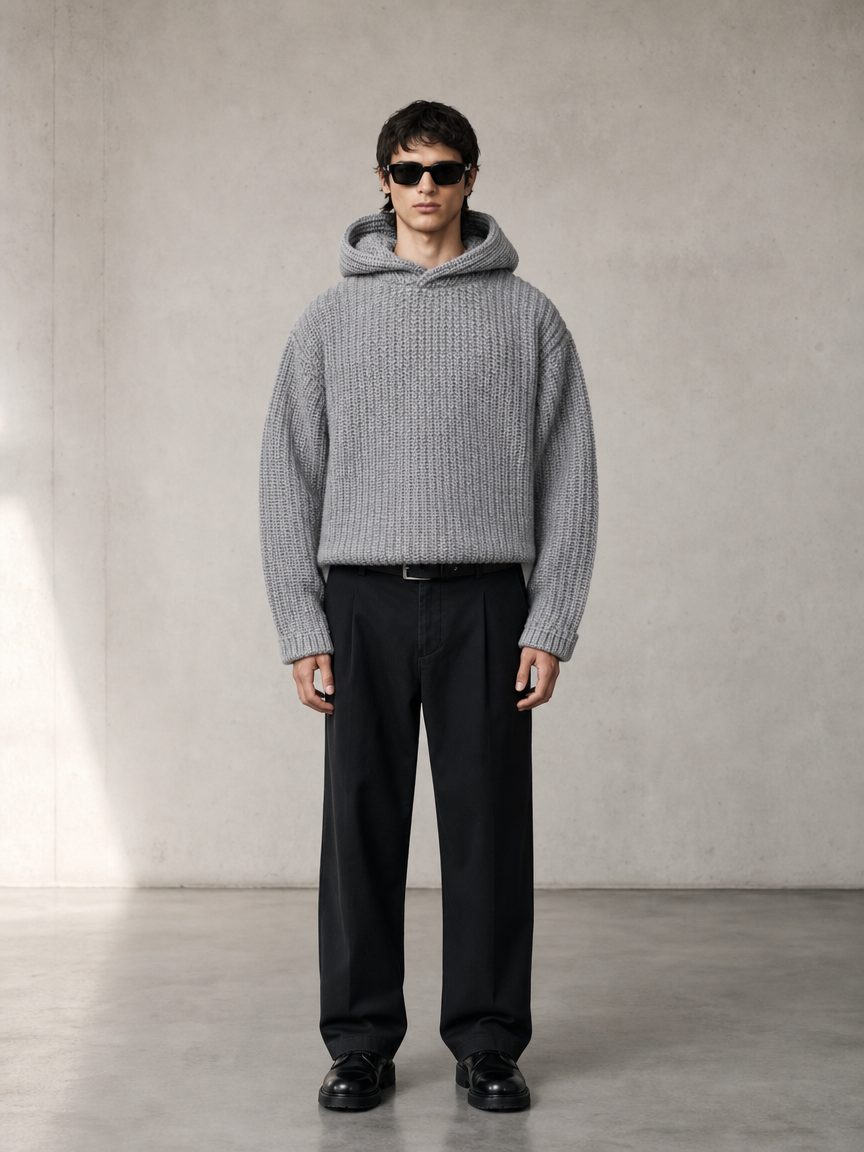
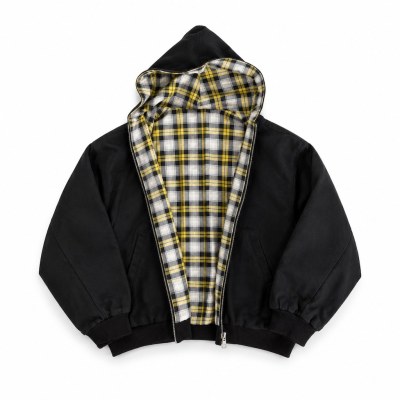
Full garment view. The cuff and hem rib heights on this body are what hold the silhouette — if the rib is specified only as "2×2 rib", the bulk run can deliver 45 mm or 75 mm cuffs from the same instruction.
Shrinkage
How much does a hoodie shrink, and where do you put it?
An un-pre-shrunk cotton fleece hoodie at 380–400 GSM can lose 5–7% of body length on the first hot wash. On a 700 mm body that is 35–49 mm, which is roughly one size at the waist.
The fix is not a bigger pattern. It is a stated allowance and a measured result. Write it on the specification: fabric pre-shrunk, residual shrinkage under 3%, body length measured after a 40 °C wash and tumble dry. Then cut the pattern to the post-wash number, not the greige number.
The second half of the fix is the wash test. Ask for a shrinkage report on the actual bulk fabric lot, not on the sample's fabric, because two lots from the same mill can differ by a percentage point after finishing. A 1% difference on a 700 mm body is 7 mm; across three sizes it is enough to change how the hem sits.
Production
Where do tolerances break down on the sewing floor?
Two places, mostly: seam allowance and rib attachment.
A 12 mm seam allowance that runs 9 mm on one panel and 13 mm on another moves the chest by 8 mm before anyone measures it. On a dense 380 GSM fleece, an overlock that does not compress evenly leaves a ridge along the side seam and pulls the panel out of square, which shows up in the measurement report as a chest that is correct at the top and short at the hem.
Rib attachment is the other. Cuffs and hem are joined under tension; if the operator stretches the rib 5% to fit the body opening, the finished cuff opening comes back 5% wider once it relaxes. That is how a 95 mm cuff becomes 100 mm, and why cuff opening has to be measured relaxed, after the garment has rested flat for at least 30 minutes.
Stitch density belongs here too. Main seams at 8–10 stitches per inch hold on a heavy knit; below 8 SPI the seam starts to grin open at the underarm after washing. Above 12 SPI on dense fleece you gain nothing and increase needle damage.
Paperwork
What belongs on the purchase order?
Not a description — a list of checkable lines. Anything that cannot be measured or tested does not belong on the order; anything that will be argued about later must be on it.
- Composition and construction: cotton-rich brushed back fleece, 380 GSM ±5%
- Pre-shrunk, residual shrinkage under 3%, tested at 40 °C
- Six fit measurements in inches, with a tolerance per point
- Six component measurements in millimetres
- Stitch density 8–10 SPI on main seams; coverstitch on hem and cuffs
- Colour reference: approved lab dip number, not a screen colour
- Wash test report on the bulk fabric lot before cutting starts
- Measurement report per size from the first 10% of output, not a single average
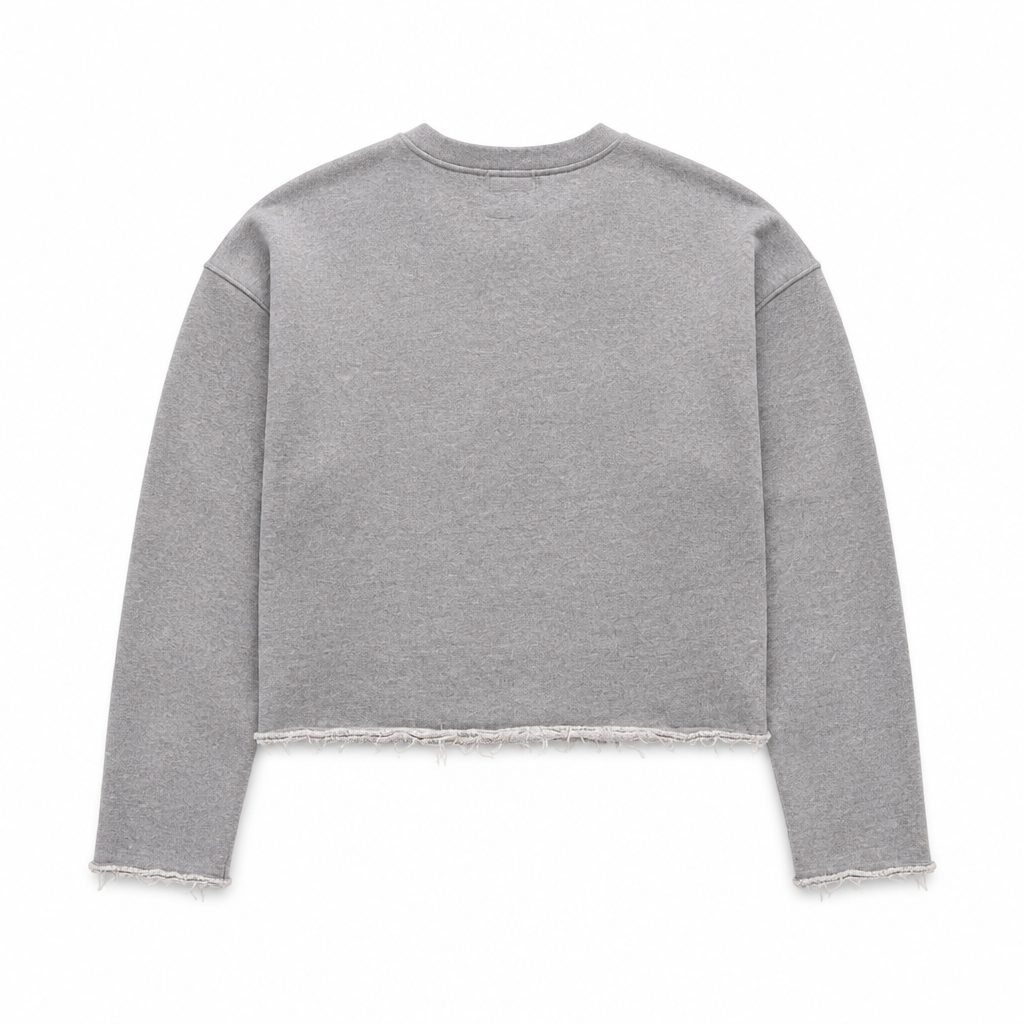
Finish detail. A washed raw hem behaves differently at 380 GSM than at 240 GSM. The heavier fabric frays less and holds the cut line, which is why the hem specification and the wash specification have to be approved together.
Inspection
How do you inspect a hoodie in 20 minutes?
Twenty minutes per style is enough for a first-article check if the sequence is fixed. It is not an AQL substitute; it is how you catch a systematic error before it repeats across a run.
| Step | What to do | Pass condition |
|---|---|---|
| 1. Measure flat | Six fit points, garment rested 30 minutes | Within tolerance on 5 of 6 points; no single point outside 2× |
| 2. Check components | Rib heights, cuff opening, hood height, pocket entry | All six inside the agreed millimetre range |
| 3. Wash 3 cycles | 40 °C, tumble dry low, measure again | Length change under 3%; neck opening growth under 10 mm |
| 4. Pull test seams | Underarm, side seam, pocket corners | No grin, no stitch crack above 8 SPI |
| 5. Check hardware | Zipper run, eyelets, drawcord ends | Smooth full travel; no sharp aglet edges |
Step three is the one buyers skip and the one that predicts returns. A hoodie that measures perfectly before washing and moves 6% after three cycles has a specification problem, not a manufacturing defect — and it will do the same on every reorder unless the allowance is corrected.
Weight
Does a heavier fabric make a better hoodie?
No. It makes a different hoodie, and the difference is functional rather than qualitative.
At 240–280 GSM the garment drapes, layers under a jacket and dries in a normal cycle. At 380–420 GSM it holds a boxy shape without interfacing, the hood stands on its own, and the garment photographs as substantial. The trade-offs are real: heavier bodies dry slower, feel stiff until the first two or three washes, and cost more in fabric consumption, sewing time and freight.
What does not follow is quality. A 260 GSM hoodie with even knitting, a matched rib and a tight specification is a better garment than a 400 GSM hoodie with a slack neckline and a hem that curls. Weight is one input; yarn, knitting tension, finishing and construction decide the rest. For the weight bands themselves, our notes on heavyweight cotton GSM ranges set out what each band does on a body, and the comparison of french terry, fleece and loopback covers how the back construction changes hand feel at the same weight.
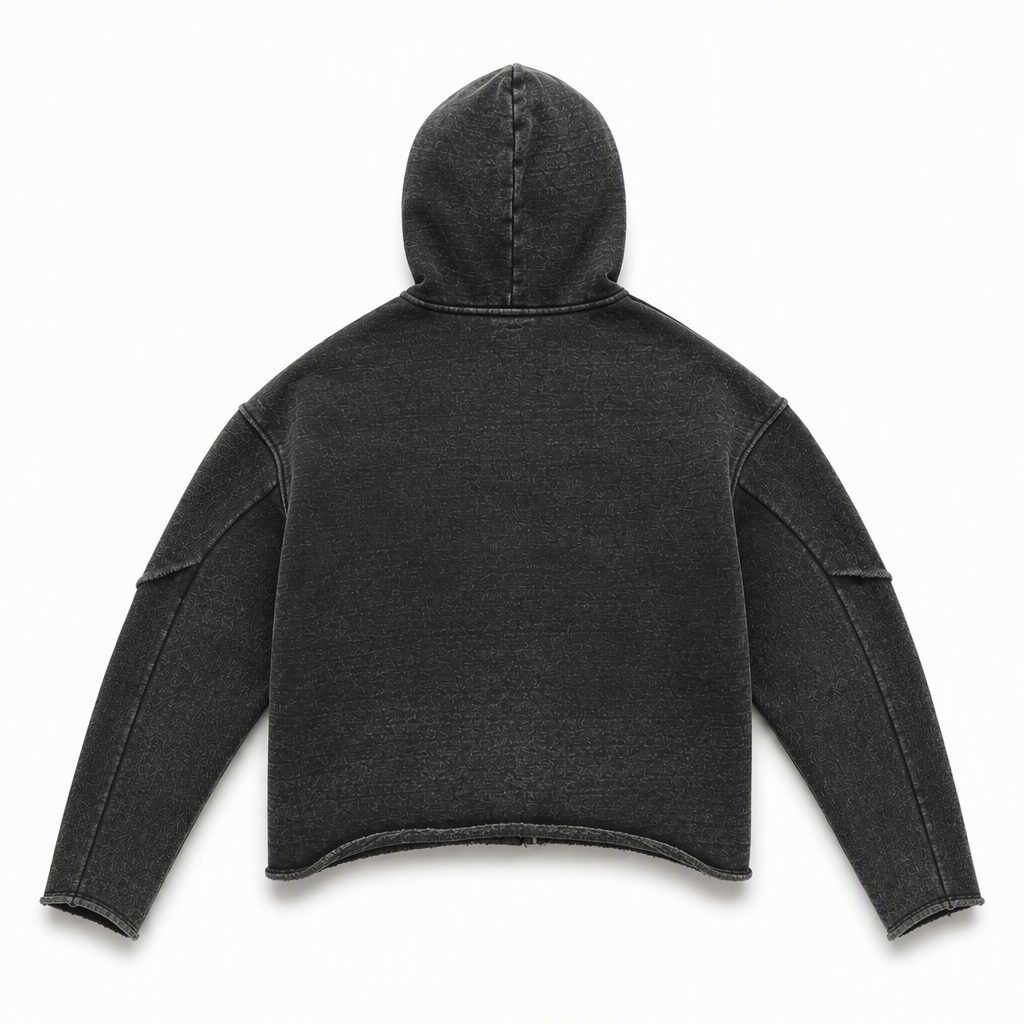
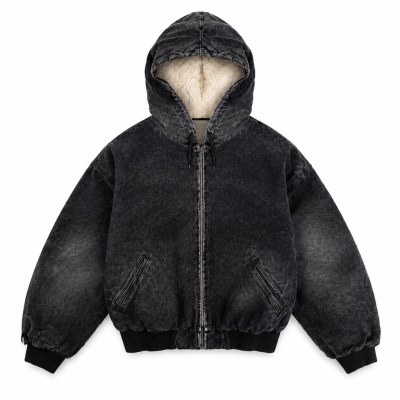
Construction view. Seam placement and rib attachment are decided at pattern stage. Once the panels are cut, no measurement report can add structure the pattern did not allow.
Reorders
How do you keep the same fit on a reorder?
Match the repeat run to the approved references, not to the last shipment. Each shipment that becomes its own reference drifts a little further from the original.
The practical file is small: the approved sample with its measurement sheet, the fabric lot reference, the lab dip, the wash test report and the component list in millimetres. When the original fabric lot is gone, the new lot is matched to the approved standard and re-approved on a swatch before cutting — and if the finish changes, the colour approval is repeated with it, because a wash moves the shade as well as the hand.
Sampling runs two to three weeks depending on construction and revision rounds. The sampling fee is quoted up front and can only be offset against bulk when the bulk volume is large enough to absorb it. Minimum order is 100 pieces per style, per colour, with sizes mixable inside a colour.
INFULLSAIL, a custom streetwear and clothing manufacturer specializing in OEM/ODM production, builds hoodie programmes from a measurement chart rather than a photo reference. Ready body shapes and constructions are listed under custom tops, the finishing side of the question is covered under fabrics and processes, and the sequence from approved sample to bulk is set out under manufacturing and production. Where embroidery sits on a heavy body, the constraints are covered in the guide to embroidery puckering on heavyweight hoodies.
INFULLSAIL provides custom T-shirt, hoodie, and streetwear manufacturing services for clothing brands working from a tech pack, a reference sample, or a size chart that still needs to be turned into one.
FAQ
What tolerance should I accept on a hoodie chest measurement?
±1/2 inch on a flat measurement works for most streetwear cuts; ±1/4 inch if the style is slim or the fabric is unstable after washing. Tighter than that and you are paying for measurement labour rather than fit. Ask for a per-size measurement report from the first part of the run, not one average across all sizes.
Should the spec sheet use inches or millimetres?
Both, deliberately. Body measurements in inches match how patterns and grading are discussed; rib heights, cuff openings and hood dimensions in millimetres, because a 10 mm error there is felt immediately while 10 mm on body length is not. Mixing the two on purpose forces the detail to be checked at the right scale.
How do I stop the neckline from stretching?
Specify rib height (18–22 mm finished), rib composition, and a taped or reinforced neck seam. On heavy bodies, match the rib weight to the body weight rather than using a standard trim. Then test it: wash the sample five times at 40 °C and re-measure the neck opening — growth above 10 mm is a construction problem, not normal wear.
How much shrinkage is acceptable on a cotton fleece hoodie?
Under 3% residual shrinkage after pre-shrinking is a workable target for a 380–400 GSM cotton-rich fleece. Anything above 5% on body length means the pattern allowance is wrong for that fabric lot, and the garment will fit differently after the customer's first wash even if it measured correctly at inspection.
Can a factory work from my measurement chart instead of a sample?
Yes, if the chart includes tolerances and the fabric is confirmed. A measurement chart without tolerances is a wish list; with them, it is a specification a pattern maker can build and an inspector can check. Sampling then verifies the numbers on the actual fabric, which is where most chart-to-garment differences appear.
What is the minimum order for a custom hoodie?
100 pieces per style, per colour, with sizes mixable inside a colour. Sampling runs two to three weeks, and the sampling fee is quoted up front and can only be offset against bulk when the bulk volume is large enough to absorb it.
Planning Your Next Streetwear Collection?
Send the style, fabric weight and target fit, and the measurement chart comes back with tolerances before sampling starts. Talk to our team