Denim Distressing: Laser, Hand Sanding or Stone Wash
Distressing is the part of denim production that most often fails quietly. The sample looks exactly right, the bulk order arrives in the same colour range, and yet the abrasion, the whiskering and the fade all sit differently from piece to piece. By the time a customer notices, the garments are already in a warehouse.
This guide explains what the main distressing methods actually do, why they behave differently at sample and bulk volume, and how to specify the finish so a run looks like one product rather than a hundred variations.
Key Takeaways
- Distressing is a set of controlled processes, not a single wash.
- Laser, hand sanding, stone washing and chemical treatments each affect a different part of the garment.
- Most methods are repeatable individually; the difficulty is applying them consistently across a run.
- Fabric weight, dye method and finishing order change the result, so the base fabric is part of the specification.
- Approve abrasion and fade against the actual production fabric, not a swatch photo.
- Ask how variation will be controlled and what tolerance is acceptable, because some variation is inherent.
What Distressing Actually Does
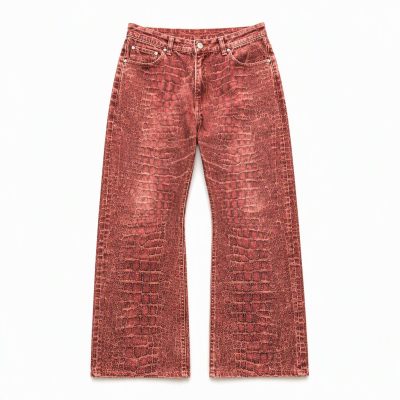
Denim is dyed on the outside of the yarn, which is why it fades rather than wearing through. Distressing accelerates that fade in specific places: at the thigh, the knee, the hem, the pocket edge and the seams where the fabric creases.
That is why distressing is described as placement rather than effect. Two jeans with the same wash recipe can look entirely different if the abrasion is applied in different places, and two jeans with the same abrasion can look different if the base fabric is heavier or dyed differently.
The useful question to ask a factory is not whether they can distress denim. It is which method they use for each placement, and how the result is checked before the run continues.
The Main Methods Compared
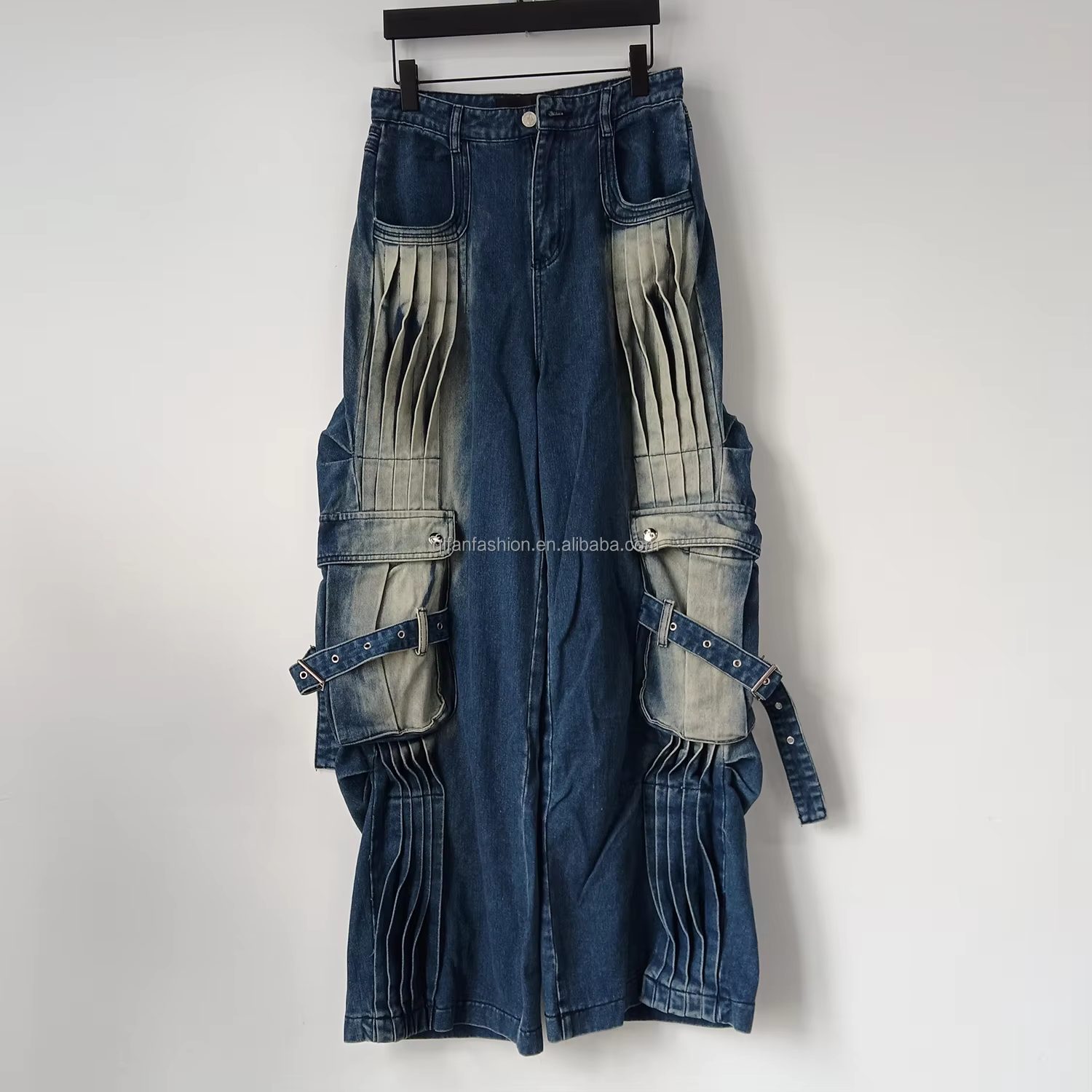
Laser finishing uses a laser to burn away surface dye in a controlled pattern. It is the most repeatable of the methods, because the file is digital and the same file produces the same pattern across a run. It suits whiskering, thigh fade and consistent placement, and it uses no chemicals for the abrasion itself.
Hand sanding uses abrasive tools against the garment in specific areas. It produces the natural, irregular look that laser lines cannot imitate, and it depends on the operator. This is where a run loses consistency, not because the technique is unreliable but because hand pressure is.
Stone washing tumbles garments with abrasive material to soften the fabric and lift colour overall. It changes the whole garment rather than one placement, and it is usually combined with other methods. It also affects hand feel, which is often the real reason a brand chooses it.
Chemical and enzyme treatments work on the dye itself. Enzyme washing softens and cleans without heavy abrasion, while bleach or permanganate treatments create contrast on specific areas. These processes need careful control because they continue working while the garment is wet, which is why our comparison of acid wash and enzyme wash matters when the finish is being chosen.
Most production denim uses a combination. A typical vintage pair might be laser-whiskered, hand sanded at the thigh, stone washed for softness and then treated at the edges for contrast.
Why Consistency Is the Hardest Part
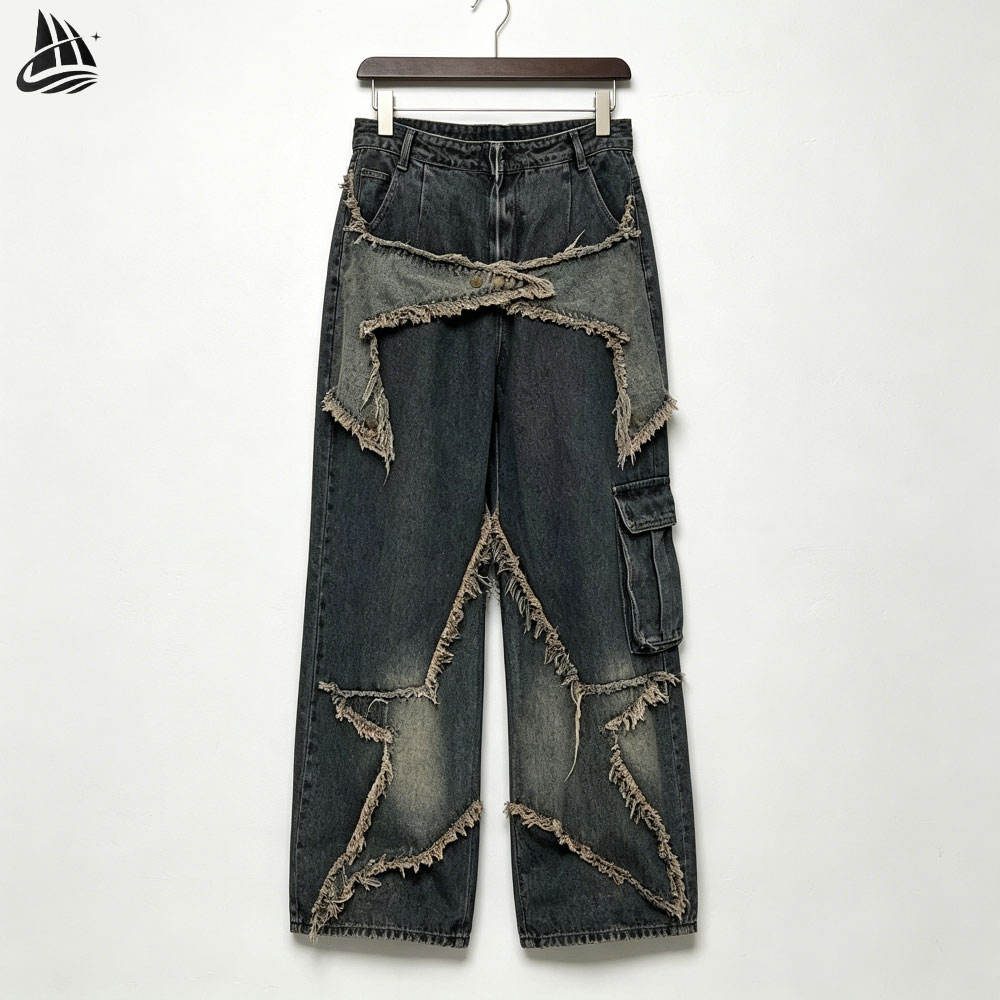
Every method above is repeatable in isolation. The difficulty is that they interact with each other and with the fabric.
Fabric weight changes how abrasion reads. A heavier denim resists the same sanding pass that would open up a lighter one, which means a recipe developed on one fabric does not transfer to another without adjustment. Our explanation of how fabric weight affects a garment explains the underlying reason.
Dye method changes how much colour is available to remove. Indigo dyed on the surface behaves differently from a garment-dyed piece, and the same process produces a different depth of fade.
Order of operations matters. Abrading before washing produces a different result from abrading after, and the difference may only become clear once the run is complete.
Then there is the human and machine variable. Laser placement is consistent to the file; hand sanding is consistent to the operator; stone washing is consistent to load size, time and the condition of the medium. A production plan that treats all three as one step will produce variation, and variation is what makes a bulk order feel cheap.
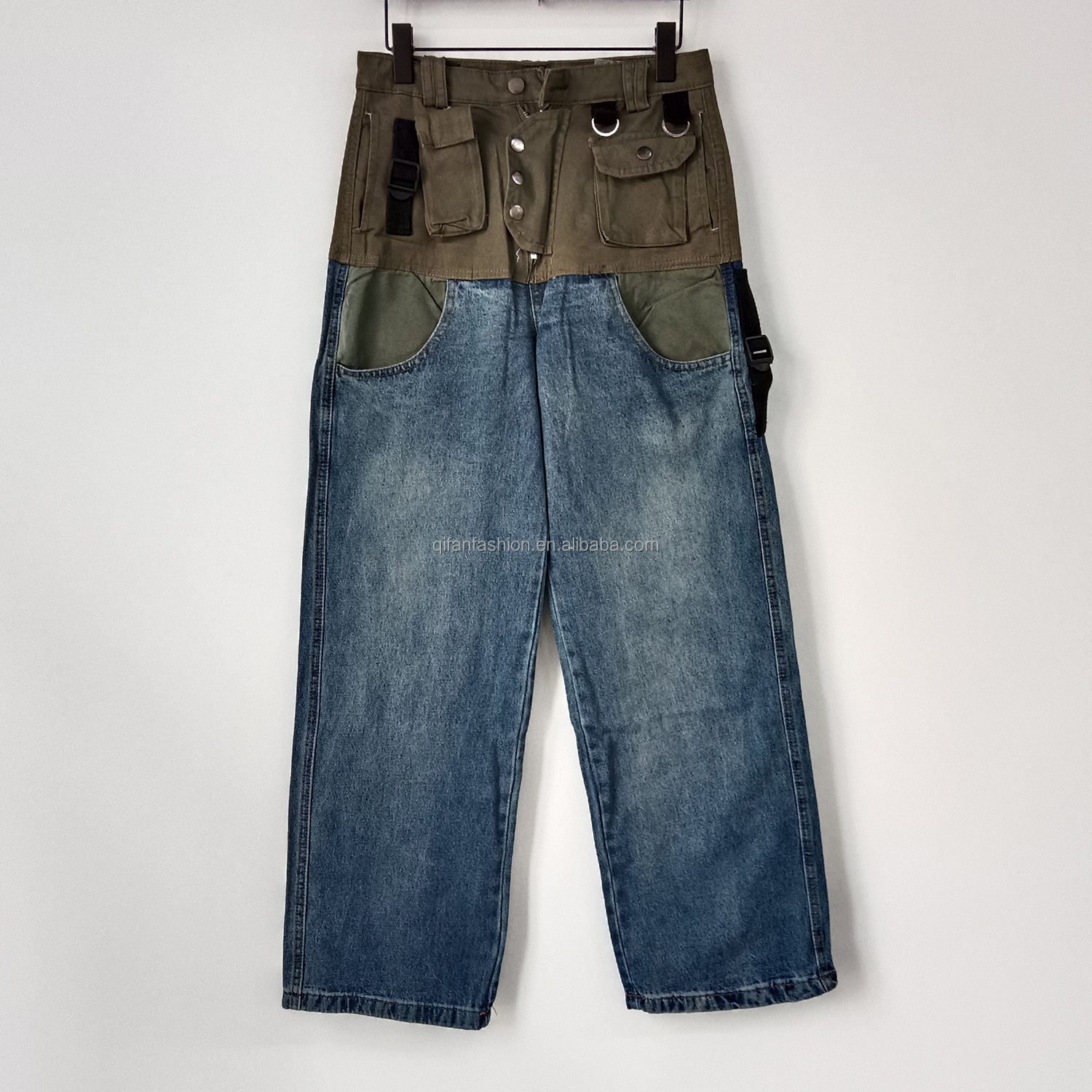
How to Specify Distressing in a Technical Pack
Write the finish as a set of instructions with a reference, not as an adjective.
Name the base fabric and the dye method first, since everything else depends on them. State each placement and the method used for it, in the order the factory will apply them. Give a reference sample and keep it, because the approved sample is the only version both sides can point to when a discussion starts.
Set a tolerance explicitly. Denim is a natural-fibre product processed with abrasion, water and heat, so a degree of variation between pieces is normal. The useful agreement is what range is acceptable, not a promise that every piece will be identical.
Then confirm how the run will be checked. A quick review at the start of the run, while adjustments are still cheap, prevents a problem that would otherwise be discovered after the whole order is washed. Our sample to bulk timeline shows where finish approval sits in the schedule, and our fabrics and processes page covers how finishing connects to the rest of production.
Frequently Asked Questions
What is the difference between laser and hand sanding on denim?
Laser finishing removes surface dye using a digital pattern, which makes placement repeatable across a run. Hand sanding uses abrasion by hand, which produces a more natural and irregular look but depends on the operator. Many production pairs combine both.
How do you get a consistent vintage fade across a bulk order?
Fix the base fabric and dye method first, specify each placement separately with a reference sample, agree a realistic tolerance, and check the run at the start rather than only at the end. Consistency comes from controlling the inputs, not from asking for identical output.
Is stone washing bad for denim?
It softens fabric and lifts colour, which is often exactly what a vintage range needs. It also reduces some strength and affects hand feel, so it is usually applied deliberately rather than as a default step.
Does distressing weaken the garment?
Abrasion removes surface fibre, so heavily distressed areas are thinner than the rest of the garment. For areas that take stress, such as knees and pocket corners, the specification should balance the look against how the garment will be worn.
Can distressing be done on any denim fabric?
Mostly, but the recipe has to be developed for the specific fabric, because weight and dye method change how the abrasion reads. A finish developed on one denim does not transfer directly to another, which is why the base fabric belongs in the specification.
Does the finish change the minimum order quantity?
The counted minimum does not change: the standard remains 100 pieces per style, per color. Complex finishing does affect cost and lead time, because each process adds a production step, and this is confirmed at quotation stage.
Send us your reference pair or the fade you are aiming for, and we will confirm which methods reproduce it and what variation is realistic at volume. Contact our team with your styles and quantities and we will reply within one working day.